Table of Contents

If your order to cash cycle stretches past 45 days, the issue is rarely one big failure. It's usually five small ones scattered across order entry, invoicing, collections, and cash application, and most teams never spot them until DSO becomes a board-level problem. The order to cash process runs the same whether you're in SAP, Oracle Apps R12, Salesforce, or NetSuite: a customer orders, you fulfill, you invoice, they pay, and you close the books. But between those steps, credit checks stall, invoices go out with errors, payments sit unapplied, and nobody knows which part of the O2C cycle is actually broken. You can download every order to cash process PDF, study every order to cash cycle flow chart, and ace every order to cash interview question on cash application or accounts receivable, but until you track cycle time and invoice accuracy at each handoff, you're still guessing. This guide walks through the complete order to cash cycle, the eight process steps every O2C transformation touches, and the metrics that show you exactly where cash is getting stuck.
TLDR:
- The O2C cycle runs through 8 steps from order to payment, and delays at any stage push your DSO into 45-90 day territory.
- Track DSO, order cycle time, invoice accuracy rate, and cash application rate to spot where cash gets held up.
- McKinsey found finance teams can automate up to 42% of O2C tasks, with order management and cash application seeing the biggest gains.
- Manual data entry and invoice disputes are the two leading causes of delayed payments and inflated DSO.
- Invoice Butler handles collections as an AR-as-a-service, sending reminders from your name and connecting to QuickBooks, Xero, NetSuite, and Bill.com.
What Is the Order to Cash Cycle?
The order to cash cycle (commonly shortened to O2C or OTC) covers every step a business takes from the moment a customer places an order to the moment that payment is collected and recorded. It spans sales, fulfilment, invoicing, and collections as one connected sequence.
Think of it as your revenue pipeline made visible. Each handoff between departments either moves cash forward or holds it up.
Here are the core stages that make up a standard O2C cycle:
- A customer submits an order, which triggers credit checks and order confirmation.
- The order is fulfilled and goods or services are delivered.
- An invoice is raised and sent to the customer.
- Payment is received, applied to the correct account, and recorded in your books.
When any of those stages stalls, your days sales outstanding climbs and working capital tightens.
The 8 Steps of the Order to Cash Process
The order to cash cycle runs through eight distinct steps, each handing off to the next like a relay. Miss one, and the whole process slows down.
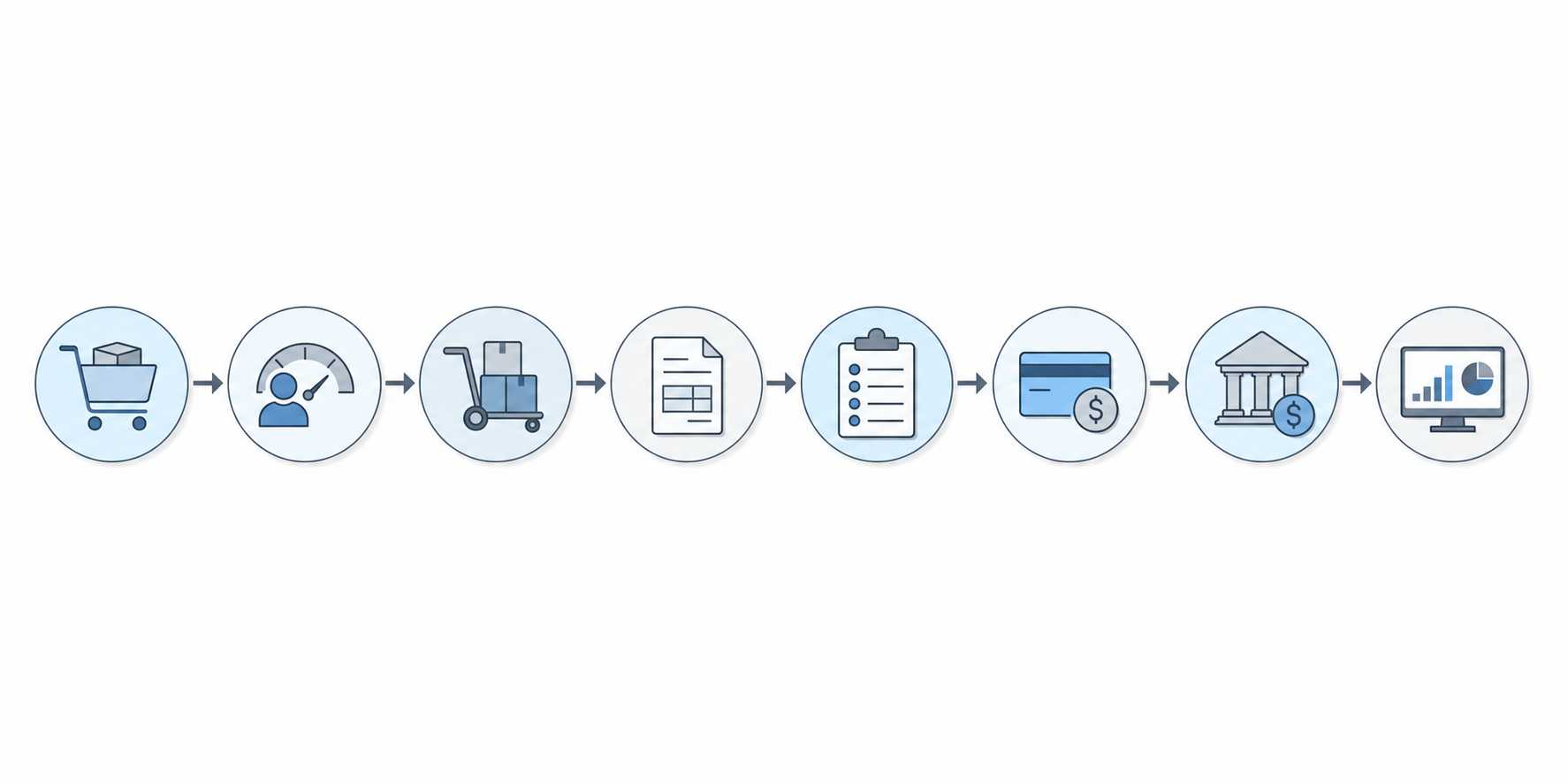
Here are the eight steps your team works through every time a customer places an order:
- Order management: the customer places an order, your team receives it, and the details get checked for accuracy before anything moves forward.
- Credit management: you assess whether the customer qualifies for credit terms based on their history and risk profile.
- Order fulfillment: the product ships or the service gets delivered according to the agreed terms.
- Invoicing: a correct, complete invoice goes out to the customer promptly after delivery.
- Accounts receivable: you track what's owed, monitor due dates, and follow up on outstanding balances.
- Payment collection: the customer pays, through whatever method you've agreed on.
- Cash application: incoming payments get matched to the correct invoices in your system.
- Reporting and reconciliation: you close the loop by updating records and reviewing cycle performance.
| O2C Process Step | Common Bottleneck | Metric That Reveals The Problem |
|---|---|---|
| Order Management | Manual data entry creates errors like mistyped delivery locations or wrong PO numbers | Order Cycle Time tracks delays from order placement to shipment |
| Credit Management | Inconsistent credit checks allow bad debt to accumulate quietly over time | Days Sales Outstanding increases when credit risk assessment fails |
| Order Fulfillment | Delays in shipping or service delivery extend the time before invoicing can begin | Order Cycle Time reveals bottlenecks in inventory or credit approval stages |
| Invoicing | Invoice errors and disputes reset the payment clock entirely and delay cash collection | Invoice Accuracy Rate measures the percentage of invoices sent without errors |
| Accounts Receivable | Disconnected systems force teams to re-key information across multiple tools, multiplying mistakes | Days Sales Outstanding climbs when AR tracking and follow-up lag |
| Payment Collection | Invoice disputes stall cash collection entirely while teams investigate questioned charges | Days Sales Outstanding extends into 45, 60, or 90-day territory with poor collection |
| Cash Application | Late or failed cash application leaves payments sitting unapplied while open invoices age | Cash Application Rate tracks how quickly payments match to correct invoices |
| Reporting and Reconciliation | Manual exports and disconnected systems delay accurate DSO figures until month-end | All O2C metrics become unreliable without timely reporting and reconciliation |
Why the Order to Cash Cycle Matters for Cash Flow
The order to cash cycle sits at the heart of how your business turns completed work into actual money in the bank. Every day a completed order spends waiting for cash to arrive is a day your working capital is tied up somewhere it can't do anything useful.
The numbers make this concrete. Companies with poorly managed O2C processes carry Days Sales Outstanding (DSO) figures that stretch into 45, 60, or even 90-day territory. That gap between invoicing and payment is more than an accounting inconvenience; it directly affects your ability to pay suppliers, meet payroll, and invest in growth.
Getting the cycle right matters across three specific areas:
- Faster cash collection reduces your reliance on credit lines and gives you a clearer picture of actual liquidity at any given moment.
- Fewer billing errors means fewer disputes, which are one of the leading causes of payment delays across industries.
- A well-run O2C process gives finance teams the data they need to forecast cash accurately, instead of guessing.
Key Metrics to Track in Your O2C Process
Four metrics give you a real read on how well your O2C cycle is performing.
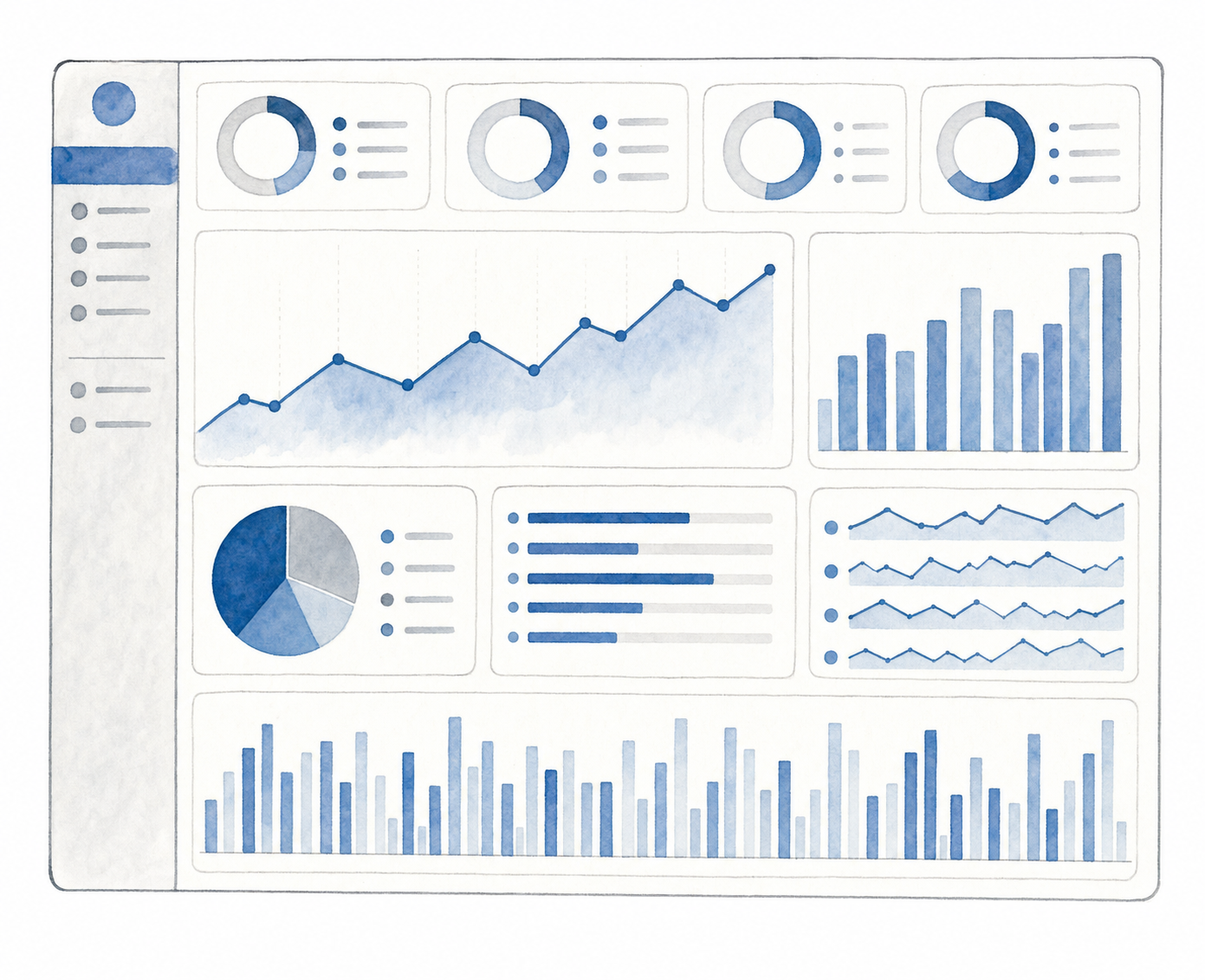
- Days Sales Outstanding (DSO) measures the average days to collect payment after a sale. A lower DSO means faster cash conversion, which directly affects your ability to manage payroll and plan for growth.
- Order Cycle Time tracks how long it takes from the moment a customer places an order to the moment it ships. Delays here often signal bottlenecks in credit checks or inventory.
- Invoice Accuracy Rate measures the percentage of invoices sent without errors. Even small mistakes on invoices lead to disputes, delayed payments, and wasted back-and-forth.
- Cash Application Rate tracks how quickly and accurately incoming payments are matched to open invoices. A low rate here creates reconciliation headaches and muddies your receivables picture.
Common Challenges That Slow the Order to Cash Cycle
Even well-run finance teams hit walls with the order to cash cycle. Here are four common points where things go wrong.
- Manual data entry creates errors early in the process. A mistyped delivery location or wrong PO number on a sales order can cascade into disputes, delayed invoices, and late payments weeks down the line.
- Invoice disputes stall cash collection entirely. When a customer questions a charge, the invoice sits unpaid while your team investigates, extending your cycle time and bloating DSO.
- Disconnected systems force teams to re-key information across multiple tools. When your order management, billing, and AR systems don't talk to each other, mistakes multiply and reconciliation eats hours.
- Late or failed cash application means payments sit unapplied in your bank account while open invoices age unnecessarily, distorting your actual receivables picture.
Best Practices for Optimizing Your Order to Cash Process
The order to cash cycle runs smoothly when everyone involved treats it as a connected system, not a series of handoffs. IBM found that O2C best practices are 81% more effective at order management. Here are five practices that make a real difference.
- Keep your credit checks consistent. Run them at the same stage for every new customer, including the ones that look safe on the surface. Inconsistent checks are where bad debt quietly accumulates.
- Set clear payment terms upfront. Ambiguous terms invite disputes, and disputes slow cash flow. Spell out due dates, accepted payment methods, and late fees before the first order ships.
- Invoice promptly and accurately. Every day between delivery and invoice is a day you are not getting paid. Errors reset that clock entirely.
- Track your cycle time actively. Knowing where orders stall lets you fix the right thing.
- Review your process regularly. Customer volumes change, teams grow, and what worked last year may be creating bottlenecks now.
How Automation Improves the Order to Cash Cycle
Manual invoice chasing, misapplied payments, and delayed reconciliation all slow down cash collection. Automation tackles each of these problems by replacing repetitive human tasks with rules-based and AI-driven workflows.
Most O2C teams that automate see measurable gains quickly. McKinsey research found that finance functions can automate up to 42% of their tasks, with order management and cash application seeing the biggest impact.
Here are four areas where automation moves the needle:
- Order processing and credit checks can run automatically against pre-set rules, cutting approval time from days to minutes without manual review for every transaction.
- Cash application tools match incoming payments to open invoices using remittance data, bank feeds, and AI pattern recognition, reducing mismatches that would otherwise age into disputes.
- Automated dunning sends payment reminders on a schedule, in your voice, without your team having to track who owes what and when to follow up.
- Reporting and reconciliation can update in near real time, giving finance teams accurate DSO figures without waiting for month-end manual exports.
Taking Collections Off Your Plate With Invoice Butler
Invoice Butler is an AR-as-a-service solution built for businesses that want collections handled without hiring a dedicated AR team. You connect your accounting software, and the Butler takes it from there.
The service sends polite, professional payment reminders on your behalf, from your own name, keeping your customer relationships intact. There is no aggressive chasing, no awkward calls, just consistent follow-up that keeps receivables moving.
It works with the tools you already use, including QuickBooks Online, Xero, NetSuite, Bill.com, and Stripe, so there is no ripping out your existing stack.
Setup takes under an hour. One customer recovered over $300,000 in outstanding invoices, while another cut their DSO by more than 50 days. Results vary, but the pattern is consistent: when follow-up is regular and professional, invoices get paid.
Final Thoughts on Order to Cash Management
The faster your O2C cycle runs, the more cash you have to work with when you need it. Track your DSO, close gaps between invoicing and delivery, and make follow-up consistent. If chasing payments is taking time you don't have, schedule a quick chat and we'll walk through how the Butler handles collections so you don't have to.
FAQ
What is order to cash cycle?
The order to cash cycle covers every step from the moment a customer places an order to the moment payment is collected and recorded in your books. It spans sales, fulfillment, invoicing, and collections as one connected sequence, turning completed work into actual cash in the bank.
Order to cash cycle vs quote to cash process?
Order to cash starts when a customer places an order and runs through to payment collection, focusing on execution and fulfillment. Quote to cash starts earlier with the sales quote and proposal stage, encompassing the full revenue cycle from initial pricing through contract signature to cash collection.
How do I calculate Days Sales Outstanding for my business?
Divide your accounts receivable balance by your total credit sales, then multiply by the number of days in the period you're measuring. For example, if you have £50,000 in receivables and £300,000 in quarterly sales, your DSO is (50,000 ÷ 300,000) × 90 = 15 days.
Can I automate collections without hiring an AR team?
Yes. AR-as-a-service solutions handle the entire collections process for you, sending reminders, managing follow-ups, and chasing payments without requiring dedicated staff. You connect your accounting software and the service runs autonomously, taking collections off your plate entirely instead of making it easier for your team to manage.
What causes most order to cash cycle delays?
Manual data entry errors early in the process create invoice disputes weeks later, disconnected systems force teams to re-key information across multiple tools multiplying mistakes, and late cash application leaves payments sitting unapplied while open invoices age unnecessarily. Each of these bottlenecks extends your DSO and ties up working capital.