

Stop emailing people who can't pay you.
The champion who signed the deal doesn't control payment runs. When invoices stall, Invoice Butler finds the AP specialist, controller, or portal admin who actually releases the money, and opens a direct line.
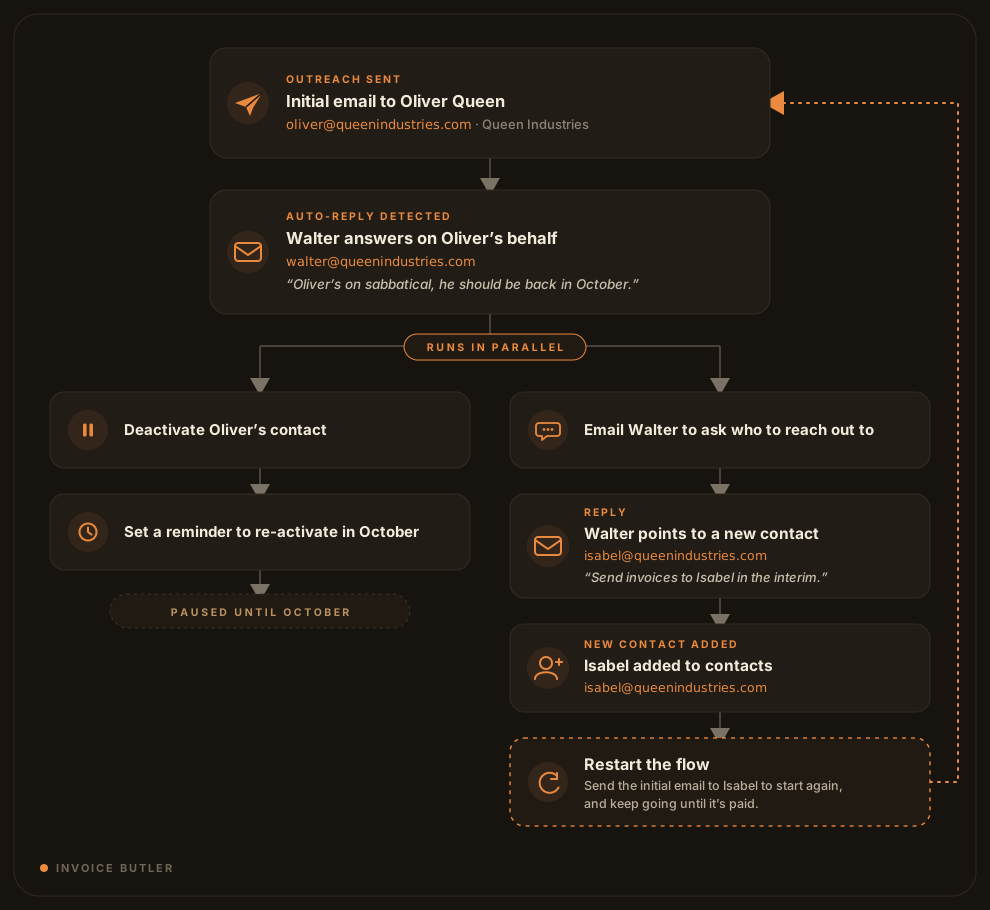
Invoices don't ghost you. People do.
The contact on the invoice is whoever signed the contract, a VP who was thrilled to buy and has no idea when payment runs happen. Your follow-ups land in their inbox, get mentally filed under "someone else's job," and die. Meanwhile the person who could pay you tomorrow has never heard your company's name.
Then people leave. In B2B, your AP contact changing jobs is a when, not an if, and reminder software keeps cheerfully emailing the dead address. Sequence tools send to the contact on file; if the contact on file is wrong, stale, or on parental leave, the entire automation stack is a machine for generating silence.
Finding the right person is real work: mining email signatures and out-of-office replies, checking portal records, calling the main line and asking for accounts payable. It's exactly the kind of grind that lean finance teams never get to, so invoices age for the dumbest possible reason: wrong inbox.
The butler finds who actually releases payment.
When an account goes quiet, Invoice Butler doesn't send a fifth email to the same address, it goes looking. It mines its own conversation history for referrals and signatures, pulls AP contacts from portal records, enriches from external data, and when needed, a real operator calls the company and asks. New contacts are verified, added to the account, and engaged with full context. Most "difficult" accounts turn out to be one correct email address away from paying.
What the Butler handles
Silence-triggered search
No reply after your threshold? Contact discovery starts automatically. Stalled accounts stop waiting for someone to notice.
Signals you already own
Out-of-office redirects, email signatures, portal vendor records, past threads — mined for the AP names hiding in plain sight.
External enrichment
Finance and AP contacts identified from enrichment data and verified before anything is sent. No spray-and-pray.
Human phone discovery
When data runs dry, a real operator calls the main line and finds accounts payable. The oldest trick in collections, still the best.
Decision-maker mapping
For large accounts: who processes, who approves, who can unstick — so escalations aim at the right level.
Contact records that stay alive
Bounces and departures detected, records updated, your billing system synced. The dead-address problem, permanently handled.
Live in under a week
An account goes quiet
No reply, bounced email, or a departed contact — the butler flags the real blocker: nobody's listening.
Discovery runs
Owned signals first, then enrichment, then a human call if needed. Candidates verified before use.
Outreach restarts — correctly aimed
The new AP contact gets a polite, complete introduction: who you are, what's open, what's needed. No history dumped, no cold tone.
The account map updates
New contacts saved with roles, synced back to your billing system, and used for every future invoice.
From dead end to direct line.

Days of silence, fixed by finding the right inbox.
Common questions
Is this like ZoomInfo or Apollo for AR?
Enrichment data is one input, but the difference is what happens around it: discovery triggers from collections context (silence, bounces, departures), candidates are verified, and the new contact is engaged immediately with the right message — by the same system that's collecting the invoice.
Why don't reminder tools solve this?
They send to the contact on file. If that contact is wrong — and on aged invoices it usually is — more automation just means more email to the wrong person. Discovery requires investigation, and investigation is work, not scheduling.
Is this compliant outreach?
Yes — B2B contact discovery for collecting legitimately owed invoices, using business contact data and direct verification. No scraping of personal data; outreach is professional and account-specific.
Will you contact people our team hasn't met?
That's often the point — the AP specialist your team has never met is the person who pays you. Introductions are polite and contextual, and you can require approval before any new contact is engaged.
What about huge enterprise customers with shared AP inboxes?
Shared inboxes get worked too, but the butler maps the humans behind them — processor, approver, escalation point — so when ap@bigco.com goes quiet, there's a name and a phone number behind it.
Does discovered data sync back to our systems?
Yes — verified contacts and roles sync to your billing system, so the improvement outlives any single invoice.
Your money knows where it is. Find who can release it.
See contact discovery re-open a silent account, book a 30-minute demo.
Book a demo