Table of Contents

If you've ever looked at your bank statement and seen "ACH" next to a transaction, you're looking at the Automated Clearing House network in action. ACH stands for Automated Clearing House, and it's the system that handles direct deposit paychecks, automatic bill payments, and transfers between your own accounts at different banks. But knowing what ACH stands for is only useful if you also understand how an ACH transfer actually works, how long an ACH payment takes to process at Wells Fargo or Bank of America or Chase, whether ACH transfers process on Saturdays, what an ACH transfer limit looks like, how ACH transfer time compares to wire transfer time, and what information you need to set up an ACH payment in the first place. You might have searched for what does ACH stand for on a bank statement, what ACH stands for in banking, what is an example of an ACH payment, whether an ACH transfer can go international, how ACH vs wire transfer differs at Bank of America, ACH payment vs wire vs SWIFT, which is faster (ACH or wire transfer), whether ACH and wire instructions are the same, Federal Reserve ACH processing times, ACH payment cut-off time, what time of day ACH transactions post, whether an ACH transfer app like Chime processes differently, or even what does ACH stand for in anatomy (acetylcholine, a neurotransmitter with a completely different meaning). We're walking through all of it so you know exactly how ACH payments work, when they post, and when to use ACH vs wire.
TLDR:
- ACH stands for Automated Clearing House, the US electronic network for moving money between banks.
- Standard ACH transfers take 1-3 business days and cost free to $1; wires clear same-day but run $15-$50.
- ACH doesn't process on weekends, and most banks post transactions between midnight and 6 a.m. on weekdays.
- In anatomy, ACH stands for acetylcholine, a neurotransmitter controlling muscle movement and memory.
- Invoice Butler handles accounts receivable follow-up on ACH invoices, with clients collecting $300,000+ and cutting DSO by 50+ days.
What Does ACH Stand For?
ACH stands for Automated Clearing House. It is an electronic network that moves money between bank accounts across the United States, managed by Nacha (the National Automated Clearing House Association).
You will see "ACH" on a bank statement when a payment has been sent or received through this network instead of by cheque, wire, or card. It covers everything from direct deposit payroll to utility bill autopay to business-to-business invoice payments.
In banking, the term also appears as "ACH transfer," "ACH payment," and "ACH deposit," all of which refer to the same underlying network.
How ACH Payments Work
When you pay a bill online, split a dinner tab, or receive your paycheck via direct deposit, there is a good chance ACH is quietly doing the heavy lifting behind the scenes.
ACH payments move in two directions: credit and debit. An ACH credit pushes money from one account to another (think payroll direct deposit). An ACH debit pulls money out of an account with the owner's permission (think a gym membership auto-renewal).
The Basic Flow
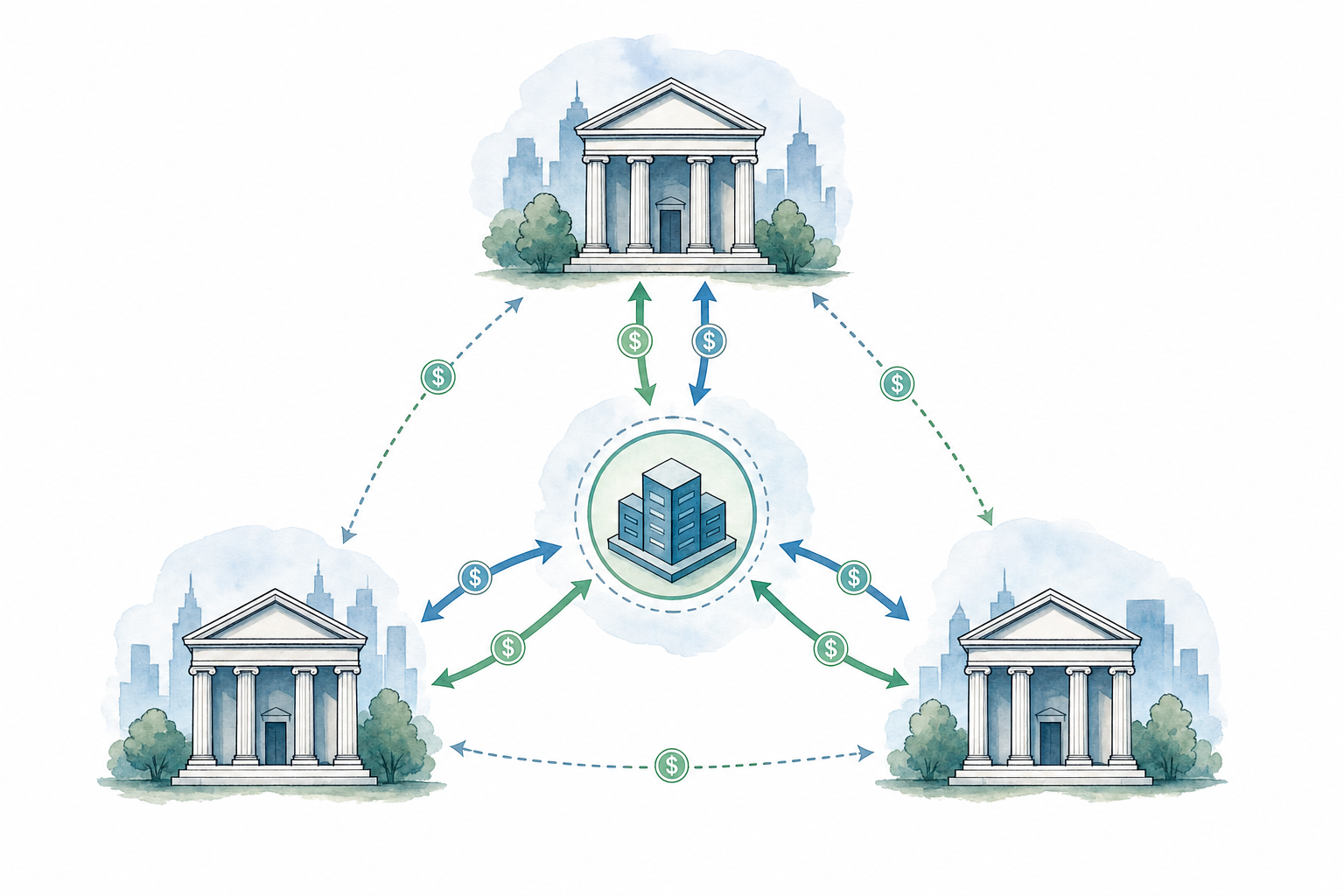
Every ACH transaction moves through three parties:
- The Originating Depository Financial Institution (ODFI) is your bank, the one sending the payment request into the network.
- The ACH Operator (either the Federal Reserve or The Clearing House) acts as the clearing intermediary, batching and routing transactions.
- The Receiving Depository Financial Institution (RDFI) is the recipient's bank, the one that posts the funds.
Transactions are bundled into batches and submitted at set intervals throughout the day, which is why ACH carries processing windows instead of instant posting times. The Federal Reserve processes five settlement windows daily for same-day ACH, with a cut-off of 2:45 PM ET for the last window, though invoice follow-up automation tools can help you stay ahead of these timing constraints.
Types of ACH Transactions
There are two broad categories of ACH transactions, and knowing the difference helps you understand why money moves the way it does.
ACH credits push money from one account to another. Your employer sends your paycheck directly to your bank account. A business pays a vendor. You initiate a transfer from your checking account to a savings account at another bank. In each case, the sender is pushing funds outward.
ACH debits pull money from an account. When you set up autopay for a utility bill, you are authorizing that company to pull the payment from your account on a scheduled date, similar to how businesses can stop chasing invoices manually with automated payment collection.
Common Examples of Each
Credits and debits show up in everyday banking more than most people realise:
- Direct deposit payroll is an ACH credit, and it accounts for the majority of ACH volume in the United States.
- Government benefit payments like Social Security and tax refunds are ACH credits sent in large batches.
- Recurring bill payments for utilities, subscriptions, and loan repayments are typically ACH debits.
- Business-to-business vendor payments sent through accounting software often move as ACH credits.
- Peer transfers initiated through apps that pull from your bank account use ACH debits on the back end.
The direction of the transaction matters because it affects who initiates the payment, who carries the authorisation burden, and in some cases how quickly the funds settle.
How Long Do ACH Transfers Take?
ACH transfers are not instant. The standard timeline runs one to three business days, though same-day ACH has made things faster for many transactions.
A few factors shape exactly how long yours will take.
Standard vs. Same-Day ACH
Standard ACH batches settle overnight, which means a transfer initiated on Monday morning typically posts by Tuesday or Wednesday, well within Net 30 payment terms most businesses use. Same-day ACH, rolled out in phases by NACHA, allows multiple settlement windows within a single business day, but it requires both banks to support it and usually carries a small fee.
Bank-Specific Timelines
- Wells Fargo and Bank of America generally post standard ACH credits within one to two business days, though incoming transfers can appear faster than outgoing ones.
- Chase follows a similar pattern, with next-day availability common for payroll and direct deposits.
- Chime, as a fintech-backed account, often makes ACH direct deposits available up to two days early by fronting the funds before the official settlement clears, similar to how accounts receivable management software accelerates cash flow.
Do ACH Transfers Process on Weekends?
No. ACH operates on Federal Reserve business days, so transfers initiated on a Friday typically do not begin processing until Monday. The Federal Reserve's FedACH service runs on weekdays only, which means weekend and holiday submissions sit in a queue.
What Time of Day Do ACH Transactions Post?
Most banks post ACH transactions in the early morning hours, often between midnight and 6 a.m. local time. Same-day ACH has three processing windows, with the earliest cut-off typically around 10:30 a.m. ET. Missing a cut-off by even a few minutes pushes your transaction to the next available window.
ACH vs Wire Transfer
The two biggest ways to move money electronically get confused constantly, and the difference actually matters depending on what you're sending, how fast you need it, and what it costs.
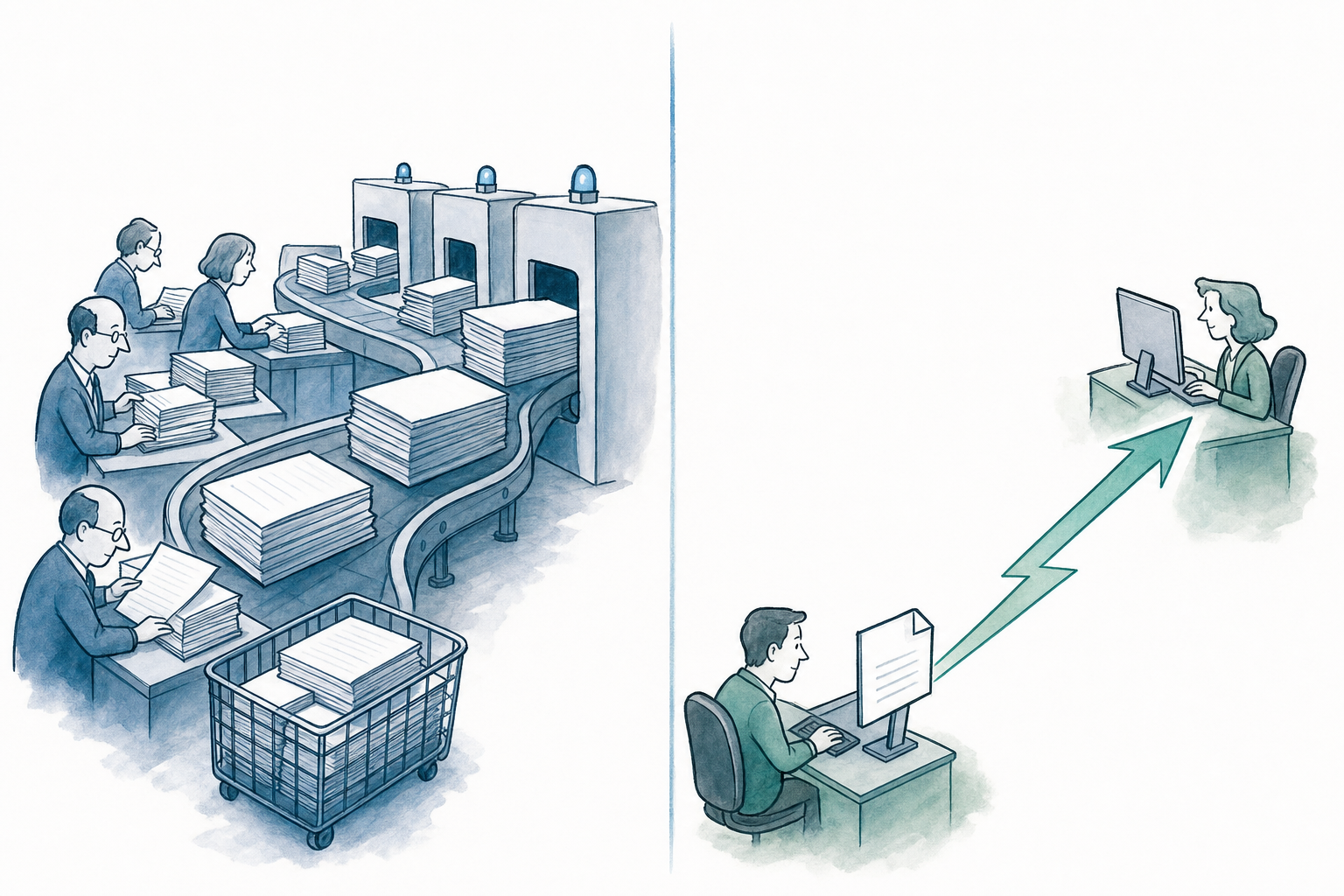
ACH transfers move through the Automated Clearing House network in batches, which is why they take one to three business days. Wire transfers move individually and in real time, which is why they typically clear the same day. Speed is the most obvious trade-off, but it's rarely the only one.
Here's how the two stack up across the factors that matter most:
| Factor | ACH Transfer | Wire Transfer |
|---|---|---|
| Speed | 1 to 3 business days (same-day ACH available) | Same day, often within hours |
| Cost | Free to a few dollars | $15 to $50 per transfer |
| Reversibility | Can be reversed or disputed | Nearly impossible to reverse once sent |
| Domestic use | Yes | Yes |
| International use | Limited (not standard) | Yes, widely supported |
| Best for | Payroll, recurring bills, direct deposit | Large one-time payments, real estate closings |
Which one should you use?
The real answer is: it depends on urgency and amount.
For everyday business payments like paying a supplier or collecting from a customer, ACH is the practical choice. It's low-cost, widely supported, and the one to three day window rarely causes problems when you plan ahead.
Wire transfers earn their higher fee when speed is non-negotiable or when the sum is large enough that reversibility matters less than certainty of delivery. Closing on property? Sending six figures internationally? Wire is the right call there.
One thing worth knowing: ACH and wire transfers use different routing information. A wire routing number and an ACH routing number are often the same nine-digit number at major banks, but the instructions you provide to a payer are not interchangeable. Always confirm which network your bank or recipient expects before sending.
What Is NACHA and How Does It Govern the ACH Network?
NACHA (the National Automated Clearing House Association) is the nonprofit organization that writes and enforces the rules governing every ACH transaction in the United States. Think of it as the rulebook author for the entire network.
Every bank, credit union, and financial institution that processes ACH payments must follow NACHA's operating rules. These rules cover everything from how long a bank has to settle a payment to what happens when a transaction is disputed or returned.
Who Actually Moves the Money?
NACHA sets the rules, but two entities do the actual processing.
- The Federal Reserve's FedACH service handles the majority of ACH volume across the country, processing transactions between member financial institutions using the Fed's own infrastructure.
- The Electronic Payments Network (EPN) is the private-sector alternative, operated by The Clearing House, and competes with FedACH for transaction volume.
Both operators follow the same NACHA rules, so from your perspective as a sender or receiver, the experience is identical regardless of which network processes your payment.
Why NACHA Matters to You
NACHA periodically updates its rules to keep pace with how businesses actually pay each other. One of the most consequential recent changes was the rollout of Same Day ACH, which gave businesses a faster settlement option without requiring a wire transfer. That change came directly from NACHA rule updates, which is worth keeping in mind whenever you hear about ACH processing times changing.
Common Uses of ACH Payments
ACH payments show up in more places than most people realise. Here are some of the most common scenarios where ACH does the heavy lifting:
- Direct deposit is the classic example. Your employer sends your wages straight to your bank account via ACH, no cheque required.
- Bill payments for utilities, insurance premiums, and subscription services nearly always run on ACH rails in the background, much like how the best accounts receivable software automates B2B payment collection.
- Business-to-business invoices are increasingly settled through ACH transfers, especially for recurring vendor relationships where writing cheques feels archaic as part of the broader order to cash cycle.
- Government benefits like Social Security and tax refunds travel via ACH to recipients' bank accounts.
- Peer-to-peer apps such as Venmo and Cash App often move funds between your bank and the app using ACH under the hood.
ACH Transfer Limits and Costs
ACH transfer limits vary depending on your bank and account type, so there's no single universal cap. That said, here's a general sense of where things land.
Most banks set daily ACH transfer limits somewhere between $2,500 and $25,000 for personal accounts. Business accounts tend to get higher ceilings, often $100,000 or more per day. Chase, Wells Fargo, and Bank of America each publish their own limits, and those figures can shift based on your account history and relationship with the bank.
On the cost side, ACH transfers are generally cheap. Many banks offer them for free, particularly for standard next-day or two-day transfers. Same-day ACH tends to carry a small fee, usually between $0.25 and a few dollars per transaction.
How ACH Costs Compare to Wire Transfers
Wire transfers are a different story. Domestic wires typically run $15 to $35 per outgoing transfer, and international wires can push $40 to $50 or higher. If you're moving money regularly, that adds up fast.
ACH wins on cost for routine payments. Wire wins on speed and finality for large, time-sensitive transactions where you need the funds to clear the same day without any possibility of reversal.
A quick comparison:
| Transfer Type | Typical Cost | Speed | Reversible? |
|---|---|---|---|
| Standard ACH | Free to $1 | 1 to 3 business days | Yes |
| Same-Day ACH | $0.25 to $3 | Same business day | Yes |
| Domestic Wire | $15 to $35 | Same day | No |
| International Wire | $40 to $50+ | 1 to 5 business days | No |
The reversibility column matters more than people expect. ACH payments can be disputed and returned, which offers a layer of protection for payers but creates uncertainty for recipients, making it important to know how to handle past due invoices before they escalate.
Automating ACH Collections with Invoice Butler
ACH payments move money efficiently, but chasing down late invoices is a separate accounts receivable management headache entirely. Knowing what ACH stands for gets you halfway there. Getting paid on time is the other half.
Invoice Butler handles the accounts receivable side so you don't have to. Instead of spending hours following up on overdue invoices, sending reminders, and matching payments manually, Invoice Butler does that work for you, operating as your AR team without requiring daily management on your part (a key difference explained in Invoice Butler vs manual invoice follow-up).
The way that Invoice Butler works with clients who are paying with ACH is that when clients promise ACH payments, we thank them and then wait 3 to 5 days for the transaction to clear. If their transaction doesn't clear, we don't see the cash actually applied. We follow up again with a contextual outreach, as opposed to normal dunning, which has 0 context.
Clients have seen real results, including over $300,000 collected and DSO cut by more than 50 days using DSO reduction software approaches. Those aren't promises, they're outcomes from actual customers.
If ACH payments are already part of how your clients pay you, Invoice Butler fits right into that workflow without friction.
Final Thoughts on ACH Payments and Transfers
Most money in the United States moves through ACH, not wires or checks, because the network balances cost and speed well enough for payroll, bills, and business payments. The Federal Reserve processes transactions in batches throughout the day, which is why timing matters when you need funds to post quickly. Knowing when ACH makes sense and when to use a wire saves you time and money. If collections are taking up more of your week than they should, book a discovery call and we'll show you how Invoice Butler handles follow-ups while you focus on work that actually grows your business.
FAQ
ACH transfer vs wire: which is faster?
Wire transfers clear the same day, often within hours, while ACH transfers take one to three business days (or same-day with supported banks). Wire wins on speed; ACH wins on cost for routine payments where you can plan ahead.
Do ACH transfers go through on Saturdays?
No. ACH operates on Federal Reserve business days only, so transfers initiated on Friday or over the weekend sit in a queue and begin processing Monday morning. This is why Friday payments typically don't post until Tuesday or Wednesday.
What information is needed for ACH payment?
You need the recipient's bank routing number, account number, account type (checking or savings), and the recipient's name as it appears on the account. Some businesses also require a payment reference or invoice number to match the transaction correctly.
Can I use ACH for international transfers?
ACH is limited to domestic U.S. transfers and not designed for international payments. For cross-border transactions, you'll need a wire transfer or a service like Wise that routes through international banking networks such as SWIFT.
What is ACH payment processing time at Chase and Wells Fargo?
Both Chase and Wells Fargo typically post standard ACH credits within one to two business days, with next-day availability common for payroll and direct deposits. Same-day ACH is available at both banks but may carry a small fee and requires submission before the daily cut-off time.