Table of Contents

Your accounts receivable turnover ratio formula is simple: Net Credit Sales divided by Average Accounts Receivable. Plug in the numbers, get your answer, compare it to last year or your industry average. But the formula doesn't tell you why invoices are aging, which customers are dragging their feet, or what's actually breaking down in your follow-up process. Improving the ratio means fixing the gaps between sending an invoice and receiving payment, which is where most companies get stuck because tracking the metric is easier than fixing the system behind it.
TLDR:
- AR turnover ratio = Net Credit Sales / Average AR, showing how often you collect outstanding invoices
- A ratio of 5-12 is typical for most B2B companies, depending on your payment terms and industry
- Convert your ratio to Days Sales Outstanding (365 / ratio) to see actual collection time in days
- Low ratios mean cash sits in receivables too long; extremely high ratios may signal overly strict terms
- Invoice Butler handles collections automatically, helping companies cut DSO by 50+ days and recover overdue payments
What Is Accounts Receivable Turnover Ratio?
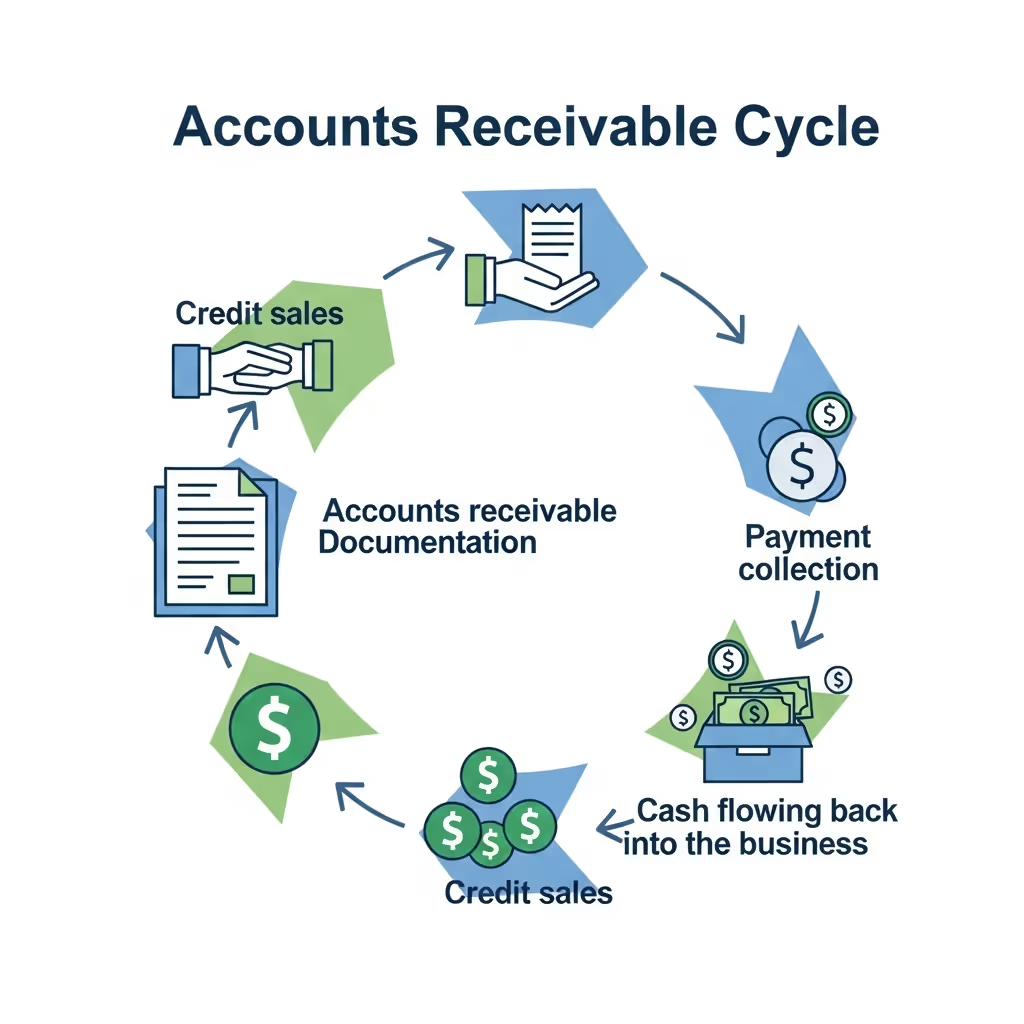
The accounts receivable turnover ratio measures how many times your business collects its average accounts receivable balance during a period (typically a year). It shows how efficiently you're converting credit sales into cash.
This metric reveals how well your collections process works. A higher ratio means faster payment collection, which improves cash flow and frees up working capital. A lower ratio suggests money sits in receivables longer than it should, straining your ability to cover expenses or invest in growth.
For B2B companies extending credit terms like Net 30 or Net 60, this ratio matters. The faster you collect what you're owed, the healthier your cash position.
Accounts Receivable Turnover Formula and Calculation
The formula is straightforward:
Accounts Receivable Turnover Ratio = Net Credit Sales / Average Accounts Receivable
Net credit sales represent your total sales on credit, minus any returns or allowances. You'll find this on your income statement.
Average accounts receivable smooths out fluctuations during the period. Calculate it by adding your accounts receivable balance at the beginning of the period to your ending balance, then dividing by two:
Average Accounts Receivable = (Beginning AR + Ending AR) / 2
These balances come from your balance sheet at the start and end of whatever period you're measuring (usually a year or quarter).
Accounts Receivable Turnover Ratio Example: Step-by-Step Calculation
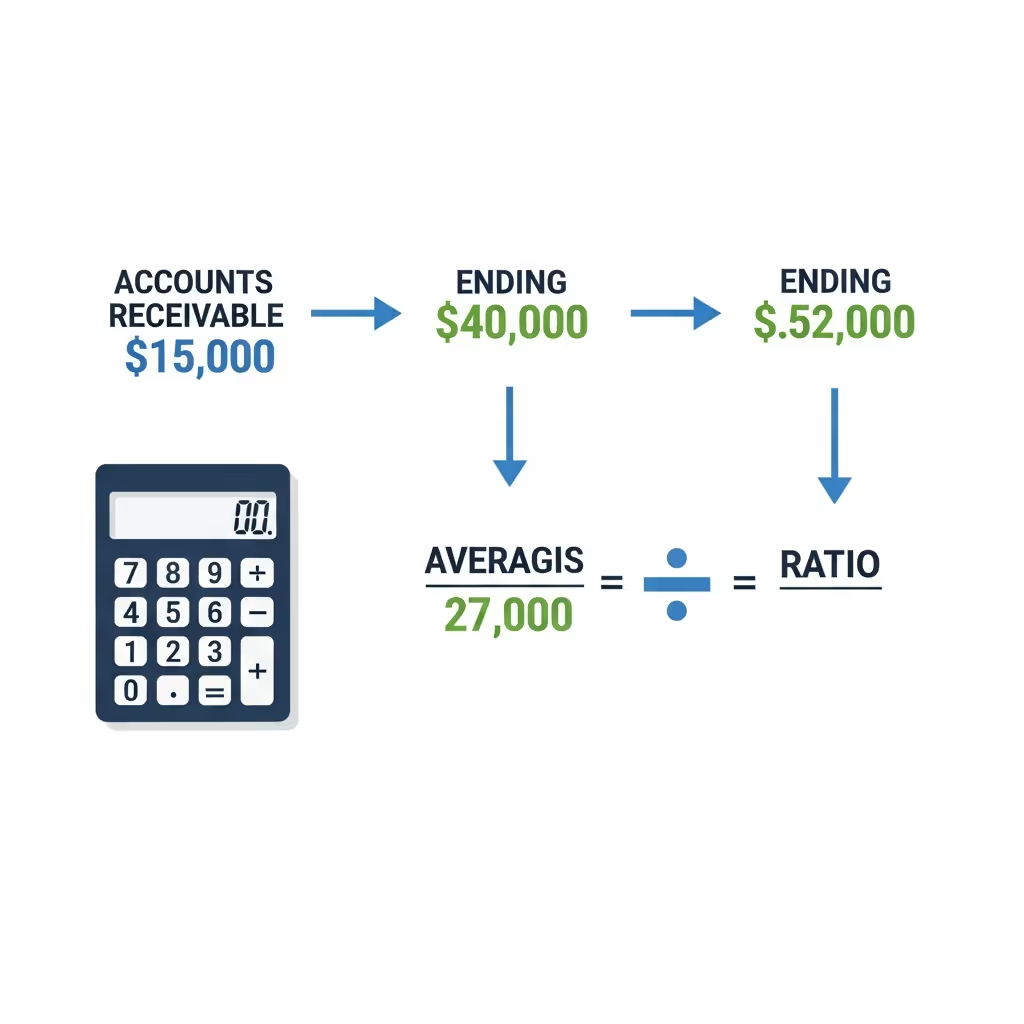
Let's work through a real example. Say your B2B software company had $800,000 in net credit sales last year. At the start of the year, accounts receivable sat at $60,000. By year-end, it was $80,000.
First, calculate average accounts receivable:
Average AR = ($60,000 + $80,000) / 2 = $70,000
Now apply the formula:
AR Turnover Ratio = $800,000 / $70,000 = 11.43
Your ratio is 11.43, meaning you collected your average receivables balance about 11 times throughout the year. The typical invoice was outstanding for roughly 32 days before payment (365 days / 11.43). That's reasonable for companies offering Net 30 terms.
What Is a Good Accounts Receivable Turnover Ratio?
There's no magic number that works for everyone. What counts as "good" depends on your industry, payment terms, and how you operate.
Professional services firms typically target between 5 and 10, which makes sense given longer billing cycles and project-based work. Retail businesses often see 8 to 12 times annually, reflecting faster payment cycles.
Your payment terms matter too. If you offer Net 60 terms, expecting the same ratio as a Net 15 company doesn't make sense. Compare yourself to businesses with similar models and terms, not against arbitrary benchmarks.
Accounts Receivable Turnover Ratio by Industry
Different industries have different payment cycles and customer relationships, which means your ratio needs context from your specific sector.
Healthcare providers typically see turnover ratios between 5 and 7 times annually. Insurance reimbursements, Medicare/Medicaid billing, and pre-authorization requirements slow the collection cycle. If you're in healthcare and hitting 6 times per year, you're on track.
Construction companies average 7 to 9, reflecting milestone-based billing and payment disputes. Manufacturing businesses often land in the 6 to 8 range, whilst SaaS companies with subscription models can reach 12 or higher since recurring billing accelerates collections.
How to Interpret Your Accounts Receivable Turnover Ratio
A higher ratio shows that cash moves quickly from invoices to your bank account. You're collecting efficiently, which strengthens cash flow and reduces the risk of bad debts.
A lower ratio suggests the opposite. Payments are dragging, whether from weak collections, overly generous credit terms, or customers who ignore due dates. That delays your access to cash and can strain operations.
But an extremely high ratio isn't always good. If your ratio dwarfs your industry average, you might be turning away creditworthy customers with overly strict payment requirements. That protects cash but throttles growth. The sweet spot balances fast collections with reasonable terms that keep customers buying.
Accounts Receivable Turnover in Days Formula
Some finance teams prefer tracking collection time in days instead of as a ratio. That's where Days Sales Outstanding (DSO) comes in.
The formula is:
Days Sales Outstanding = 365 / Accounts Receivable Turnover Ratio
Using the earlier example where the turnover ratio was 11.43, your DSO would be:
365 / 11.43 = 32 days
The average invoice takes 32 days to collect. For most people, that's easier to grasp than saying "we turn over receivables 11.43 times per year."
Days-based metrics feel more actionable. You can directly compare DSO to your payment terms (if you offer Net 30 and your DSO is 32, you're close to target).
High vs. Low Accounts Receivable Turnover: What Each Means
A high turnover ratio usually signals smooth collections. Customers pay quickly, your credit policies screen out slow payers, and cash flow improvement tools help cash convert from invoices without drama.
But there's a catch. If your ratio climbs far above your industry peers, you might be leaving sales on the table. Overly strict credit requirements or aggressive payment demands can scare off customers who'd otherwise buy from you.
Low ratios tell a different story. Customers take too long to pay, your follow-up process has gaps, or you're extending credit to buyers who shouldn't have it. That ties up cash you need for payroll, inventory, or expansion.
Accounts Receivable Turnover Ratio vs. Other Financial Metrics
Accounts receivable turnover doesn't work in isolation. It sits alongside other financial metrics that measure different parts of your operations.
The asset turnover ratio measures how well you generate revenue from all assets (equipment, inventory, receivables, everything). The formula is Net Sales / Average Total Assets. Accounts receivable is one component, but this ratio tells a broader story about how well you're using everything on your balance sheet to generate revenue.
The accounts payable turnover ratio flips the script. It measures how quickly you pay suppliers, calculated as Cost of Goods Sold / Average Accounts Payable. Compare your AR and AP turnover together and you'll spot cash flow timing gaps that matter for working capital. Collections software for small finance teams can help manage these gaps.
Limitations of the Accounts Receivable Turnover Ratio
The ratio has blind spots worth watching. Seasonal businesses see wild swings throughout the year that skew annual averages (a landscaping company's summer collections look stellar while winter months tank).
Credit policy changes distort comparisons too. Tighten your terms from Net 60 to Net 30 mid-year and your ratio jumps, but not because collections improved.
The formula only captures credit sales, ignoring cash transactions. Multi-channel invoice collections solutions cover both types. Two companies with identical ratios might have completely different cash positions depending on their sales mix.
Use this metric alongside DSO, cash flow statements, and aging reports.
How to Improve Your Accounts Receivable Turnover Ratio
Improving your ratio starts with setting clear credit policies before customers place orders. Screen new buyers, check credit references, and set appropriate limits based on payment history.
Consider early payment incentives like 2% off for paying within 10 days. That rewards prompt payers while improving your cash position.
Automate invoice delivery the moment work completes or products ship. The faster an invoice reaches your customer, the faster payment starts.
Make paying easy. AR automation tools with customer payment portals accept credit cards, ACH transfers, and wire payments. Every friction point in the payment process adds days to your collection cycle.
Automating Collections to Improve Accounts Receivable Turnover
Manual collections waste time and money. Processing each invoice manually costs $22.75 versus $2-$4 when automated, and 55% of B2B invoiced sales in the U.S. are overdue at any given time.
Automation fixes this. Reminders go out on schedule without someone needing to track them. Daloopa cut cash collection times by 50% using this approach. Follow-ups happen for every invoice, including the ones your team never gets around to. You get faster payment cycles and better turnover ratios without hiring more people.
How Invoice Butler Helps Companies Improve Accounts Receivable Turnover
We handle the collections work that improves your ratio. Our AR inbox management sends follow-ups for every unpaid invoice and manages responses when customers ask questions or request changes. Vellum's CEO offloaded AR using this exact process.
For supplier portals (Coupa, Ariba), we log in, upload invoices, and chase approvals. We eliminate the weeks these systems add to collection cycles.
We escalate when invoices age, identifying decision-makers and reaching out through email, LinkedIn, phone, or text. Companies using Invoice Butler have cut DSO by 50+ days and recovered overdue payments.
Final Thoughts on Your Accounts Receivable Turnover Ratio
Understanding how to calculate accounts receivable turnover gives you a number to track, but collecting faster requires fixing the follow-up process behind it. Most companies know their ratio lags but don't have time to chase every invoice manually. Automation handles the repetitive work of reminders, portal management, and escalation without adding headcount. Your cash converts faster when collections run consistently instead of whenever someone finds time.
FAQ
How do I calculate my accounts receivable turnover ratio?
Divide your net credit sales by your average accounts receivable for the period. To get average AR, add your beginning and ending receivables balances and divide by two (both numbers come straight from your balance sheet, while credit sales appear on your income statement).
What does a high accounts receivable turnover ratio actually mean for my business?
A high ratio means you're collecting payments quickly, which improves cash flow and reduces the risk of bad debts. However, if your ratio towers over your industry average, you might be turning away good customers with overly strict payment terms.
How can I improve my accounts receivable turnover ratio without damaging customer relationships?
Start by automating invoice delivery the moment work finishes, making payment easy through multiple methods (credit cards, ACH, wire), and offering early payment incentives like 2% off for paying within 10 days. Consistent, professional follow-ups matter more than aggressive tactics. Automation helps you stay on top of every invoice without the awkward manual chasing.
Is Days Sales Outstanding (DSO) the same as accounts receivable turnover?
They measure the same thing from different angles. DSO tells you how many days the average invoice takes to collect (calculated as 365 divided by your turnover ratio), while the turnover ratio shows how many times per year you collect your average receivables balance. Most people find DSO easier to interpret since you can compare it directly to your payment terms.
Why does my accounts receivable turnover ratio fluctuate throughout the year?
Seasonal businesses, mid-year credit policy changes, and variations in your sales mix between cash and credit transactions all create fluctuations. A landscaping company's summer collections will look brilliant whilst winter months suffer. Annual averages smooth these out, but quarterly tracking gives you a clearer picture of what's actually happening with your collections process.