Table of Contents

You're covering payroll with cash that technically belongs to you. It just hasn't arrived yet because three dozen invoices are sitting unpaid, aging quietly while your team drafts reminders and waits for replies that may or may not come. Revenue looks fine on paper, but cash flow feels unpredictable month to month, and your DSO keeps climbing without a clear reason why. These are signs your business needs AR automation, and ignoring them means you're funding an interest-free loan to customers who never asked for one. The gap between earning revenue and actually receiving it is where working capital goes to die, but it's also where the fastest fixes live if you know what to look for.
TLDR:
- Your business needs AR automation if team hours disappear to payment chasing each week
- Rising DSO above 36.8 days means your collections process has stopped working properly
- Automation cuts DSO by 7 days on average and saves $440,000 annually in labor costs
- Manual processes create payment disputes through data errors and inconsistent follow-ups
- Invoice Butler handles follow-ups, portal submissions, and escalations so your team can focus elsewhere
7 Clear Signs Your Business Needs AR Automation in April 2026
Manual accounts receivable quietly bleeds cash, time, and focus from your business. The question isn't whether AR automation is worth considering. The question is whether you've already waited too long.
Some signs are obvious. Others sneak up on you. If any of the seven below sound familiar, your collections process is costing you more than you think and the fix is closer than you'd expect.
- Your team loses hours every week chasing payments
- Your DSO keeps climbing with no clear reason why
- Cash flow feels unpredictable month to month
- Growth means hiring, not scaling
- Disputes and invoice errors consume your day
- You have no real-time view of what's outstanding
- Customer payments are consistently, reliably late
Your Team Spends Hours Every Week Chasing Payments
Manual collections work has a way of consuming entire mornings before anyone notices. Pulling aging reports, drafting reminder emails, logging responses, following up on the follow-ups and it compounds fast.
The numbers aren't flattering. Manual invoice processing costs businesses an average of $15 per invoice, and without automation, processing a single invoice takes an average of 17.4 days. Multiply that across your outstanding invoices and you're looking at serious money spent just to ask people to pay you.
The real cost, though, is what your team isn't doing. Every hour spent on payment chasing is an hour not spent analyzing trends, strengthening customer relationships, or closing the books faster. That's the opportunity cost that never shows up on an invoice, but it's very real.
Your Days Sales Outstanding Keeps Climbing
Days Sales Outstanding (DSO) is one of those metrics that looks fine until it doesn't. A slow creep upward over a few quarters is easy to dismiss, but it's one of the clearest signals that your collections process has a problem.
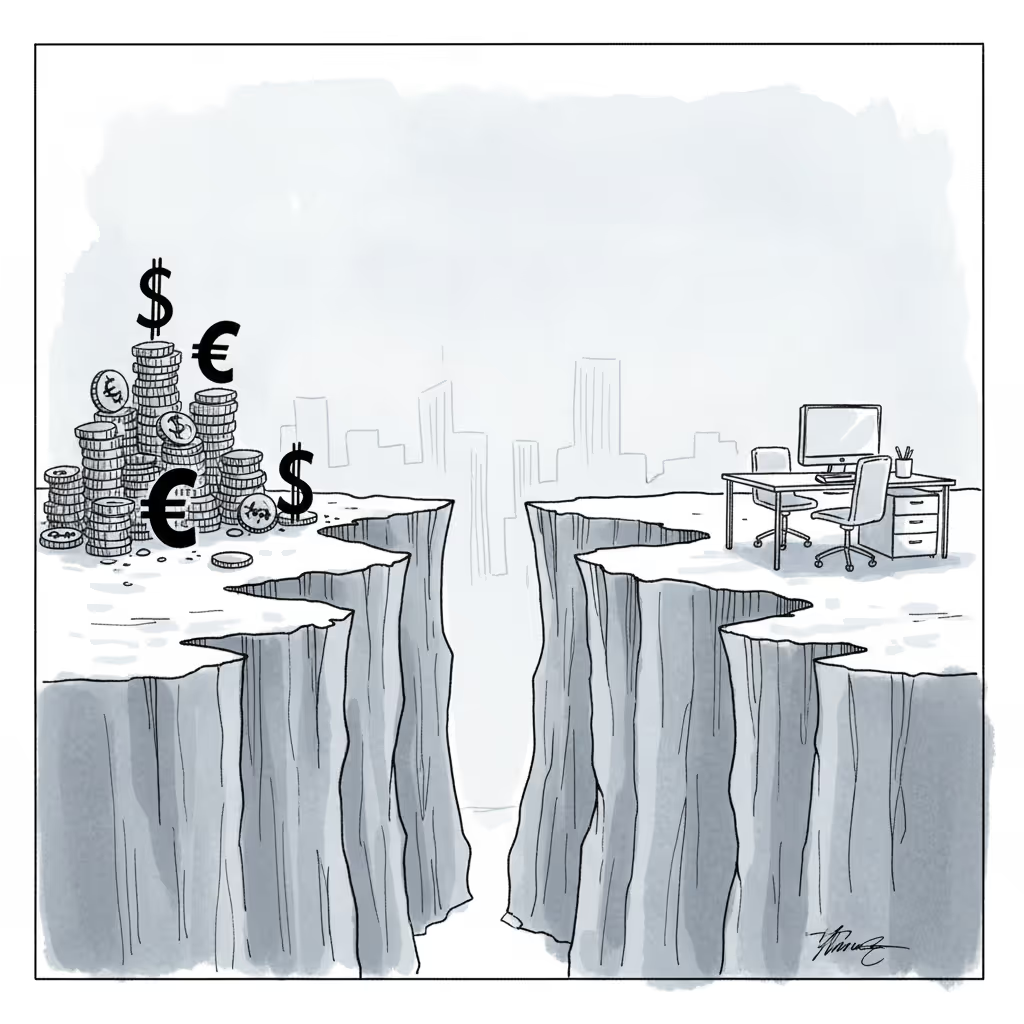
The benchmark worth knowing: average DSO for domestic trade receivables hit 36.8 days in Q3 2024 (Atradius Payment Practices Barometer). If yours is higher, or trending that direction, you're effectively giving your customers an interest-free loan they never asked for.
What DSO actually measures is the gap between earning revenue and receiving it. Widen that gap and your working capital takes the hit. You're covering payroll, vendor costs, and overhead with cash that technically belongs to you, it just hasn't arrived yet.
The good news is that this is fixable. Mid-sized companies that deploy intelligent AR suites can shave seven days off average DSO and save $440,000 annually through labour reduction and early payment capture. Seven days might sound small, but in cash flow terms, it moves the needle fast.
Cash Flow Problems Are a Constant Struggle
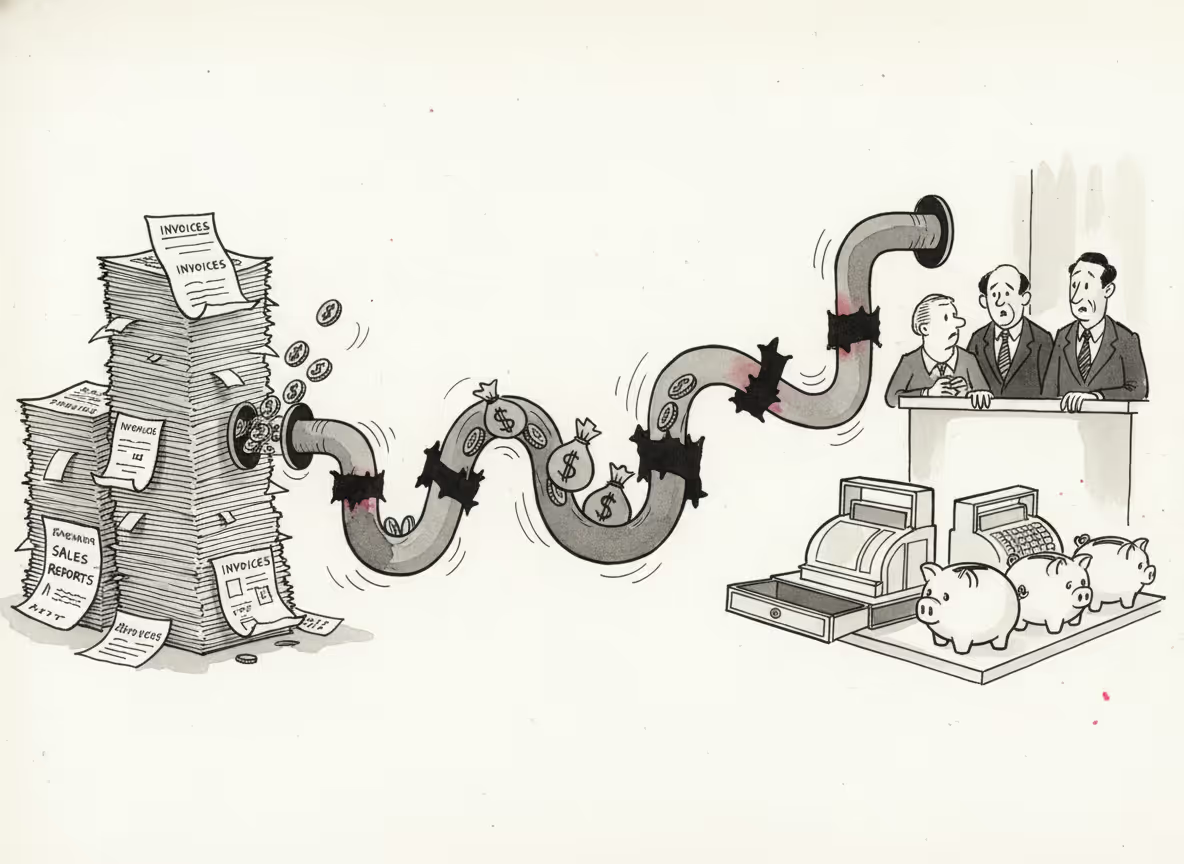
Strong sales numbers can mask a broken collections process for a long time. Revenue looks fine on paper. The pipeline is healthy. But cash never seems to be where you need it, when you need it.
The data here is sobering: 82% of small businesses fail due to cash flow problems, and 88% report disruptions in the past year. Fewer than one-third take proactive steps to prevent them. That gap between knowing there's a problem and fixing it is where businesses get hurt.
Slow AR is usually the culprit. Every invoice sitting unpaid is cash you've already earned but can't spend. You can't reinvest it, pay down vendor balances, or hire with it. You just wait.
Scaling Your Receivables Process Means Hiring More People
Growth should feel good. But if every new client you land means more AR follow-up work piling onto an already stretched team, you're not really scaling and you're adding weight.
The math is unforgiving. Hire an AR specialist and you're looking at salary, benefits, training, and turnover costs. AR roles churn too. The work is repetitive, the wins are invisible, and skilled finance staff want to move into more strategic roles as quickly as they can.
Automation handles ten invoices or ten thousand with the same consistency, zero additional headcount required.
Payment Disputes and Errors Are Eating Up Time
One wrong PO number or mismatched billing details doesn't delay payment once. It kicks off a chain of back-and-forth that can stretch across weeks, pulling your team into repeated investigation, correction, and resubmission cycles.
Manual AR processes are where these errors breed:
- Data entry mistakes slip through without a second set of eyes to catch them before sending.
- Invoices reach the wrong contact, sitting unread until someone notices the due date has passed.
- Small customer change requests (a reference number, updated billing details) land in inboxes and wait.
Every dispute costs your team time twice: once to fix it, and again to follow up. AR automation catches the most common errors before an invoice ever leaves your system, and handles routine correction requests without pulling anyone off higher-value work.
You Have No Real-Time Visibility Into Your Receivables
Spreadsheets are fine for tracking static data. Receivables aren't static. By the time you've updated a sheet, checked it against your inbox, and shared it with the team, something has already changed.
That lag creates blind spots. You can't see which accounts are going quiet, which invoices are approaching risky aging thresholds, or where follow-ups have stalled. So instead of getting ahead of late payments, you're catching them after the fact.
Finance leaders managing AR reactively aren't making strategic decisions. They're doing triage. Real-time visibility flips that: when you can see exactly what's outstanding, what's been followed up, and what needs escalation right now, collections becomes something you manage instead of something that manages you.
Customer Payments Consistently Arrive Late
Late payments are rarely about customers who can't pay. More often, they're about customers who haven't been reminded, or who've learned from experience that your reminders are easy to ignore.
Payment behavior is trained. If a customer misses a due date and hears nothing for two weeks, they've learned something: your follow-up is soft. That pattern repeats until someone tightens it.
Inconsistent reminders are the root cause. A manual process means follow-ups go out when someone has time, not when the cadence demands it. Customers fall through the cracks, invoices age quietly, and by the time anyone notices, the conversation is awkward.
AR automation removes the inconsistency entirely. Every invoice gets followed up on schedule, every time, regardless of how busy your team is.
How Invoice Butler Turns These Signs Into Competitive Advantages
Each of the seven signs above points to the same root problem: AR work that belongs off your plate is still sitting on it.
Invoice Butler takes that work away entirely. Our team monitors your AR inbox, sends timed follow-ups, handles customer replies, logs into supplier portals like Coupa and Ariba, and escalates overdue invoices to decision-makers when initial contacts go quiet. If someone needs a call, we make it. If a customer only responds on Slack or LinkedIn, we go there.
The AI handles routine tasks. Our AR specialists step in for anything that needs judgement. You get speed without losing the human touch on relationships that matter.
Setup takes under an hour. No new tools for your team to learn. Just a collections process that runs without you and actually gets paid.
Final Thoughts on When Manual AR Stops Working
Once you spot these patterns, waiting won't make them better. If AR automation feels like something you should have done six months ago, you're probably right. Invoice Butler takes over the entire collections workflow so your team stops chasing payments and your cash flow stops feeling like guesswork. Talk to us for 15 minutes and we'll show you exactly what changes on your end (spoiler: almost nothing).
FAQ
Can I automate AR collections without losing the personal touch with customers?
Yes. Invoice Butler combines AI automation with AR specialists who review sensitive situations, so routine follow-ups happen automatically while important customer relationships get handled with care and context. Communications come from your company (not a third-party collections firm) and are tailored to sound like your team, preserving goodwill whilst getting paid.
What's the fastest way to reduce DSO without hiring more staff?
AR automation cuts DSO by an average of seven days for mid-sized companies, often saving £440,000 annually through faster payment capture and labor reduction. Invoice Butler deploys in under an hour and starts working immediately with no training, no new headcount, no complex rollout.
How does Invoice Butler handle supplier portals like Coupa and Ariba?
We log in to customer procurement portals on your behalf, upload invoices, fill out required forms, chase approval statuses, and follow up until payment clears. You don't touch the portal at all; our team takes care of the entire tedious process so you can focus elsewhere.
AR automation vs hiring an AR specialist?
Hiring an AR specialist means salary, benefits, training, turnover costs, and ongoing management overhead, often tens of thousands per year for work that's repetitive and high-churn. Invoice Butler handles the same collections workload at a fraction of the cost, with faster follow-ups and no turnover risk.
When should I consider AR automation for my business?
If your team spends more than a few hours weekly chasing payments, your DSO is climbing, or cash flow feels unpredictable despite healthy sales, you're already at the point where automation pays for itself quickly. Many clients see ROI within the first 30 days just from collecting overdue invoices that were slipping through the cracks.