Table of Contents

The average small business has £17,500 sitting in past due invoices at any given moment, which means that money is technically yours but completely unavailable. You're paying interest on a credit line while clients sit on invoices that are 20, 30, sometimes 45 days late. What makes this especially frustrating is that most of those clients aren't trying to dodge payment, they just forgot or deprioritized it, which means the right reminder at the right time would've solved the problem weeks ago.
TLDR:
- Past due invoices happen when payment deadlines pass, often due to forgotten emails or approval delays
- 61% of B2B invoices are paid late, with the average small business owed £17,500 at any given time
- Send reminders at days 7, 14, and 30 past due, escalating tone each time while staying professional
- 60% of customers pay on time simply because they received a reminder, not because of cash flow issues
- Invoice Butler automates your entire AR workflow, handling reminders, client replies, and escalations
What Does Past Due Invoice Mean and When Does It Occur
A past due invoice is one where the agreed payment deadline has passed without the client settling what they owe. The moment that due date ticks over, the invoice moves from "outstanding" to "past due."
This tends to happen for a few common reasons:
- The client simply forgot, especially if they're managing dozens of vendor relationships at once.
- Payment approval processes got held up internally on their end.
- The invoice was sent to the wrong contact or buried in an inbox.
- There's a genuine cash flow problem on the client's side.
The Real Financial Impact of Past Due Invoices on Your Business
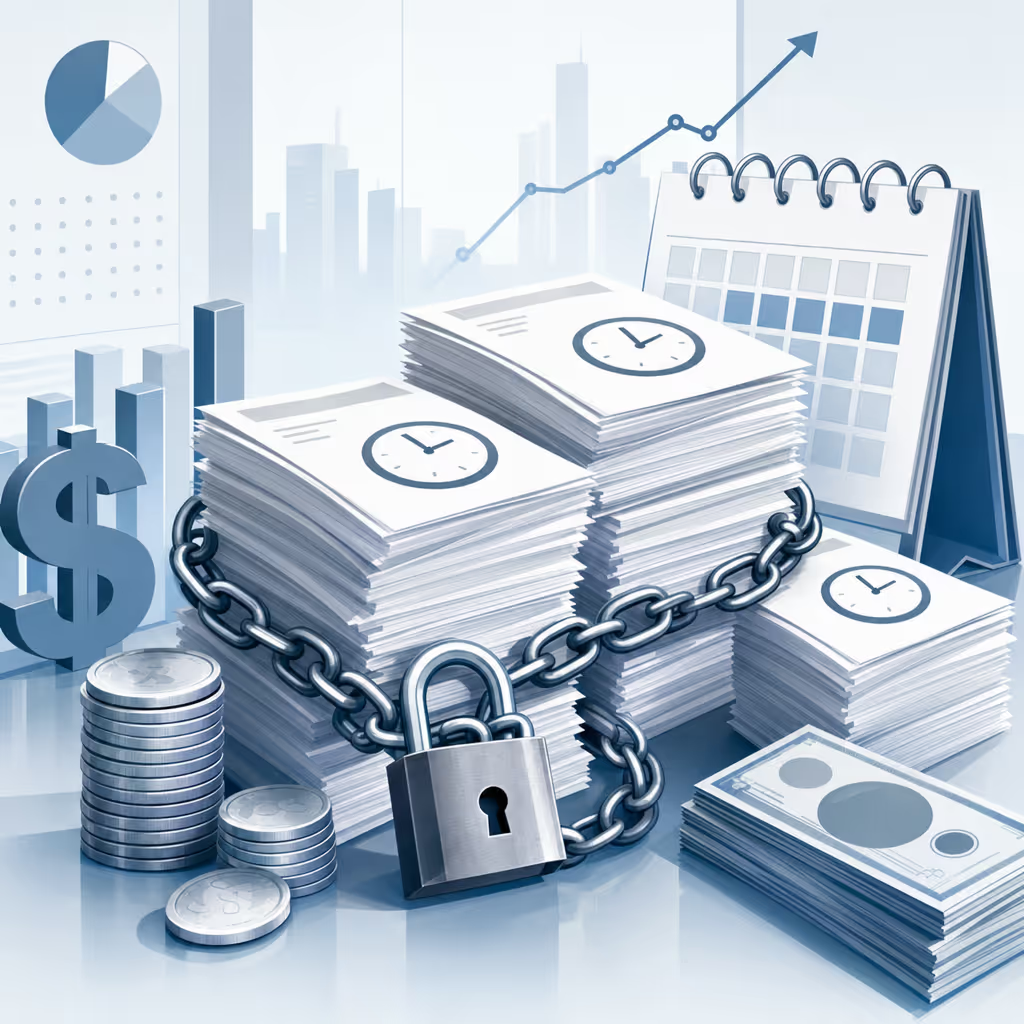
61% of B2B invoices in the US are paid late. For most businesses, that's not a bad month. That's the default state of receivables.
The average small business with outstanding invoices is owed $17,500 at any given moment. That's capital sitting idle while you may be drawing on credit lines to cover payroll or operations, paying interest on your own money.
The ripple effects compound from there. Finance teams get pulled into manual follow-up work instead of higher-value tasks. Supplier relationships strain when your own payments slow down. And the longer an invoice ages, the harder collection becomes.
Common Reasons Invoices Become Past Due
Invoices slip past due for a handful of predictable reasons. Knowing them helps you get ahead of the problem before it starts.
- Clients sometimes genuinely forget, especially when your invoice lands during a busy period or gets buried in a crowded inbox.
- Payment terms weren't clear from the start, leaving clients uncertain about when payment was actually expected.
- The invoice contained errors like wrong amounts or missing details, giving the client a reason to delay while waiting for a correction.
- Cash flow problems on the client's end mean they're prioritising other obligations first.
How to Write an Effective Past Due Invoice Email
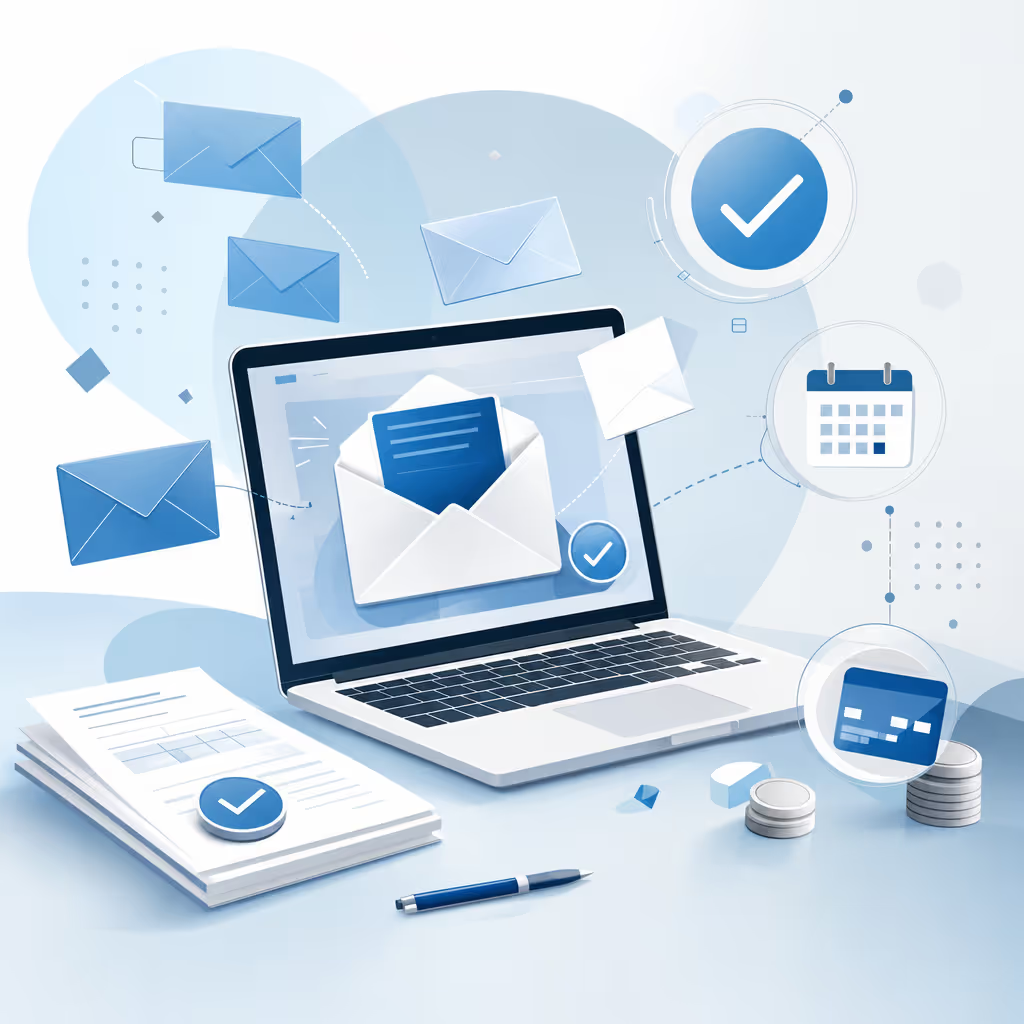
A strong past due invoice email has three parts working together: a subject line that actually gets opened, a body that gets to the point, and one clear ask.
For the subject line, specific beats vague. "Invoice #1042 - 14 Days Overdue" gives immediate context and leaves no room for "I didn't realise."
In the body:
- Include the invoice number, amount owed, and original due date so there is zero ambiguity about what you are chasing.
- Keep the tone calm and factual, not accusatory, since the person on the other end may still be a valued long-term client.
- Offer an easy way to flag disputes or questions, because sometimes the hold-up is a mismatch in records instead of bad faith.
Close with a single, direct call to action: a payment link or a specific reply-by date. One clear door is always better than five options.
Past Due Invoice Email Templates for Every Stage
Timing your follow-ups well makes a real difference. Here are three ready-to-use email templates covering the most common stages of chasing payment.
Friendly First Reminder (1-7 Days Overdue)
Subject: Friendly Reminder: Invoice #[Number] Due [Date]
"Hi [Name], just a quick note that invoice #[Number] for [Amount] was due on [Date]. If you've already sent payment, please disregard this. Otherwise, feel free to reach out with any questions."
Firm Follow-Up (8-21 Days Overdue)
Subject: Past Due Invoice #[Number] - Payment Required
"Hi [Name], invoice #[Number] remains unpaid as of [Date]. Please arrange payment of [Amount] at your earliest convenience. Let me know if there's anything holding this up."
Final Notice (22+ Days Overdue)
Subject: Final Notice: Invoice #[Number] Requires Immediate Attention
"Hi [Name], this is a final notice regarding invoice #[Number] for [Amount], now [X] days past due. Payment must be received by [Date] to avoid further action. Please contact us immediately."
Creating a Structured Follow-Up Schedule
A structured cadence removes the guesswork. Here's a follow-up schedule that keeps pressure consistent without straining relationships:
Irregular follow-ups let clients quietly deprioritize your invoice. A predictable schedule signals that you're paying attention, and most clients will settle long before that final notice arrives.
Best Practices for Past Due Invoice Letters and PDFs
When formatting a past due invoice letter or PDF, content wins over design. Your document needs these elements clearly visible at the top:
- Company letterhead and full business details, so there is no ambiguity about who the invoice is coming from
- Client's billing name and contact information, confirmed accurate before anything goes out
- Invoice number, amount owed, and original due date, all in plain sight
- Payment instructions and any applicable late fee terms
Word format works well for building a reusable template your team can edit quickly. For sending, convert to PDF first. Files render differently across devices, and a formatting issue becomes a convenient excuse for delay.
Keep dated copies of every version you send. If a dispute escalates to collections or legal proceedings, that paper trail is what substantiates your claim.
Setting Clear Payment Terms to Prevent Past Due Invoices
Clear payment terms are your first line of defence against overdue invoices. When clients know exactly what's expected, late payments happen far less often.
A few things worth spelling out on every invoice:
- Due dates written as specific calendar dates, not vague terms like "net 30" without further context
- Late payment fees or interest charges that apply after the due date
- Accepted payment methods so there's no friction at the finish line
- Early payment discounts if you want to reward prompt clients
How to Reply Professionally When Your Own Payment Is Late
Being on the receiving end of a past due notice puts you in an awkward spot, but how you respond matters more than the fact that you're late.
Reach out before they follow up again. A short, honest message goes further than silence:
- Acknowledge the delay directly without over-explaining
- Give a specific payment date, not a vague promise like "soon"
- If cash flow is tight, propose a partial payment now with a clear schedule for the rest
Suppliers generally respect honesty over excuses. A note that says "we're experiencing a short-term delay and will pay $X by [date]" keeps the relationship intact far better than radio silence.
Keep the tone professional and the commitment realistic. Missing a payment plan you proposed yourself is worse than the original delay.
Automating Past Due Invoice Reminders and Follow-Ups
60% of customers pay on time simply because they received a reminder. That's a memory problem, not a collections crisis, and automation fixes it without anyone lifting a finger.
A good automated sequence fires reminders at pre-set intervals, reaches clients across multiple channels (email, text, Slack, phone), and logs every touchpoint without any manual input. When a client pays, the sequence stops. When they don't, it escalates. No one has to remember to follow up or check a spreadsheet.
Tracking payment velocity (invoice-to-paid speed), tells you which cadences are doing the work so you can sharpen them over time.
When to Escalate Past Due Invoices Beyond Email
Email stops working at a certain point. The signals are clear: no response after multiple attempts, a contact who's suddenly "unavailable," or messages bouncing entirely.
When that happens, it's time to move:
- Switch to phone calls or texts if you haven't already
- Find a senior contact like a CFO or finance director and reach out directly
- Hold new work until payment arrives
- Issue a formal demand letter or hand the account to a collections agency
Legal action is a last resort. Small claims court handles lower amounts without requiring an attorney, but every communication should be documented before you go that route.
Legal Considerations and Documentation for Past Due Invoices
Late fees are only enforceable if your original contract or invoice explicitly stated them. Many states cap the maximum interest rate you can charge, so check your state's usury laws before adding charges.
Keep a documented paper trail from day one: sent invoices, delivery confirmations, every follow-up, and any client responses. If a dispute reaches small claims court or a collections attorney, that record is your case.
One compliance note worth knowing: the Fair Debt Collection Practices Act (FDCPA) governs third-party collectors, not you directly. But if you hand the account to a collections agency, that agency must follow those rules, so choose one carefully.
How Invoice Butler Handles Past Due Invoice Management for You
Instead of piecing together reminder schedules yourself, Invoice Butler takes over the entire workflow. We monitor your AR inbox, send professionally timed reminders, handle client replies and disputes, and stop follow-ups the moment payment lands. When contacts go quiet, we escalate directly to decision-makers.
Our AI handles the routine work while our AR specialists step in for anything needing a human judgment call. No spreadsheet tracking, no manual chasing, no awkward emails straining client relationships. Just consistent collections running quietly in the background.
Final Thoughts on Past Due Payment Collection
Getting paid on time shouldn't require you to become a collections expert or spend half your week writing overdue payment reminders. A structured system does the heavy lifting, and you get back to what you're actually good at. We'd be happy to walk you through how Invoice Butler works if you want to see what automated AR looks like in practice. Your invoices get paid, your clients stay comfortable, and you reclaim hours every week.
FAQ
What's the difference between a past due invoice reminder and a strong letter for outstanding payment?
A past due invoice reminder is typically sent within the first 1-14 days after the due date and keeps a friendly, factual tone to prompt payment without assuming anything's wrong. A strong letter for outstanding payment comes later (usually 22+ days overdue) and carries firmer language, references potential next steps like late fees or collections, and signals that the situation requires immediate attention.
Can I automate past due invoice follow-ups without damaging client relationships?
Yes, if the automation sounds human and adjusts based on client behavior. The best systems send professionally timed reminders, stop immediately when payment arrives, and escalate only when necessary - all whilst maintaining a polite tone that comes from your company instead of sounding like a robotic collections notice.
How do I reply for late payment professionally when I'm the one who's late?
Contact them before they follow up again, acknowledge the delay directly, and give a specific payment date instead of vague promises. A short message like "We apologize for the delay on invoice #[Number]. We'll send $[Amount] by [Date]" shows respect for the relationship and keeps your word valuable for future interactions.
When should I escalate a past due invoice beyond email reminders?
Escalate when you've sent multiple emails with no response, contacts have gone silent or "unavailable," or messages are bouncing entirely. At that point, switch to phone calls, reach out to senior contacts like the CFO, or consider holding new work until payment arrives - email has simply stopped being the right channel.
What should a past due invoice template include to get paid faster?
Your past due invoice template (whether Word, PDF, or email) needs the invoice number, exact amount owed, original due date, and clear payment instructions all visible at the top. Include your business details and the client's billing information to remove any ambiguity, and always convert Word documents to PDF before sending to prevent formatting issues becoming excuses for delay.