Table of Contents

When you're weighing Invoice Butler vs Growfin, the Invoice Butler vs Growfin decision isn't really about AI sophistication. Both services use it. The AR comparison is about who's doing the actual work. Growfin surfaces which accounts need attention, forecasts payment timing, and drafts outreach messages for your team to review and send. Your team of collectors (if you even have one) still need to log in, rank their work, and execute. Invoice Butler sends the follow-ups, answers the replies, corrects the PO numbers, and chases the payments while you're doing something else. For businesses stretched thin, a Growfin comparison misses the point if it only looks at features, because features require someone to use them every single day.
TLDR:
- Growfin provides forecasting tools and prioritised worklists, but your team still drafts and sends every message.
- Invoice Butler handles collections on your behalf, sending follow-ups from your domain without daily management.
- Growfin takes weeks to onboard with CRM and ERP integrations; Invoice Butler is live in under an hour.
- Invoice Butler manages supplier portal submissions (Coupa, Ariba, Tipalti) and answers customer replies for you.
- Invoice Butler works best if your AR problem is capacity + a lack of a dedicated collections hire; one customer recovered $300,000+ in overdue invoices.
What is Growfin.ai?
Growfin.ai is an AI-driven AR management tool built for B2B finance teams that want more structure in their collections workflow. Its core focus is cash flow predictability: the product forecasts when payments are likely to arrive, surfaces a ranked worklist for AR staff, and generates personalized outreach messages so collectors know where to direct their attention each day.
Worth noting is how that last part works in practice. Growfin.ai drafts the messages; your team sends them. The AI handles the analytics and recommendations, but execution stays with your existing AR headcount.
Who this model suits
For B2B companies with a dedicated collections team, that works well. There are three reasons finance leaders tend to like it:
- The ranked worklist takes the guesswork out of which accounts need attention first, so your collectors spend time on the right invoices.
- Payment predictions give finance leaders a clearer picture of incoming cash, which is genuinely useful for short-term planning.
- Centralized dashboards consolidate AR performance data that would otherwise live across scattered spreadsheets.
If your team has the headcount to act on those recommendations daily, Growfin.ai gives them sharper tools to do so.
What is Invoice Butler?
Invoice Butler is an accounts receivable service built for small and mid-sized businesses that don't have a dedicated AR team. Instead of giving you a dashboard to manage, it handles collections on your behalf, sending follow-up emails that come directly from your own domain and sound like they're from your team.
The setup takes under an hour. You connect your accounting software (QuickBooks Online, Xero, NetSuite, or others), configure your preferences, and the Butler gets to work. No daily oversight required.
Here's what that looks like in practice:
- Automated follow-up sequences go out under your name, preserving the customer relationship without introducing a third party into the conversation.
- Invoice disputes and minor corrections (like PO numbers or billing details) get handled without pulling you in.
- You get visibility into what's outstanding and what's moving, without needing to manage it yourself.
One customer recovered $300,000+ in overdue invoices. Another cut DSO by over 50 days. A third saw ROI within 30 days of getting started.
Predictive Analytics vs Active Collections Execution
Growfin leans into forecasting. Its AI reads your invoice data, flags which accounts are likely to go delinquent, and gives your team a prioritised worklist to act on. That's genuinely useful if you have a dedicated AR team who can act on those signals every day.

Invoice Butler works differently. Instead of only predicting which invoices might become problems, it gets ahead of them through consistent, automated follow-up that runs without anyone managing it. Reminders go out on schedule, replies get handled, disputes get flagged, and payments get chased, all without your team needing to log in and take action. Invoice Butler contextually handles customer responses and responds.
The distinction matters if your team is stretched thin. Predictive insights only help if someone has the bandwidth to act on them. If that capacity doesn't exist, you need something that acts on your behalf.
- Growfin's forecasting models are well-regarded for finance teams that want visibility into cash flow risk before it materialises.
- Invoice Butler focuses on execution: following up, responding, and collecting, so the work gets done regardless of your team's availability.
| Feature | Invoice Butler | Growfin |
|---|---|---|
| Who does the collections work | The service handles collections on your behalf, sending follow-ups and answering replies without daily oversight | Your AR team drafts and sends messages using AI-generated recommendations and worklists |
| Setup and onboarding time | Under one hour to connect accounting software and go live | Multi-week (or months) implementation with CRM and ERP integrations, workflow configuration, and team training |
| Customer reply handling | Answers customer replies automatically, including PO corrections, W-9 requests, and banking detail confirmations | Centralizes customer responses on a dashboard, but your team drafts the actual replies |
| Supplier portal management | Manages portal submissions directly for Coupa, Ariba, Tipalti, and others on your behalf | Does not appear to offer hands-on supplier portal management based on publicly available information |
| Daily management required | None after onboarding; the Butler runs collections without your involvement | AR staff need to log in daily to action alerts, manage worklists, and send messages |
Implementation Timeline and Resource Requirements
Getting set up with either service looks quite different depending on your team size and how much time you can actually spare. AR automation platforms vary widely in their implementation approach, with some requiring extensive configuration and others designed for immediate deployment.
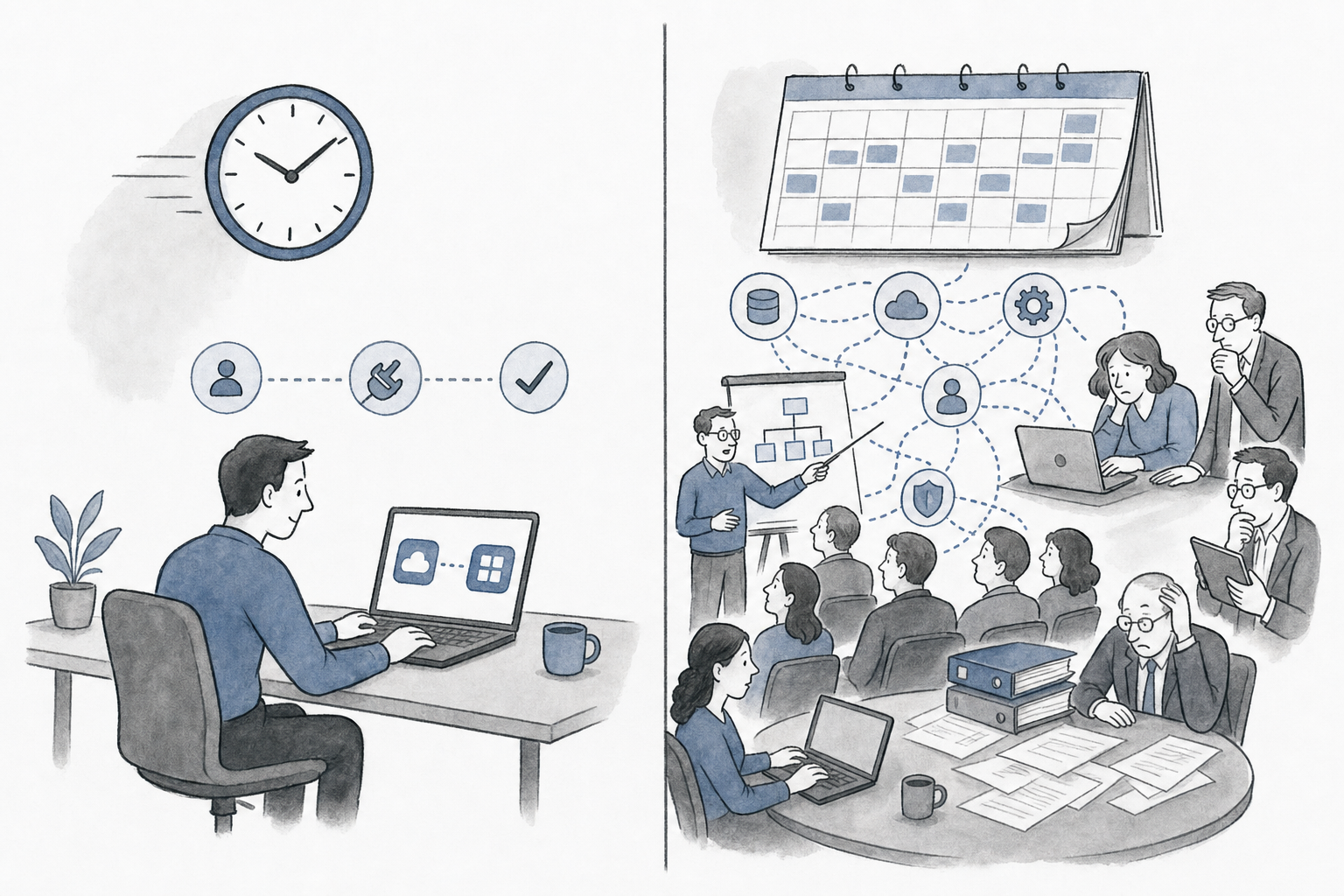
Growfin's implementation is built around enterprise onboarding. Expect a dedicated setup process involving CRM and ERP integrations, workflow configuration, and training sessions for your AR team. That's not a knock on them (configurable tooling takes time to configure properly), but you're looking at weeks before you're fully live, and your team will be operating the system day to day once you are.
Invoice Butler takes about 30 minutes to onboard. You connect your accounting software, share some context about your business, and the Butler's team takes it from there. There's no daily system to manage because the work gets done for you.
Here's what that difference looks like in practice:
- Growfin requires dedicated AR staff to configure rules, monitor dashboards, and action alerts on an ongoing basis.
- Invoice Butler requires none of that. Once onboarded, your involvement is approval-level, not execution-level.
If your team has the headcount and appetite for a hands-on AR system, Growfin's setup investment makes sense. If you'd rather hand the whole thing off, Invoice Butler is ready in under an hour.
Supplier Portal Management and Multi-Channel Collections
Supplier portals like Coupa, Ariba, and Tipalti are a genuine headache for AR teams. You submit an invoice, it disappears into a portal queue, and chasing it means logging into yet another system manually.
Invoice Butler handles supplier portal submissions for you. Instead of training your team on each portal's quirks, the service manages those submissions directly, so invoices reach buyers through whatever channel they require.
On the collections side, Invoice Butler runs multi-channel follow-up across email, SMS, and phone calls, all sent from your own company's name. Customers receive polite, on-brand reminders that feel like they came from your team, because they did.
Growfin focuses on AI-assisted collections workflows and customer collaboration features. Based on publicly available information as of June 2026, it does not appear to offer hands-on supplier portal management or done-for-you outreach in the same way.
If portal submissions and multi-channel follow-up are part of your daily AR burden, that distinction is worth weighing carefully.
Customer Reply Handling and Context Management
Growfin centralizes customer responses on its dashboard and reduces the internal back-and-forth your finance team has to manage. That's genuinely useful. But when a customer replies disputing a line item, asking about payment terms, or requesting updated banking instructions, drafting that response still falls to your team.
Invoice Butler answers the replies. PO corrections, W-9 requests, banking detail confirmations, payment method changes, all handled without pulling you into the thread. Each customer's payment preferences, communication history, and required documents are stored centrally, so the institutional knowledge your team has built up doesn't disappear when someone leaves.
For businesses managing hundreds of customers, each with their own quirks and processes, that context layer matters more than it might first appear. The Butler keeps a full picture of every relationship, so nothing falls through the cracks when your team is stretched thin.
Why Invoice Butler is the Better Choice
Invoice Butler takes a fundamentally different approach from Growfin. Where Growfin gives your team a smarter set of AR tools to operate, Invoice Butler acts as your AR team. The work gets done for you.
That distinction matters most if you're a small or mid-sized business without a dedicated collections function. You're not logging into dashboards, tweaking workflows, or chasing down AI suggestions. The Butler handles outreach on your behalf, in your name, preserving your customer relationships throughout.
Here's what that looks like in practice:
- Invoices go out, reminders follow automatically, and escalations happen without you lifting a finger.
- Communications come from your team's email, so customers never feel like they're dealing with a third party.
- Setup takes under an hour, with integrations for QuickBooks Online, Xero, NetSuite, and others connecting in under five minutes.
If your AR problem is capacity, not sophistication, Invoice Butler solves the right problem.
Final Thoughts on Selecting Your AR Approach
Your AR problem determines which service makes sense. Growfin works well when you have collectors who need better prioritization. Invoice Butler works when you don't have collectors at all. The setup takes about 30 minutes, and you'll see whether your overdue invoices move without daily involvement. Talk to us to figure out if your AR volume warrants handing it off entirely.
FAQ
How do I decide between Growfin.ai and Invoice Butler if I don't have a dedicated AR team?
If you don't have existing AR headcount, Invoice Butler is the better fit. Growfin gives your team smarter tools to operate, but someone still needs to action the insights, send the messages, and manage the workflows daily. Invoice Butler handles collections for you, so the work gets done without needing staff to execute it.
What happens when customers reply to collection emails with questions or disputes?
Invoice Butler answers those replies on your behalf. PO corrections, W-9 requests, payment method updates, and banking detail confirmations all get handled without pulling you into the thread. Growfin centralizes customer responses on a dashboard, but drafting the actual replies still falls to your team.
Which service is better for businesses selling to large enterprises with supplier portals?
Invoice Butler manages supplier portal submissions directly (Coupa, Ariba, Tipalti, and others), logging in and uploading invoices on your behalf. Growfin, based on publicly available information as of June 2026, does not appear to offer hands-on portal management in the same way, though we recommend confirming with Growfin directly if portal support is a deciding factor for your business.
How long does it take to get either service up and running?
Growfin's implementation is built for enterprise onboarding with multi-week setup involving integrations, workflow configuration, and team training. Invoice Butler's full setup takes under an hour: you connect your accounting software, share some context, and the service takes over from there with no daily system to manage afterward.
Can Invoice Butler work for businesses that already have an AR team in place?
Yes, though the value proposition changes slightly. If you have dedicated AR staff who need better forecasting and prioritisation tools, Growfin might suit their workflow. But if your team is stretched thin and execution capacity is the bottleneck, Invoice Butler still makes sense because it removes the work entirely instead of reorganising it.