Table of Contents

Selling to big corporations means your payment process just got ten times more complicated. Complex payment process automation becomes necessary when you're dealing with supplier portals like Ariba, purchase orders that halt everything if one digit is wrong, and contacts who can't actually help you get paid. Your invoice might be correct, but it's stuck with someone in accounts payable you've never met. The old approach of sending reminders and hoping for the best simply doesn't work when you're facing enterprise procurement bureaucracy.
TLDR:
- Enterprise clients require portal automation for Coupa, Ariba, and Tipalti, not just email reminders
- Invoice Butler handles end-to-end collections including portal uploads and payment negotiations
- Most AR tools provide dashboards; your team still does the manual work and portal submissions
- Setup takes minutes with integrations to QuickBooks, NetSuite, Stripe, and modern billing systems
- Invoice Butler combines AI automation with human specialists who manage complex enterprise relationships
What is Enterprise AR Management?
Securing payment from a massive corporation differs wildly from billing a local shop. With B2B enterprise invoicing, you are not sending a simple PDF; you are navigating a labyrinth where the chap who purchased your service rarely holds the purse strings.
Common headaches include:
- Supplier Portals: You must manually log into systems like Ariba or Coupa instead of sending an attachment.
- PO Matching: A single missing digit on a purchase order halts payment instantly.
- Departmental Silos: Your contact helps, but the invoice sits with a ghost in accounts payable.
Standard automated email chasers are useless here. Proper enterprise AR management requires tools that handle these portals directly.
How We Ranked AR Solutions for Enterprise Clients
To keep things proper, we ranked these solutions based on their ability to handle the "enterprise problem." A standard email cannon is useless when your client demands a 14-step submission process in Ariba. We ignored basic dunning tools to focus on tech built for complex procurement departments.
With payment trends shifting toward longer terms, you cannot afford a tool that drops the ball. We prioritized solutions that reduce DSO metrics using these criteria:
- Portal Automation: Auto-logging into procurement sites (Coupa, Tipalti, Ariba) to upload invoices without manual fuss.
- Human Escalation: Real experts available to ring up the client when the software hits a wall or needs a polite nudge.
- Stakeholder Mapping: Finding the path between the person who bought your product and the department paying for it.
- Integration Speed: Connecting to your billing stack without a massive IT headache.
Best Overall Enterprise AR Solution: Invoice Butler
Invoice Butler is a full-service AR assistant that automates enterprise collections end-to-end, from logging into supplier portals like Coupa, Ariba, and Tipalti to handling follow-ups, escalations, and payment negotiations. It combines AI workflows with human AR specialists so clients avoid building an in‑house collections team while still getting tactful, brand-safe outreach.
Key features
- Supplier portal automation, including form completion, invoice uploads, and tracking for Ariba, Coupa, Tipalti, and similar systems.
- Human-in-the-loop collections that manage replies, escalations, and stakeholder mapping, plus plug-and-play integrations to QuickBooks, NetSuite, Stripe, and modern billing tools.
Good for: Companies selling into large enterprises that are overwhelmed by portal logins, PO matching, and complex approval chains, and that prefer to outsource collections instead of hiring AR staff.
Limitation: Works best when core billing data is already structured in systems like QuickBooks, NetSuite, Stripe, or usage-based billing platforms; completely ad‑hoc, manual AR setups still benefit from some cleanup before handoff.
Bottom line: Invoice Butler functions as an outsourced enterprise AR team, not a dashboard, executing portal submissions and negotiations so you collect cash from large customers without adding headcount.
Tesorio
Tesorio operates as a cash-flow and collections control center that gives existing AR teams workflows, dashboards, and status tracking over invoices and promises to pay. It focuses on orchestrating internal work instead of performing collections tasks on your behalf.
Key features
- Workflows, reminders, and status monitoring to coordinate finance staff around collections.
- Integrations with ERPs and legacy systems (including SFTP-style connections) to centralize receivables data.
Good for: Large enterprises with fully staffed AR departments that need better coordination, visibility, and forecasting.
Limitation: Provides visibility but not execution; your team still logs into portals, sends emails, and negotiates payments, and coverage of newer billing stacks is limited.
Bottom line: Tesorio organizes AR work for in-house teams, whereas Invoice Butler replaces much of that team by doing the portal uploads and follow-ups directly.
Growfin
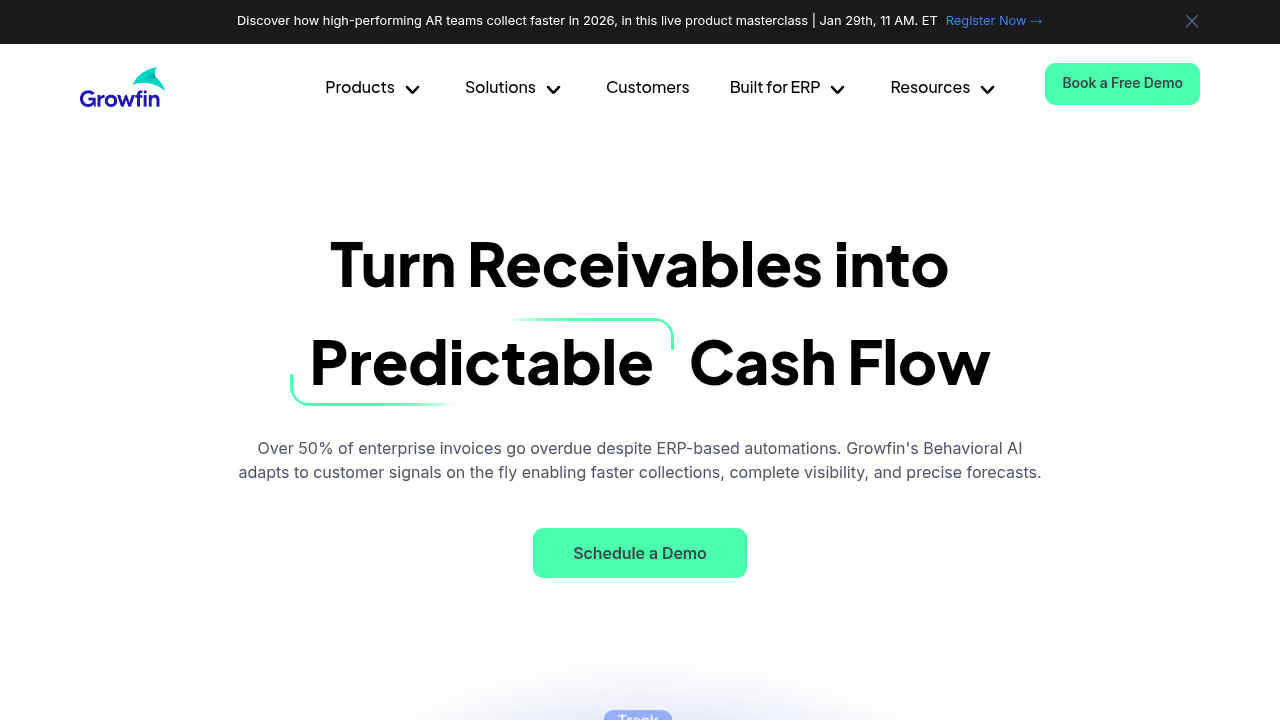
Growfin operates primarily as a cash flow analytics dashboard. It cares less about doing the dirty work of collections and more about forecasting when funds might arrive. Picture it as a weather forecast for your bank account, using historical data to guess when a client might settle their bill.
What They Offer
- AI-powered payment date estimation based on history
- Writing tools to help controllers draft collection notices
- Visual dashboards for cash flow analysis
- Workflow prompts suggesting which accounts need attention
Good for: Finance leaders who require deep analytics for reporting and employ a full staff to manage outreach. It fits well if you have people to do the chasing but lack data on who to ring first.
Limitation: While Growfin predicts dates well, it does not perform the actual collections tasks. It might draft a note, but your team must hit send and handle the back-and-forth. It offers no help with supplier portals, meaning you must still log into Coupa, Ariba, or Tipalti yourself. Integrations with newer ERP tools like Campfire or Rillet are also missing.
Bottom line: Growfin gives you the forecast, but you must still brave the rain. Invoice Butler performs the calling, emailing, and portal uploads needed to collect cash from enterprise clients.
Upflow
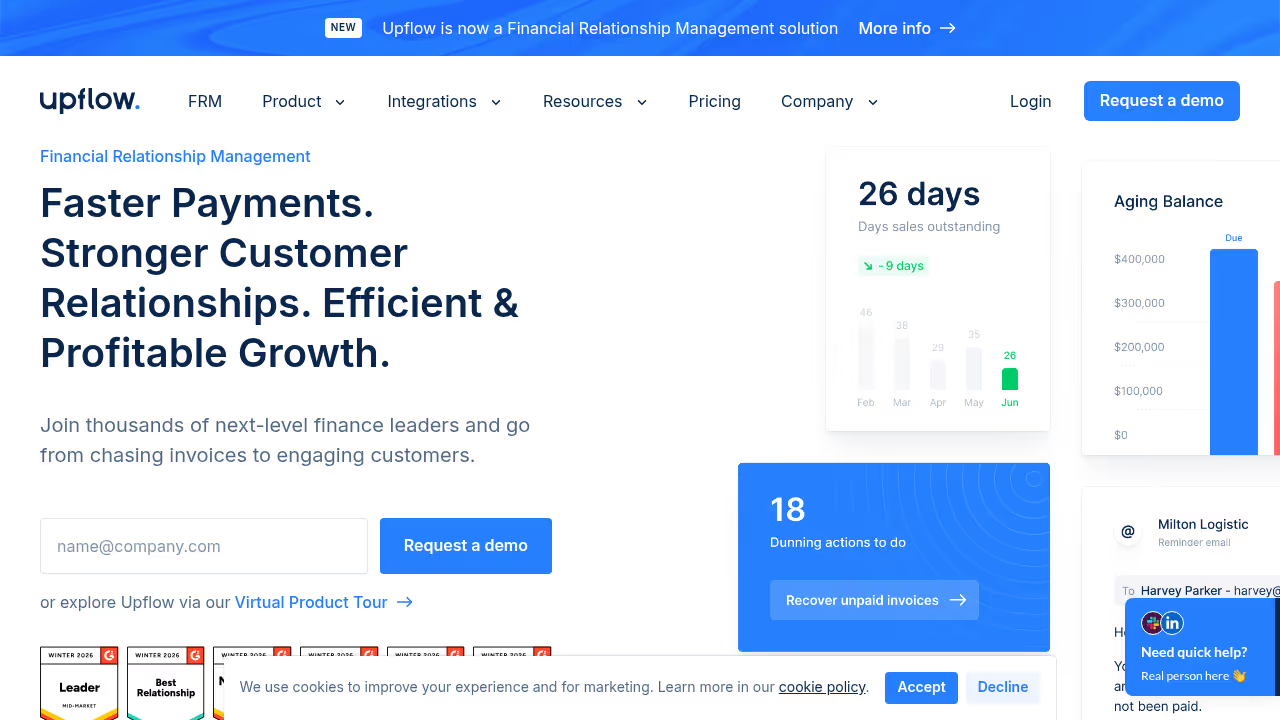
Upflow acts as a project manager for AR, assigning collection tasks to internal stakeholders and providing dashboards over invoices and follow-ups. It focuses on coordination across finance, sales, and customer success, not full-service execution.
Key features
- Automated email sequences, task assignment, and dashboards to track which invoices need attention.
- Basic collaboration features so cross-functional teams can share responsibility for collections.
Good for: Companies that want to share collections work across teams and have staff with spare capacity to handle outreach themselves.
Limitation: Automation largely stops once a customer responds; the tool does not manage conversation threads or supplier portals, leaving manual follow-up and admin to your team.
Bottom line: Upflow organizes who should do AR tasks, while Invoice Butler actually completes those tasks, including portal submissions and back-and-forth, so employees can stay focused on their core jobs.
Gaviti
Gaviti serves as an upmarket dashboard for massive enterprises, best suited for organisations where the accounts receivable department is large enough to field a cricket team. It offers a centralised view for existing staff to track their queue.
Key features
- Consolidated collections dashboards, ACH payment portal, and reporting for high-volume AR operations.
- AI assistance for status insights and prioritization.
Good for: Organizations with large AR departments that want central oversight and payment rails under their own brand.
Limitation: Relies on customers adopting proprietary payment flows, offers limited integrations to modern billing tools, and still leaves portal logins and negotiations to your team.
Bottom line: Gaviti is a control panel for big AR teams, while Invoice Butler is the team: handling the unglamorous portal and email work required to get enterprise invoices paid.
Levers
Levers presents itself as a fully automated, AI-only collections agent that sends sequences and automated replies based on rules and training. It aims to act as a digital worker, not a dashboard or human-backed service.
Key features
- AI-driven outbound sequences and auto-responses to standard AR questions.
- Self-service configuration to tune model behavior and workflows.
Good for: Teams that are comfortable delegating customer communication to bots and have clean data and processes for the AI to follow.
Limitation: Lacks human judgment for edge cases, cannot reliably handle messy data, stakeholder discovery, or nuanced enterprise relationships, and does not replace the need for humans in complex scenarios.
Bottom line: Levers automates scripted outreach but stalls on exceptions, while Invoice Butler combines automation with human AR experts to handle the messy, portal-heavy enterprise realities that pure AI tools struggle with.
Feature Comparison Table of Enterprise AR Solutions
Most tools for enterprise AR management act a bit like a SatNav. They show you the route, but you still have to drive the lorry. When handling collections for enterprise clients, you typically want someone to take the wheel. Dashboards look smart, but they do not handle the drudgery of logging into Ariba or sorting through complex email chains.
Here is how the current market compares when facing the hard graft of getting paid.
Why Invoice Butler is the Best AR Solution for Enterprise Clients
Selling to massive corporations requires more than a shiny dashboard; it demands proper elbow grease. Enterprise collections are rarely about the invoice itself, they are about the bureaucracy encasing it.
Most vendors simply hand you a spanner and expect you to do the repairs yourself. You remain the one logging into Coupa to upload PDFs. You still chase down W-9 forms. You still scour LinkedIn when your primary contact leaves the company.
Invoice Butler takes a distinct approach to enterprise AR management. We function as your outsourced accounts receivable team. We pair AI for pace with human experts who handle the tedious manual labour that software cannot manage.
The Execution Difference
- We do the portal work. No more logging into Ariba or Tipalti; we handle the uploads.
- We manage the admin. We provide the forms and data procurement teams demand.
- We navigate the maze. When a contact goes silent, we find the decision-maker who can actually sign the cheque.
You do not need another login. You need the cash in the bank. We see to it that the funds arrive.
Final Thoughts on Automating Complex Payment Processes
When complex payment process automation actually works, you should notice the absence of work, not the presence of another tool. Enterprise collections demand human judgment for the edge cases that trip up software. We pair AI speed with real people who handle the manual tasks, so your invoices get paid without adding headcount.
FAQs
How do I choose the right AR solution for my enterprise clients?
Start by identifying your biggest pain point: if you're drowning in supplier portal work (Coupa, Ariba, Tipalti), you need a solution that handles those logins and uploads for you. If you have a full AR team that just needs better organisation, a dashboard tool might suffice but if you want to avoid hiring collections staff altogether, look for a service that executes the work instead of just tracking it.
Which AR tool works best for companies without a dedicated collections team?
A full-service solution like Invoice Butler works best when you lack dedicated AR staff, as it handles the entire collections process (portal uploads, customer replies, escalations) without requiring you to manage software or assign tasks. Dashboard-focused tools require existing team members to do the actual chasing, which defeats the purpose if you're trying to avoid hiring.
Can these AR solutions actually log into supplier portals on my behalf?
Most cannot: they stop at the login screen and leave you to manually upload invoices and fill out forms. Only Invoice Butler currently handles end-to-end portal automation, logging into systems like Coupa, Ariba, and Tipalti to complete submissions without your involvement.
What's the difference between AI-only collections and human-supported AR services?
AI-only tools send automated messages but get stuck when data is messy or customers respond with questions, requiring you to step in and handle exceptions. Human-supported services combine automation for routine tasks with real specialists who manage complex situations (disputed invoices, missing purchase orders, relationship-sensitive accounts) that require judgment and context.
When should I consider switching from my current AR approach?
If you're spending more than 10 hours weekly on manual portal work, chasing down payment contacts, or managing collections spreadsheets. Or if your Days Sales Outstanding exceeds 60 days, it's time to evaluate a more hands-on solution that removes the work from your plate rather than just organising it.