Table of Contents

Sending payment reminders shouldn't eat up your finance team's week. The problem isn't just remembering to send the first reminder it's everything that comes after. Customers reply with questions, portals require manual uploads, email addresses bounce, and suddenly your automated collections emails aren't so automated anymore. Most tools on the market handle the easy part (scheduled sending) but leave the hard part (actual collections work) to you. This breakdown shows which solutions actually reduce your workload versus which ones just shift it around.
TLDR:
- Automated invoice follow-up tools send payment reminders on schedule, freeing your team from manual chasing
- Most solutions provide dashboards but require your staff to handle replies, portal uploads, and escalations
- Invoice Butler acts as your outsourced AR team, managing the entire collections process including multi-channel follow-ups
- Key features to compare: real-time integrations, supplier portal management, and whether the tool does the work or just alerts you
- Invoice Butler handles back-and-forth negotiations, finds new contacts when emails bounce, and operates at a fraction of hiring cost
What Is Automated Invoice Follow-Up Software?
Think of automated invoice follow-up tools as your dedicated digital accounts receivable clerk. While standard accounting kit generates the bill, invoice chasing software handles the "dunning" process—that polite but persistent task of getting paid. It picks up where your ERP finishes, managing the receivable's lifecycle through payment reminder automation. By sending automated collections emails on a precise schedule, this tech turns a chaotic chore into a disciplined routine and frees your finance team from manual administrative drudgery.
How We Ranked These Tools
To curate this list of invoice chasing software, I adopted the mindset of a finance leader who values their time. My primary yardstick was automation depth. Does the tech manage itself, or does your staff still need to do the heavy lifting?
Capabilities like slotting into Xero or NetSuite and navigating complex AP portals—where standard emails go to die—were essential. I also prioritized full lifecycle handling, from the initial polite nudge to payment confirmation. Please note this review relies on public product specs rather than hands-on testing of every interface.
Best Overall Automated Invoice Follow-Up Solution: Invoice Butler
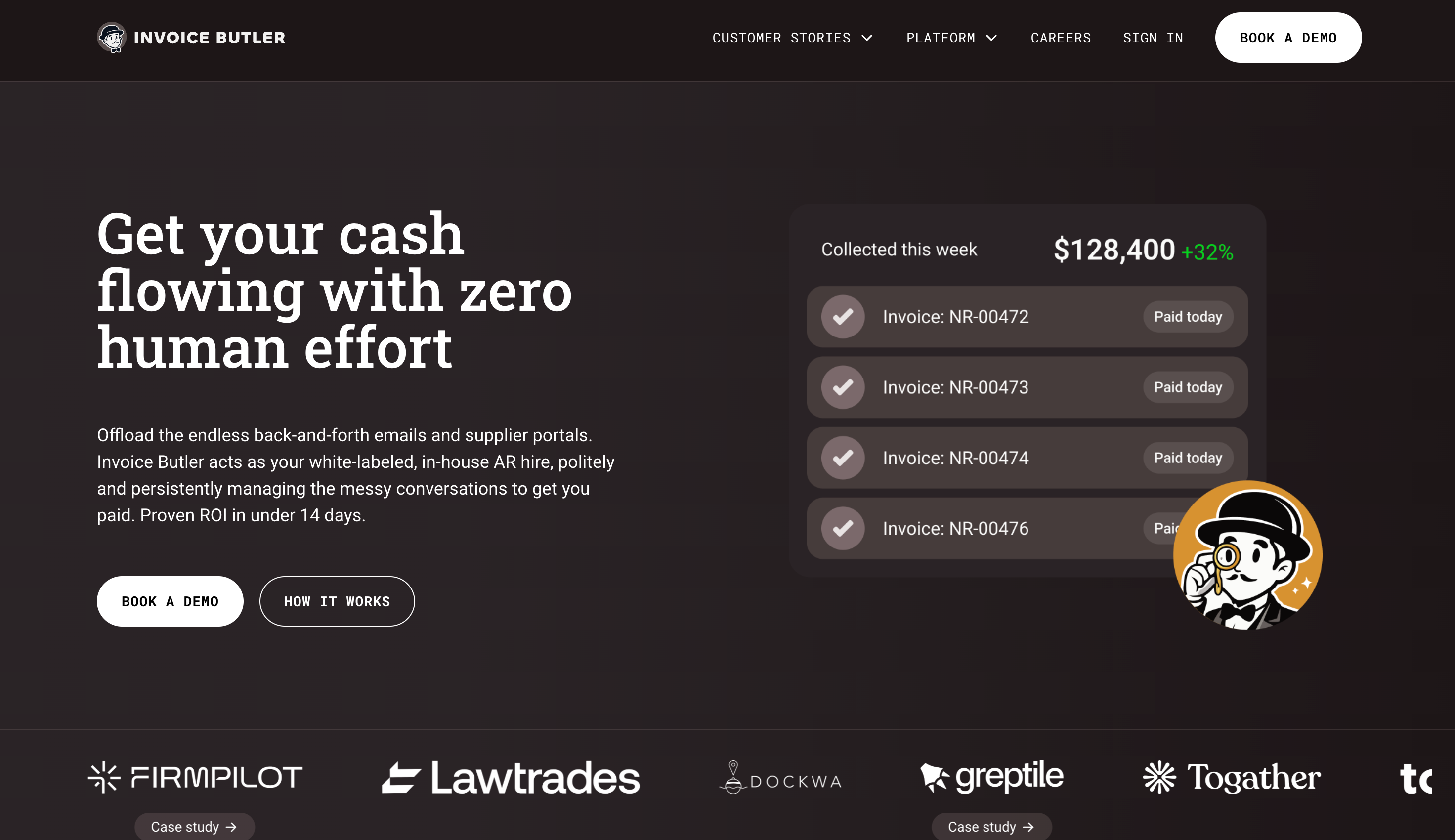
Most options on this list give you a dashboard and expect you to do the rest. Invoice Butler acts as your fully outsourced accounts receivable department, using automated collections emails that look completely personzlized powered by tech but guided by human experts. While typical invoice chasing software requires you to push the buttons, we handle the entire process—from the polite initial nudges to the complex negotiations. Think of us as an extension of your finance team that never takes a tea break (though we do enjoy a biscuit).
What they offer
- Hybrid approach: we pair payment reminder automation with real human in the loop AR specialists to handle sensitive accounts and edge cases.
- Portal management: we log into systems like Coupa, Ariba, and Tipalti to upload invoices and chase approvals so your team doesn’t have to.
- Contact discovery: our system finds new decision‑makers when original contacts go dark or emails bounce.
- Multi‑channel escalation: we follow up via email, Slack, LinkedIn, phone, and text so reminders are actually seen.
- Rapid setup: we plug into QuickBooks, NetSuite, Stripe, Xero, and more in just a few minutes for fast time‑to‑value.
Good for: B2B companies generating roughly $10M–$100M+ in revenue that want invoice follow‑up handled end‑to‑end without hiring a full‑time AR clerk, especially when customers require complex procurement portals.
Limitation: best suited to recurring B2B invoicing with established systems; very small businesses or highly one‑off, bespoke billing processes may not fully benefit from the level of automation and specialization offered.
Bottom line: Invoice Butler delivers a complete automated invoice follow‑up solution by doing the actual work—chasing payments, navigating portals, and managing responses—rather than adding yet another dashboard for internal teams to manage.
Billtrust
Billtrust caters to the Fortune 1000 massive organisations with on-premise ERPs and dedicated AR teams.
What they offer
- SFTP integrations with overnight batch sync.
- Collections dashboards and payment portals.
- High‑volume invoice delivery tools.
Good for: enterprises over $100M in revenue that run legacy ERP systems and already employ sizable internal AR teams.
Limitation: data moves via overnight batching instead of real‑time APIs, limiting native connections with modern billing platforms like Stripe, and the product provides software only—not labour—so organizations must still staff collections operations manually.
Bottom line: Billtrust fits large, legacy‑stack enterprises that want to formalize existing AR workflows, while companies seeking real‑time connectivity and outsourced collections work will likely need a more modern, service‑driven solution.
Tesorio
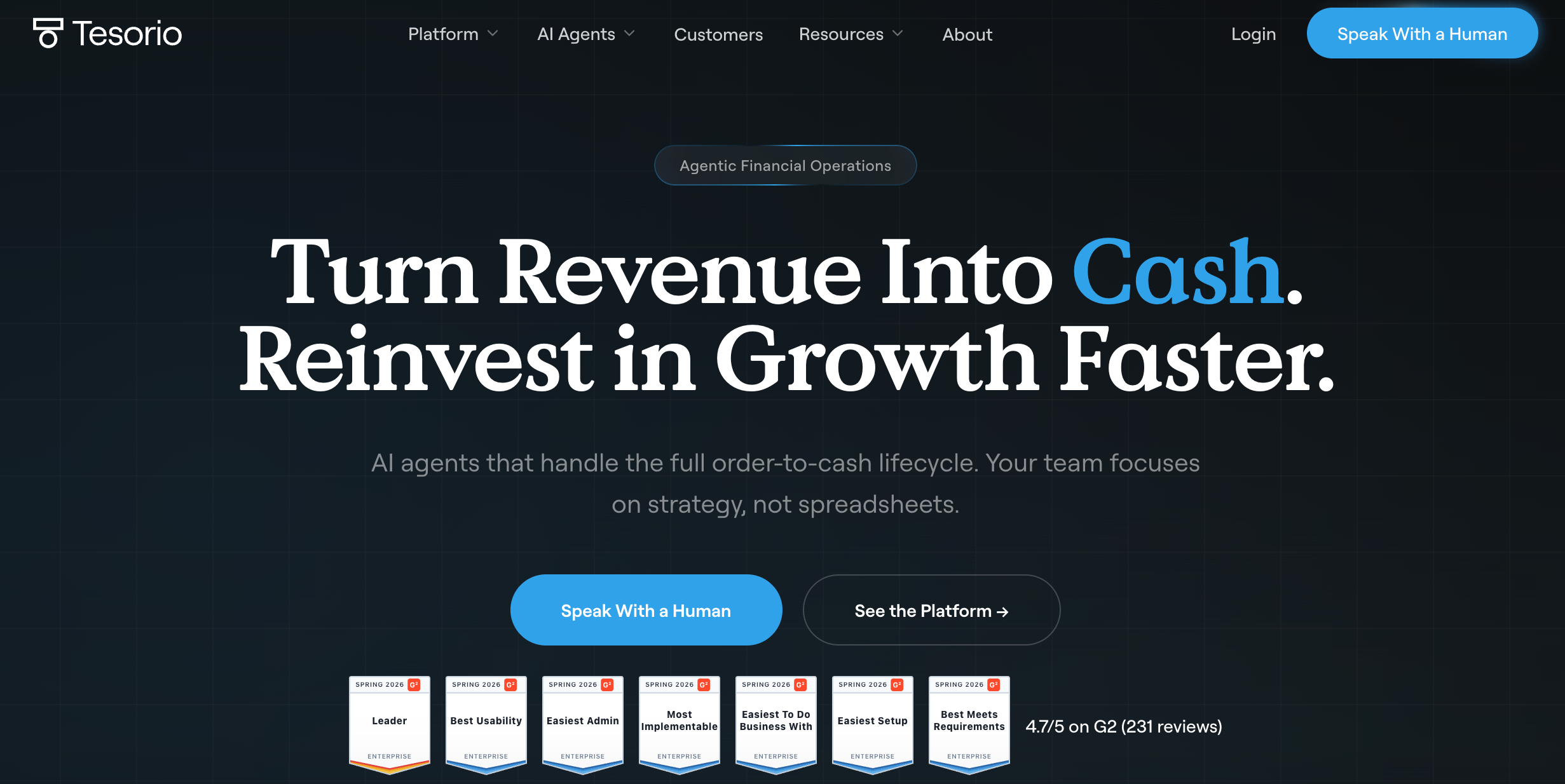
Tesorio serves as a dashboard for collections teams using legacy ERPs. It connects via SFTP to help staff organise their chasing queues.
What they offer
- Workspace for assigning AR tasks.
- AI agent that flags payment updates.
- Routing tools to distribute work across team members.
Good for: companies with dedicated AR teams running on on‑premise or legacy ERP systems that want better visibility and task management rather than outsourced collections.
Limitation: the technology flags updates, but staff must still perform all manual outreach, and it lacks native connections to newer billing platforms like Orb.
Bottom line: Tesorio is a solid workspace for managing receivables from older ERP data, but it requires human hands to operate and does not replace an AR team.
Growfin
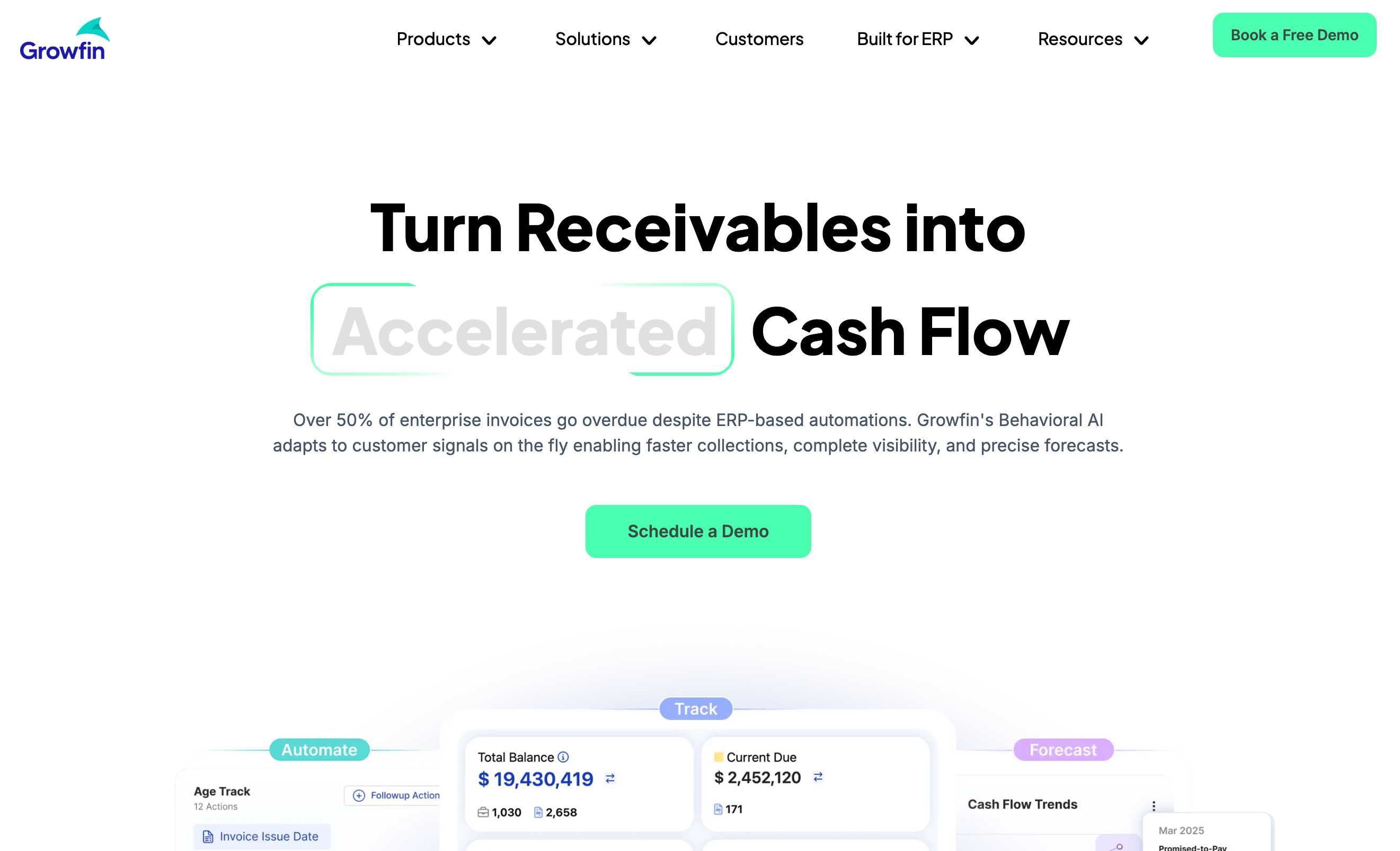
Growfin is a crystal ball for cash flow, not a butler. It uses AI to predict payments and draft messages, but won't press "send." Delivery remains a manual task.
What they offer
- AI-driven predictions on payment timing.
- Drafting assistance for personalized collections messages.
- Deep cash flow forecasting and AR trend dashboards for reporting.
Good for: leaders who prioritize analytics and visibility into future cash positions, and who already have staff available to handle the manual chasing work those insights generate.
Limitation: execution remains manual; the platform suggests scripts and forecasts but does not own automated invoice follow-up, nor does it handle supplier portal uploads (Coupa, Ariba) or support more modern integrations like Campfire.
Bottom line: Growfin is top-tier for prediction and planning, but still relies on internal labor to actually get invoices paid.
Upflow
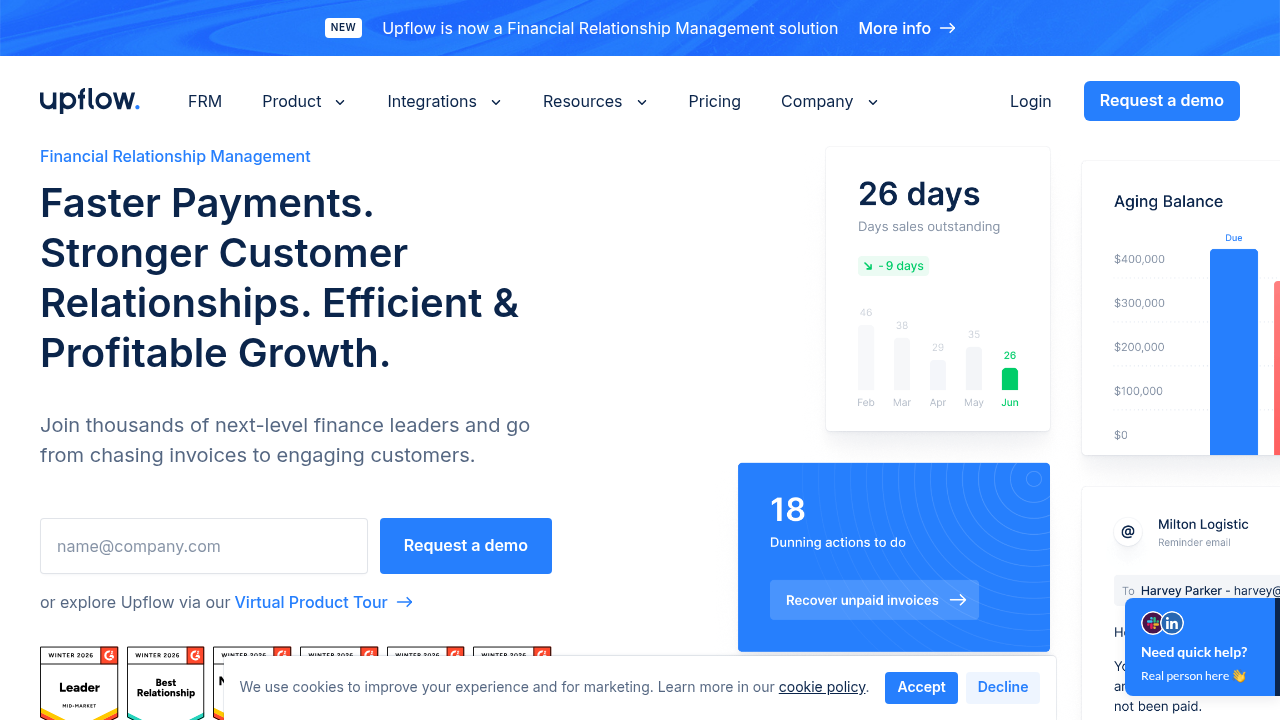
Upflow acts as a workflow visualisation tool. It helps finance teams design automated collections emails and assigns chasing tasks to internal sales or success reps.
What they offer
- Visual builder for designing reminder sequences.
- Internal ticketing to route issues to sales or CS teams.
- Invoice-level tracking dashboard for monitoring outstanding bills.
Good for: organisations that want to delegate invoice chasing tasks to internal teams via structured workflows and tickets rather than outsource collections.
Limitation: it centers on an invoice-level view rather than customer-level aggregates and cannot operate inside third-party portals like Ariba, so when a client replies to an automated invoice follow-up, internal staff must handle negotiations and portal work manually.
Bottom line: Upflow creates tidy workflows and tickets, but your team still manages the replies, portal logins, and final collections effort.
Gaviti
Gaviti caters to firms with over $100M in revenue, emphasizing its own payment rails and tightly controlled workflows rather than flexible, plug‑and‑play connections.
What they offer
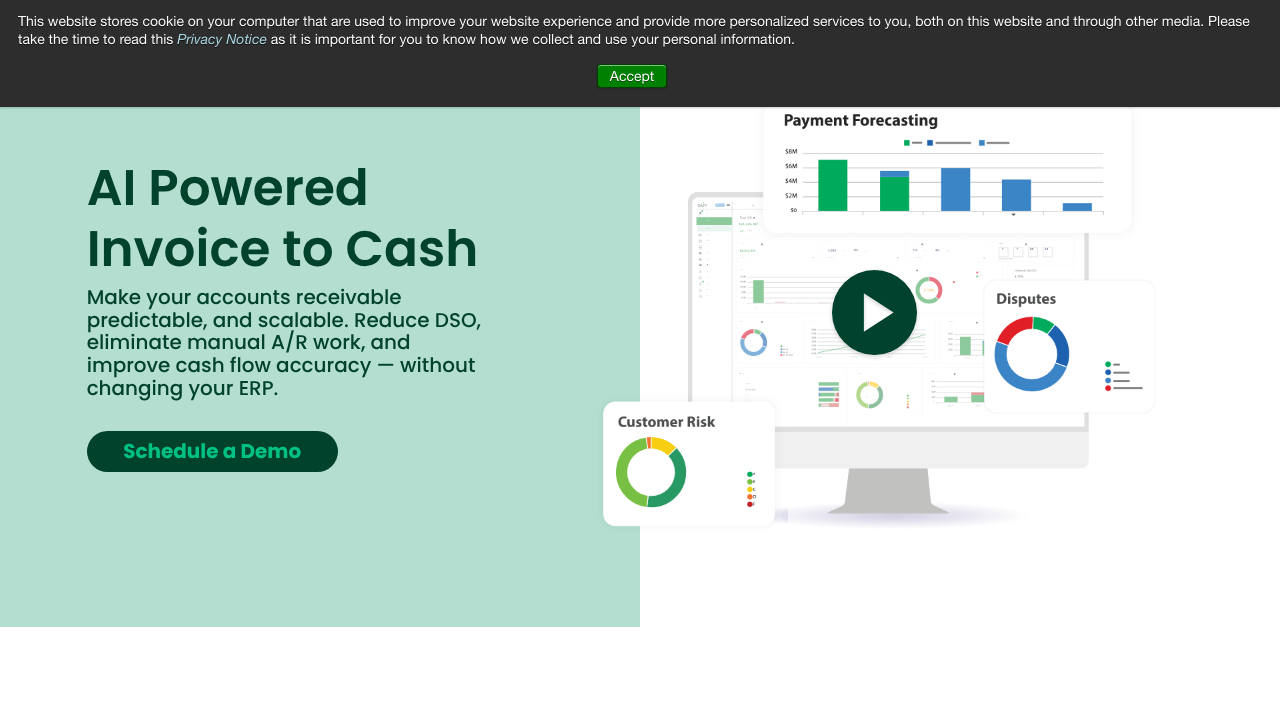
- Enterprise-level collections dashboards.
- Proprietary zero-fee ACH system.
- AI assistant for invoice and status checks.
Good for: large enterprises (around $100M+ in revenue) that can mandate a specific payment portal and are comfortable steering customers through Gaviti’s own rails.
Limitation: you won’t find native links to tools like Stripe, Orb, or Sequence; the AI mainly surfaces data and status rather than performing automated invoice follow-up tasks such as portal data entry or phone outreach.
Bottom line: Gaviti works well for giants that dictate payment terms and channels, but feels rigid for agile teams that rely on open, native connections across their billing stack.
Monk
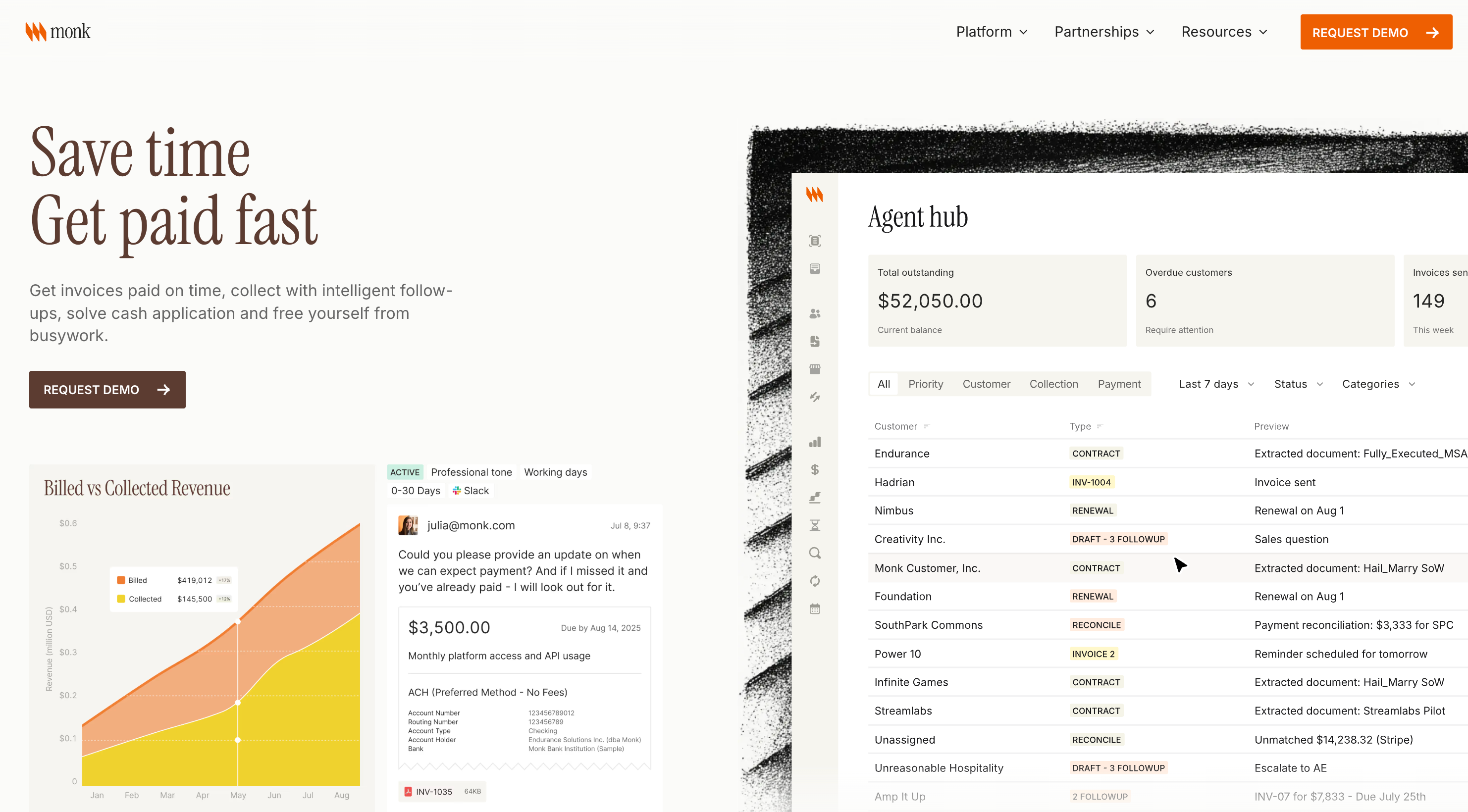
Monk attempts to juggle contracting, billing, and collections simultaneously. As a newcomer with fewer than 40 customers, it is still finding its feet compared to established invoice chasing software.
What they offer
- Contract management alongside billing tools.
- Basic automated invoice follow-up workflows.
Good for: teams that prioritize contract management and want light-touch payment reminder automation bundled into the same system rather than a specialized collections platform.
Limitation: the user base is tiny, and while it can send reminders, the manual graft—replying to customers, uploading to portals, and making calls—still falls entirely on your team.
Bottom line: Monk covers a broad scope across contracts and billing, but lacks the focused depth and operational muscle required to reliably drive actual cash collection.
Feature Comparison Table of Automated Invoice Follow-Up Tools
Seeing the features laid out clarifies the difference between a tool you manage and a service that sorts the work for you. Most options here offer splendid dashboards, but they still require your team to drive the car. Invoice Butler takes the wheel entirely.
| Capability | Invoice Butler | Billtrust | Tesorio | Growfin | Upflow | Gaviti | Monk |
|---|---|---|---|---|---|---|---|
| Handles Replies and Back-and-Forth | Yes | No | No | No | No | No | No |
| Supplier Portal Upload and Management | Yes | No | No | No | No | No | No |
| Finds New Contacts When Emails Bounce | Yes | No | No | No | No | No | No |
| Multi-Channel Escalation (Phone/Text/LinkedIn) | Yes | No | No | No | No | No | No |
| Real-Time API Integration with Billing Systems | Yes | No | No | No | No | No | No |
| Human Oversight for Complex Situations | Yes | No | No | No | No | No | No |
| Requires Dedicated AR Staff to Operate | No | Yes | Yes | Yes | Yes | Yes | Yes |
Why Invoice Butler Is the Best Automated Invoice Follow-Up Solution
Most tools strictly provide a dashboard, leaving the actual legwork to you. Invoice Butler takes a different tack, functioning as a complete AR service. We resolve late payments rather than merely alerting you to them. Given the sobering statistics on payment delays, admiring the problem is insufficient.
We handle the grunt work invoice chasing software typically ignores. If a client demands an upload to a portal like Ariba, we log in and do it. If an email bounces, we hunt down the correct contact. This intervention is critical as B2B late payments rise. We make certain technical hurdles don't become excuses for non-payment.
Automation is brilliant for scale, but delicate relationships require tact. We combine AI speed with human oversight. If a long-standing client needs a gentle nudge, our specialists intervene. This aligns with the AR automation market trend towards context-aware solutions.
Our proactive approach—chasing via phone, text, and LinkedIn—helps you beat DSO benchmarks by industry. Hiring a collections team is pricey; Invoice Butler offers that capability instantly. By using automated payment collection reminders managed by us, you secure cash flow without bloating payroll.
Final Thoughts on Getting Paid Faster
Most automated invoice follow-up tools alert you to problems but leave the actual work in your lap. The difference between software and service matters when you're trying to reduce DSO without expanding your team. If you need replies handled, portals managed, and contacts tracked down, a complete AR solution beats another dashboard. Your cash flow improves when payments clear, not when you get better reports.
FAQs
How do I choose the right automated invoice follow-up tool for my business?
Start by asking whether you need software to manage or a service that does the work for you. If you have a dedicated AR team and legacy systems, tools like Billtrust or Tesorio make sense. If you want the chasing handled entirely without hiring staff, a service like Invoice Butler removes the operational burden. Consider your revenue size, existing tech stack, and whether you can spare staff to operate dashboards daily.
Which invoice chasing software works best for small teams without dedicated AR staff?
Small teams benefit most from solutions that handle the entire collections process rather than adding another tool to manage. Invoice Butler acts as your outsourced AR department, managing replies, portal uploads, and multi-channel follow-ups without requiring staff oversight. Alternatives like Upflow or Levers still need your team to handle customer responses and manual tasks, which defeats the purpose if you're already stretched thin.
Can automated collections tools handle complex supplier portals like Coupa and Ariba?
Most automated reminder systems cannot log into third-party procurement portals or upload invoices on your behalf. Invoice Butler specifically manages these portals end-to-end, including form submissions and approval chasing. If your customers require portal submissions, verify that your chosen solution actually performs this work rather than simply sending email reminders that get ignored.
What's the difference between AI-driven predictions and actual collections work?
Tools like Growfin excel at forecasting when payments will arrive and drafting suggested messages, but your team still sends the reminders and handles replies manually. Levers uses autonomous AI to send messages directly, though you must train it yourself. Invoice Butler combines AI automation with human specialists who manage the entire back-and-forth, including sensitive negotiations and contact discovery when emails bounce.
When should I consider switching from my current collections process?
If you're spending more than 10 hours weekly chasing payments manually, your DSO exceeds industry benchmarks by 30+ days, or you're losing track of overdue invoices in spreadsheets, it's time to automate. Companies often switch when they realize hiring a full-time AR clerk costs significantly more than outsourcing to a specialized service that delivers faster results.