Table of Contents

If you're stuck between Invoice Butler or hiring an AR specialist, you're probably tired of watching invoices sit unpaid while your finance team drowns in follow-ups. Hiring someone sounds logical until you add up the real numbers: recruitment, onboarding, benefits, overhead, and the inevitable turnover when they move on to their next role. What looks like a $50,000 problem on paper turns into a $90,000 commitment with a built-in expiration date. There's a reason more teams are handing the whole mess to someone else entirely.
TLDR:
- Hiring an AR specialist costs $64K-$92K yearly after benefits and overhead, plus turnover every 1-2 years.
- Most finance professionals lack the sales skills collections requires and avoid the repetitive work.
- Invoice Butler handles all AR tasks for you (from portal logins to phone calls) at a fraction of hiring cost.
- Clients have recovered $300K+ in overdue payments and cut Days Sales Outstanding by over 50 days.
- Invoice Butler combines AI automation with AR specialists who manage complex situations and escalations.
The True Cost of Hiring an AR Specialist in 2026
Hiring an AR specialist feels straightforward on paper. Post a job, find someone, pay them a salary. Done. Except the salary is rarely the whole story.
According to Robert Half, AR specialist salaries range from $54,750 to $65,750 annually. ZipRecruiter puts the average closer to $51,279. Either way, once you factor in payroll taxes, benefits, and overhead, the real cost climbs to 1.25x to 1.4x that base number. You're looking at somewhere between $64,000 and $92,000 per year before your new hire sends a single reminder email.
And that's before you account for:
- Recruitment fees covering job boards, agency costs, and the interview time your team absorbs along the way
- Onboarding logistics like software access setup and getting them up to speed on your accounts
- Management overhead from whoever on your finance team ends up supervising their work
- Errors during the ramp-up period, which are basically guaranteed while someone is still learning your clients and processes
The math adds up fast. For smaller teams, that budget is often competing directly with other growth priorities.
Training Time and Onboarding Requirements for AR Specialists
Getting someone hired is one thing. Getting them useful is another.
The Institute of Finance & Management (IOFM) estimates AR specialist certification courses run 10 to 15 total learning hours. That's just the foundational coursework. It says nothing about learning your invoicing system, your customer quirks, your escalation preferences, or why that one client always pays late but gets upset when you follow up too aggressively.
Real onboarding looks more like this:
- Week one through two: system access, process documentation, and shadowing the way things actually get done
- Week three through four: supervised outreach with corrections coming in along the way
- Month two: semi-independent work, though questions keep coming and avoidable mistakes still happen
- Month three: finally operating close to full productivity
That's a generous timeline, and it assumes no hiccups. Every business has its own rhythms, and an AR specialist needs time to absorb yours before they stop being a liability and start being an asset. During that window, someone still has to chase invoices.
The Hidden Problem: AR Specialist Turnover and Career Progression
Here's the part that rarely shows up in any hiring budget spreadsheet: people leave.
AR work is repetitive by nature. Sending reminders, logging into portals, chasing the same contacts week after week. Skilled finance professionals typically treat the role as a launchpad, not a destination. Once they've built enough experience, they move toward accounting, FP&A, or controller roles, often within a year or two.
So the cycle restarts. Another job post, another round of interviews, another three months of ramp-up while invoices pile up and your follow-up cadence falls apart. The cost of AR specialist turnover in the U.S. is estimated at roughly 16% to 20% of annual salary, and that's a conservative figure.
Offshore hires face the same pattern, often worse. Without strong ties to your company, they'll move to whoever pays more, and often with little warning.
You end up paying repeatedly just to reach the same baseline you had before.
What Invoice Butler Actually Does (Beyond Software)
Most AR automation tools hand you a dashboard and wish you luck. Invoice Butler works differently.
Invoice Butler is an outsourced AR team, backed by AI, that takes the actual work off your plate entirely. There's no new tool for your staff to learn, no inbox to babysit, no portal logins to remember. We handle it.
Here's what that looks like in practice:
- Keeping your AR inbox at zero, including all the back-and-forth when customers respond with questions or disputes
- Logging into supplier portals like Coupa, Ariba, or Tipalti to submit invoices and chase approval statuses on your behalf
- Calling and texting customers who never check their email, because some people simply won't respond any other way
- Confirming banking details and payment contacts for new customers before the first invoice even goes out
- Updating invoice details like PO numbers and billing info directly in your invoicing system when customers request changes
- Escalating overdue invoices to the right decision-makers across email, phone, LinkedIn, or Slack
Where things get genuinely complex, our AR specialists step in. AI handles volume; humans handle judgment calls. You stay out of it either way.
Collections Is Sales, Not Finance
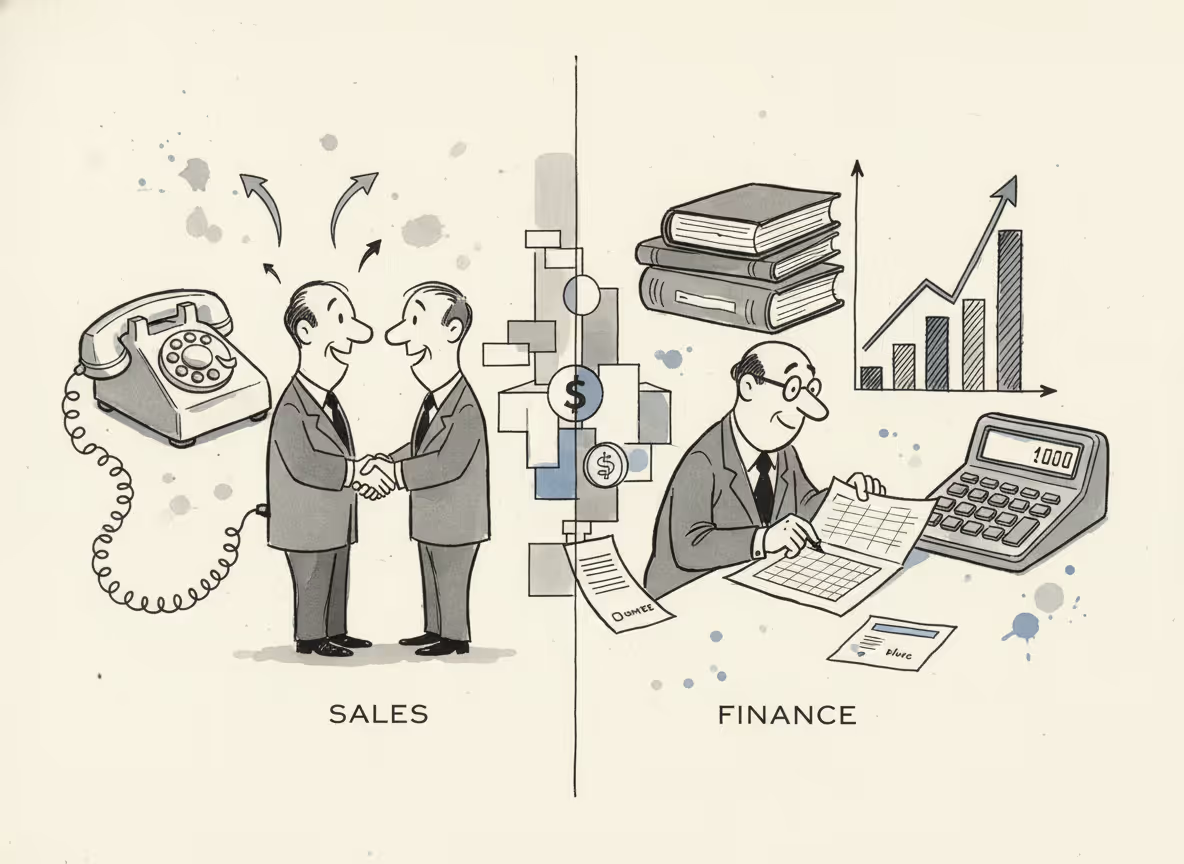
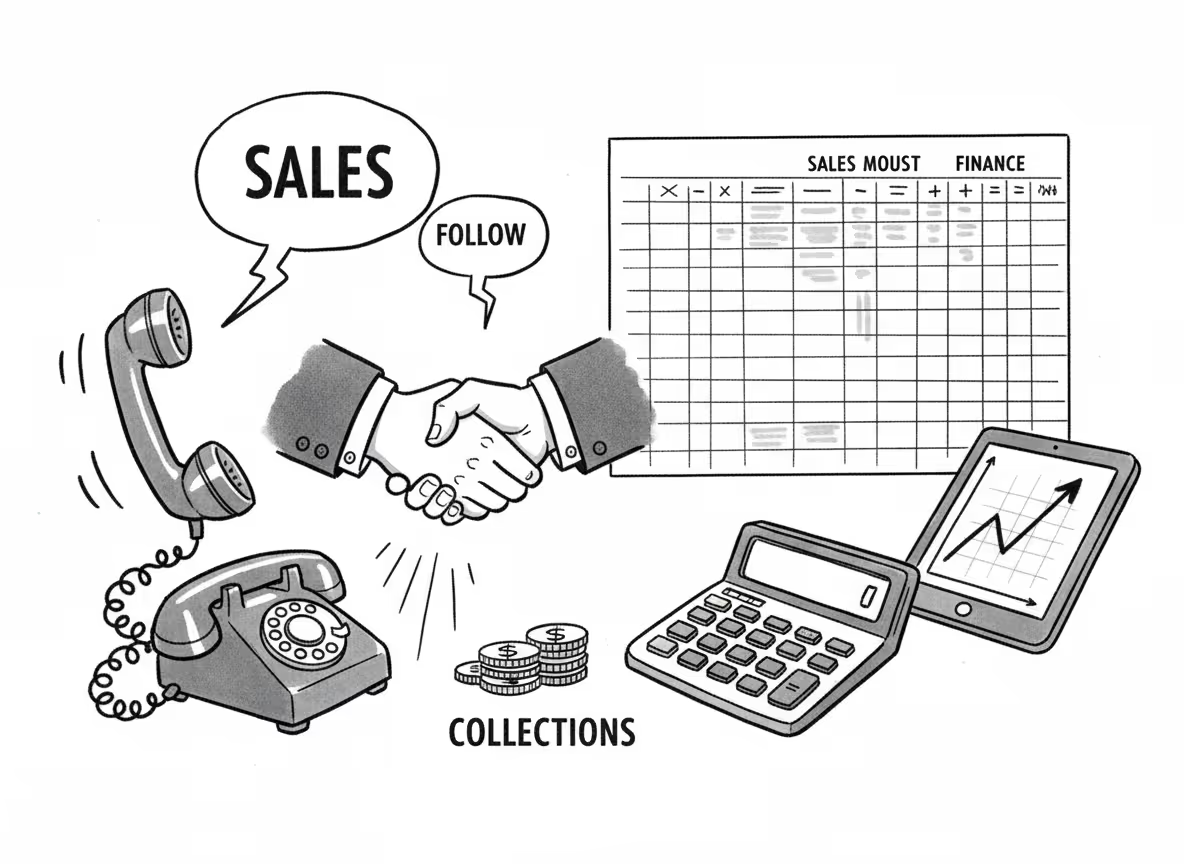
Collections sits in a strange in-between space. It lives on the finance org chart, but the skills that make someone good at it are almost entirely sales skills: building a follow-up cadence, finding the right contact when the first one ghosts you, staying persistent without burning the relationship. That's not what most accountants signed up to do, and frankly, it's not where their strengths lie.
Finance professionals are trained to be precise and analytical. Collections rewards a different temperament entirely. One that's comfortable with ambiguity, repetition, and the occasional awkward conversation. When you hire an AR specialist hoping they'll naturally cover both sides of that equation, you're often setting them up to quietly avoid the parts they find uncomfortable.
Invoice Butler is built around that sales mentality. We track who's been contacted, when, through what channel, and what the response was. If one approach stalls, we try another. We find alternate contacts. We follow up on LinkedIn if email goes nowhere. The persistence that most finance teams don't have the bandwidth or appetite for is exactly what we do by default.
How Invoice Butler Handles the Work Finance Teams Hate
The work finance teams dread most is the work Invoice Butler does best. Repetitive follow-ups, portal logins, invoice corrections, awkward phone calls to confirm a payment that was supposedly sent two weeks ago. All of it.
Here is what that looks like in practice:
- Automated, multi-channel follow-up sequences that reach customers by email, SMS, and phone without your team lifting a finger.
- AI-powered invoice matching that catches discrepancies before they become disputes, saving your team the back-and-forth.
- Customer portal access so your clients can view invoices, raise queries, and pay without calling your office.
- Escalation handling that knows when to loop in a human and when to keep the process moving automatically.
- Full audit trails so your team always knows exactly where each invoice stands, without chasing anyone for an update.
Your finance team gets their time back for forecasting, variance analysis, and the work that genuinely requires their expertise. The tedious, time-consuming receivables grind gets handed off entirely.
For growing businesses that need real AR muscle without the overhead of a full-time hire, that trade-off is worth taking seriously.
Final Thoughts on Hiring for Accounts Receivable
The salary is just the starting point when you hire an AR specialist. Training takes months, turnover resets the clock, and your finance team ends up managing someone who'd rather be doing almost anything else. Invoice Butler takes the entire receivables process off your plate without adding headcount, onboarding timelines, or the constant risk of starting over when someone leaves. Set up a discovery call if you want to see how outsourcing AR would actually work for your business.
FAQ
How much does hiring an AR specialist actually cost compared to Invoice Butler?
An AR specialist's base salary runs $51,000-$66,000, but with payroll taxes, benefits, and overhead, you're looking at $64,000-$92,000 annually before recruitment, onboarding, and management costs. Invoice Butler delivers the same work at a fraction of that cost, often paying for itself within the first billing cycle through recovered payments.
How long before a new AR hire becomes productive?
Most AR specialists need two to three months before they're operating at full capacity. The first two weeks cover system access and process documentation, weeks three and four involve supervised outreach with corrections, and month two brings semi-independent work with ongoing questions. During that entire window, your invoices still need chasing and someone has to cover the gap.
Can Invoice Butler handle supplier portals like Coupa and Ariba?
Yes, we log into customer procurement portals on your behalf to upload invoices, fill out required forms, and chase approval statuses. You won't need to remember another login or spend hours working through portal workflows - we handle the entire process from submission through to payment confirmation.
What happens when customers don't respond to email reminders?
We get creative with outreach channels. If email goes nowhere, we'll follow up via phone calls, SMS, LinkedIn messages, or even your shared Slack channels with customers. Some clients simply won't respond to email, so we adapt the approach until we reach the right person through the channel that actually works.
Will using an automated service damage relationships with my customers?
No - our communications come from your company (not a third-party collections firm) and are tailored to sound like your team. We maintain a polite, professional tone that protects your brand, and our AR specialists review sensitive situations to handle key relationships with appropriate care and context.