Table of Contents

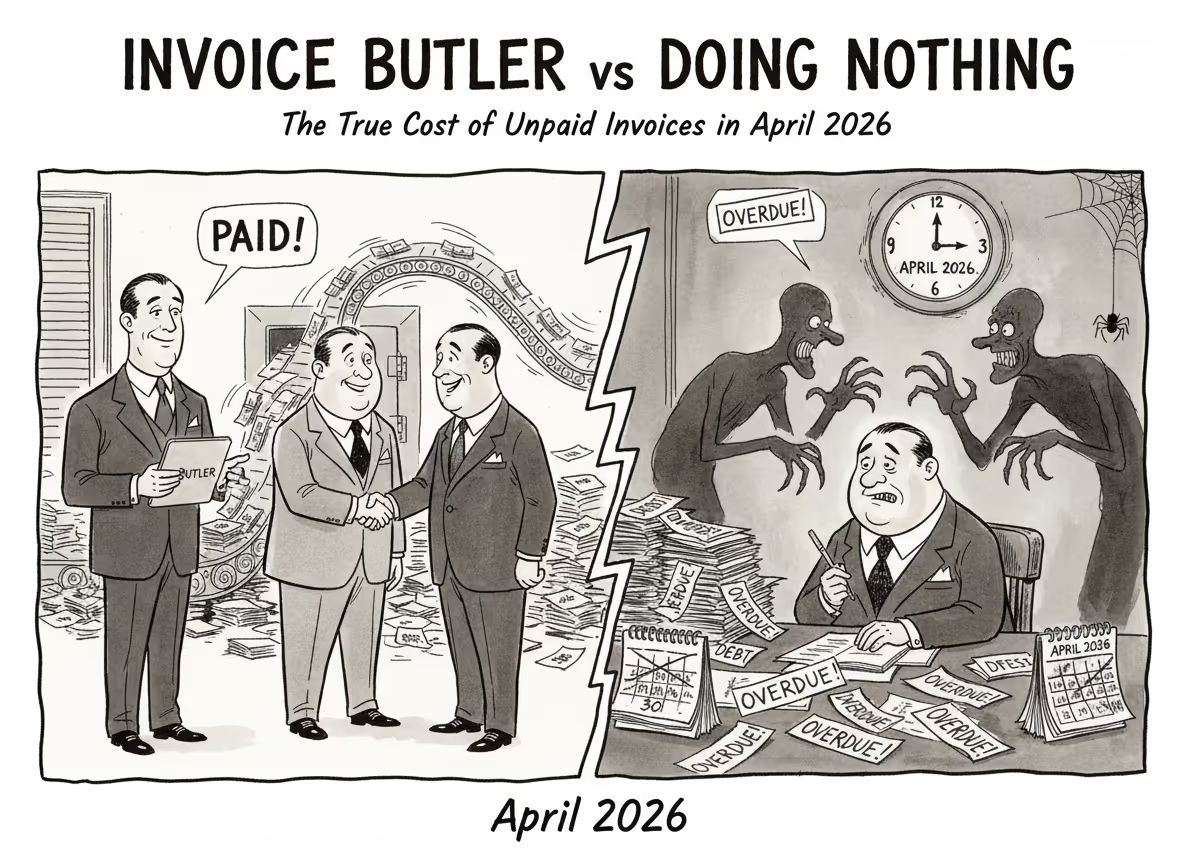
Doing nothing about collections feels safe because it avoids confrontation. In reality, choosing between Invoice Butler and inaction is choosing between getting paid or subsidizing your customers' cash flow problems. When you don't chase invoices, you're not preserving relationships; you're training customers that your payment terms are optional. The longer you wait, the more expensive that silence becomes. Here's the real price tag of staying quiet.
TLDR:
- Unpaid invoices drain annual revenue and force you to borrow at high interest rates against money already earned.
- Finance teams waste 14 hours weekly on manual collections that could go toward forecasting and strategy.
- Invoices over 90 days old become statistically unlikely to collect and turn into permanent write-offs.
- Silence on collections damages customer relationships more than consistent professional follow-up does.
- Invoice Butler handles your entire AR process from follow-ups to portal submissions, typically paying for itself within 30 days.
The Direct Cash Flow Impact of Unpaid Invoices
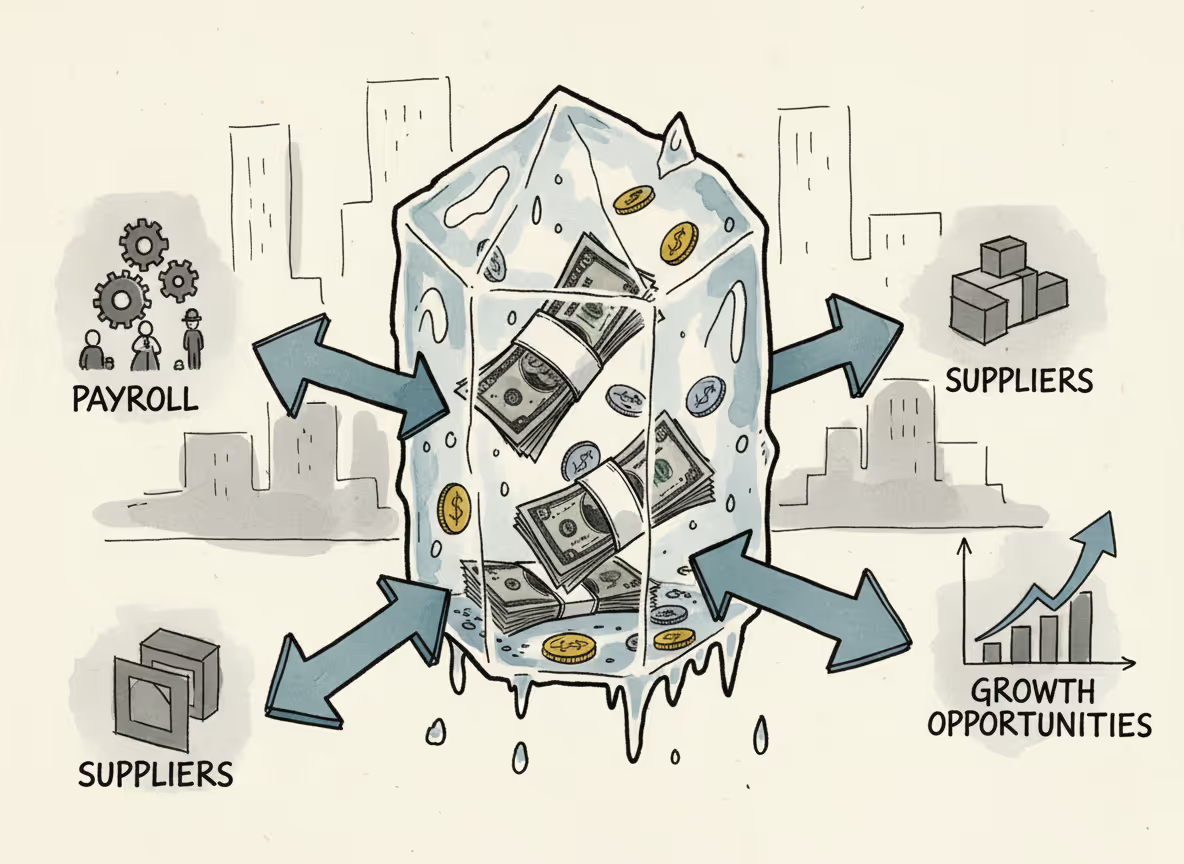
Every dollar sitting in an unpaid invoice is a dollar you can't use to pay suppliers, make payroll, or reinvest in growth. That gap between "invoice sent" and "payment received" sounds like a timing issue. In practice, it's a working capital shortage in slow motion.
The numbers are hard to ignore. Small businesses collectively carry billions in outstanding receivables at any given time, and late payments squeeze daily operations for the majority of B2B businesses surveyed. What starts as a single overdue invoice cascades fast. You delay a vendor payment. You hold off on a hire. You pass on an opportunity because the cash simply isn't there yet. Meanwhile, unpaid invoices keep piling up, compressing margins and forcing reactive decisions where strategic ones belong. Doing nothing about collections isn't neutral. It costs you money every single day.
The Hidden Opportunity Costs That Multiply Over Time
The pressure on cash flow is the obvious problem. What's harder to see is everything you couldn't do because that money was stuck waiting.
When receivables pile up, you're short on cash today and forfeiting the compounding returns that cash could generate. A hire you delayed by two months. Equipment you leased instead of bought. A bulk inventory deal you passed on because the timing was off. Each of those missed moments has a real dollar value, even if it never shows up on a balance sheet.
The scale of this is worth pausing on. Businesses lose roughly 2% of annual revenue directly to late payments. That's before accounting for what that revenue could have done if it arrived on time.
Your competitors who collect on time aren't better organised by accident. They're compounding an advantage every quarter while you're stuck chasing invoices from last month.
How Manual AR Processes Drain Your Team's Time and Energy
Finance teams don't sign up to write the same chaser email twelve times a month. Yet here we are.
Studies show finance employees spend up to 14 hours per week on AR-related admin. That's more than a third of a full working week gone to writing reminders, updating spreadsheets, and logging calls that may or may not get returned.
The morale cost is just as real as the time cost. Repetitive collections work quietly wears people down, and the ones talented enough to leave usually do. Then you're back to hiring and training, which costs money and resets institutional knowledge.
Here's what gets squeezed out in the meantime:
- Forecasting and cash flow modelling, which your business actually needs to make good decisions.
- Vendor negotiations, where a prepared finance team can recover real margin.
- Strategic reporting that gives leadership an honest picture of financial health.
All of that waits while someone types yet another polite nudge about Invoice #1042.
The Write-Off Reality: When Unpaid Invoices Become Permanent Losses
Waiting stops being a strategy at a certain point. It becomes acceptance of loss.
When an invoice crosses a certain age threshold, most businesses stop pursuing it and write it off as bad debt. The accounting entry is clean. The revenue loss is not. Writing off $10,000 in receivables means you delivered the work, absorbed the costs, and walked away with nothing.
The data makes this worse: invoice collectability drops sharply with age. An invoice that's 90 days overdue is statistically far less likely to be paid than one that's 30 days out. Every week of inaction narrows your window.
There's also a tax dimension worth noting. A bad debt deduction helps on paper, but it doesn't restore your margin or cover what you already spent delivering that service.
The write-off stage is almost always avoidable. It's what happens when follow-up never happened in the first place.
The Debt Spiral: Borrowing to Cover Cash Flow Gaps
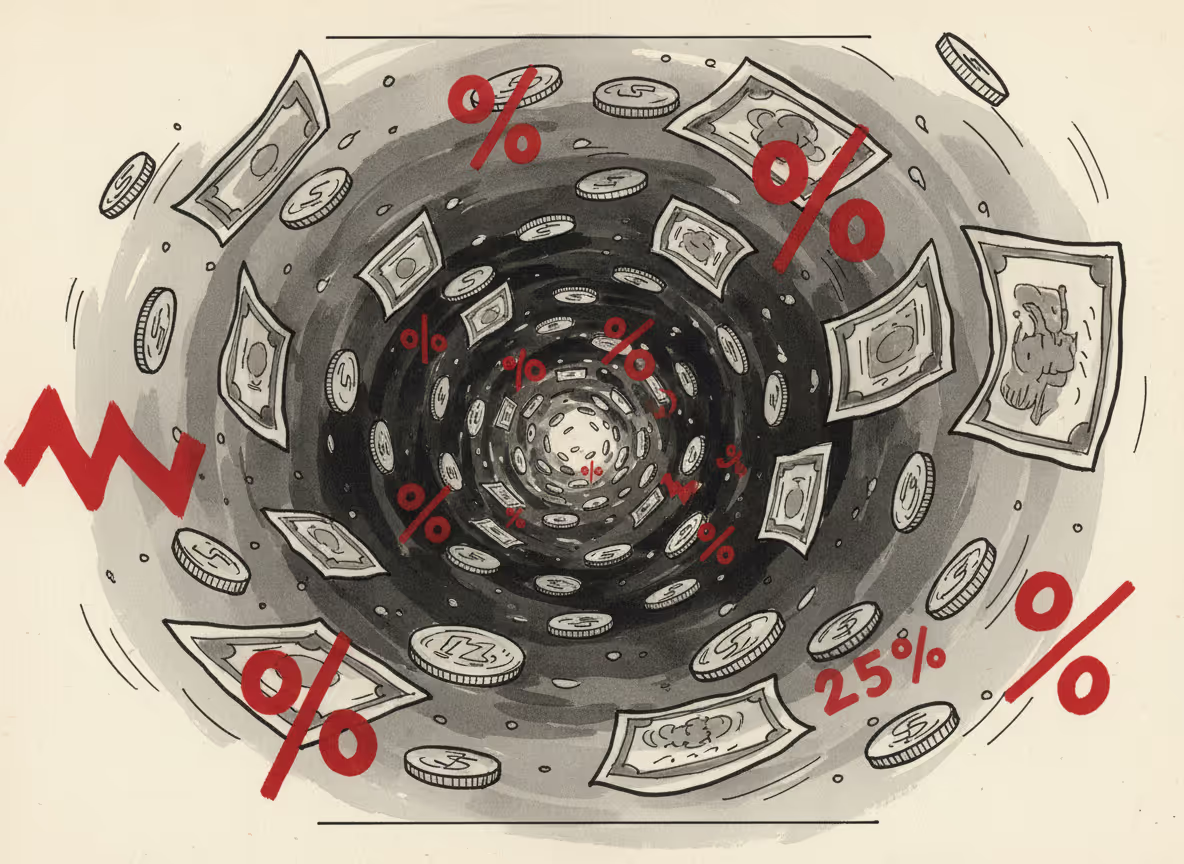
When a customer hasn't paid and your own bills are due, you cover the gap somehow. A credit line. A short-term loan. A business credit card at 20% APR. You're now paying interest on money you've already earned and simply haven't collected yet. That's not a financing strategy. That's a penalty for someone else's slow payment habits.
The pattern compounds fast. You borrow to cover payroll. The loan carries a fee. Next month, another invoice ages out unpaid and the cash squeeze tightens further. Collections software for small finance teams can break this cycle by automating follow-up. You borrow again. Before long, a portion of every dollar you collect is going straight toward servicing debt that didn't need to exist.
Doing nothing about collections doesn't keep you neutral. It makes your customers' cash flow problem your debt problem.
The Customer Relationship Paradox: Why Doing Nothing Actually Damages Trust
Most businesses avoid chasing invoices because they're worried about damaging the relationship. The logic feels sound: stay quiet, keep the peace, get paid eventually.
What actually happens is the opposite. When you never follow up, customers learn that your invoices are optional. No reminder means no urgency. Silence reads as flexibility, and flexibility gets exploited, usually unintentionally. This is why the best invoice follow-up automation tools focus on consistent, timely communication.
There's also the confusion factor. Customers who receive no communication after an invoice lands sometimes assume it was received but settled, lost in a system, or pending on your end. Radio silence doesn't preserve goodwill. It creates ambiguity that can turn a simple payment into a disputed one.
What Consistent Follow-Up Actually Signals
Professional, timely follow-up does something important: it signals that you run a tight operation. Customers respect that. A well-worded reminder from a company that clearly has its accounts receivable together lands very differently than a frantic email three months after the due date.
- Timely reminders show you're paying attention, which makes them pay attention too.
- Consistent communication removes ambiguity about whether an invoice was received, queried, or outstanding.
- A structured follow-up sequence shows professionalism, which tends to move you up the priority list when a client is deciding who gets paid first.
The paradox is real. Avoiding the awkwardness of collections talk doesn't protect the relationship. It just delays the awkwardness while eroding your negotiating position and letting confusion fester. Setting clear expectations from the start, and following up consistently, is what actually builds trust. Your customers know where they stand, and you do too.
How Invoice Butler Turns AR From a Burden Into an Asset
Every problem covered in this article has the same root cause: nobody followed up. Invoice Butler fixes that by doing it for you.
We connect to your billing system in under an hour, then take over the entire collections process. Reminders go out on time, every time. Customer replies get handled. Supplier portals get updated. Escalations happen before invoices age into write-off territory. You stop losing sleep over Invoice #1042.
What That Looks Like in Practice
Here is what changes when follow-up stops falling through the cracks:
- Cash flow improves because follow-up is consistent, not dependent on your team's bandwidth or whoever remembered to check the AR ledger this week. Companies like Daloopa cut cash collection times by 50% using this approach.
- Your finance team gets their 14 hours back each week to focus on forecasting and strategy.
- Overdue invoices get escalated to decision-makers before they cross into write-off territory.
- Customers receive professional, timely communication that signals you run a tight operation.
- You stop borrowing against money you have already earned.
We are not software that makes collections easier to manage yourself. We take it off your plate entirely. Our approach combines hybrid AI and human AR solutions. Our AR specialists handle the edge cases, disputed invoices, and sensitive client situations where pure AI accounts receivable automation tools would fall flat. You stay in control without doing the work.
Final Thoughts on Choosing Action Over Inaction
When you weigh Invoice Butler against doing nothing, you're really deciding whether unpaid invoices get to control your cash flow or whether you do. Doing nothing feels safe until you add up the borrowing costs, the write-offs, the deals you passed on, and the finance hours lost to repetitive admin work. We take collections off your plate completely so your team can get back to work that actually moves your business forward. Schedule a quick chat and we'll walk through what consistent follow-up looks like without adding to your workload.
FAQ
How quickly does an unpaid invoice become a permanent loss?
Collectability drops sharply after 90 days, with your chances of recovery declining each week an invoice ages. The longer you wait to follow up, the more likely you'll end up writing off that revenue entirely (after already absorbing the costs of delivering the work).
What's the real cost of spending 14 hours per week on collections?
Beyond the time itself, your finance team loses the bandwidth for forecasting, vendor negotiations, and strategic reporting that actually drive business decisions. You're also paying talent to do repetitive admin work instead of the high-value analysis they were hired for, which quietly erodes morale and accelerates turnover.
Why does following up on invoices actually improve customer relationships?
Consistent follow-up signals professionalism and tells customers you're paying attention, which makes them pay attention too. When you never chase payment, customers learn your invoices are optional, and silence creates confusion about whether an invoice was received, queried, or forgotten. Clear communication builds trust, not awkwardness.
Can Invoice Butler handle complex supplier portals and customer payment processes?
Yes, we log into portals like Coupa, Ariba, or Tipalti to upload invoices, fill out required forms, and chase approval statuses on your behalf. We also handle the back-and-forth when customers request changes like adding PO numbers or updating billing details, taking the entire process off your plate.
How long does it take to see results after implementing Invoice Butler?
Most clients start seeing consistent follow-ups and recovered payments within the first month, with setup taking under an hour. The service typically pays for itself within one billing cycle by bringing in overdue cash that would otherwise sit aging in your receivables.