Table of Contents

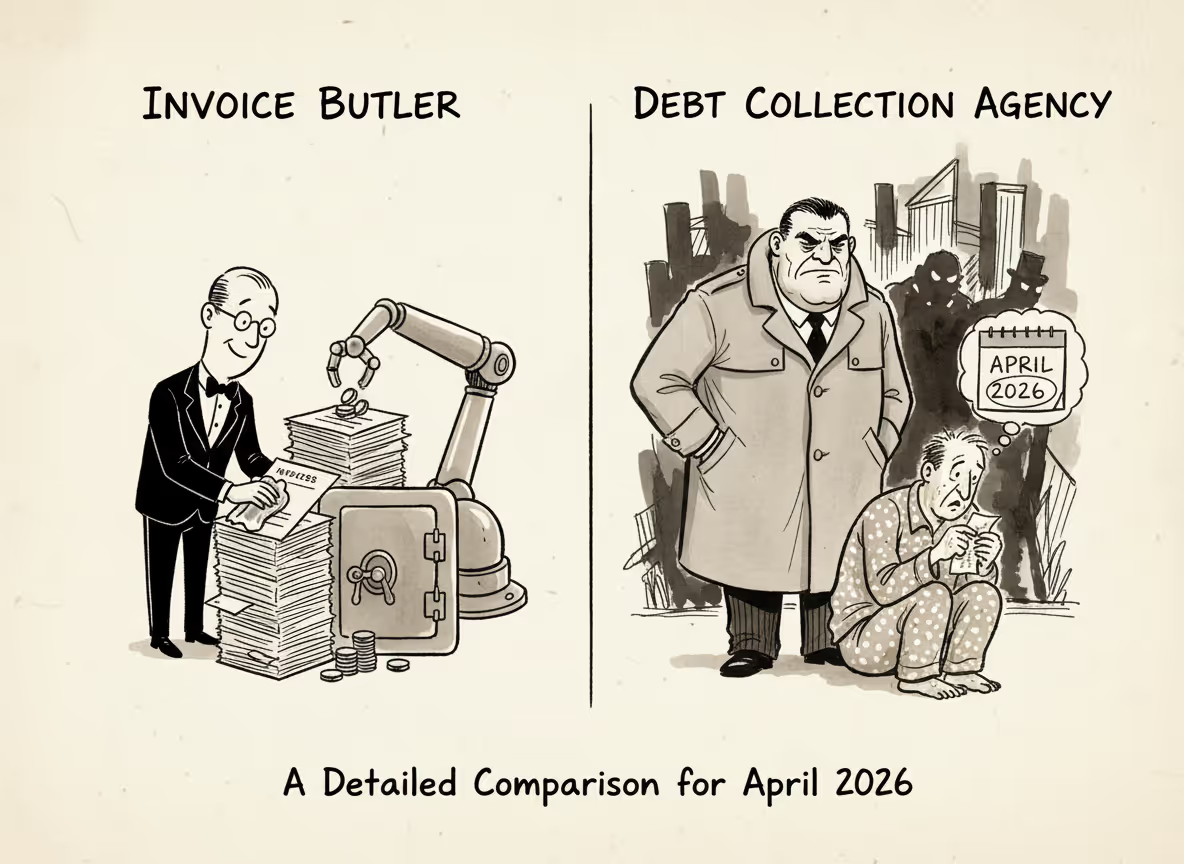
Most businesses don't hire a debt collection agency after one missed payment. They call after weeks of radio silence, unanswered emails, and the growing realization that this invoice might never get paid. By then, you're choosing between writing it off or handing it to a third party who'll take 30% of whatever they recover. The smarter question is whether you needed to reach that point at all, and that's where comparing Invoice Butler vs debt collection agency approaches actually starts to matter.
TLDR:
- Invoice Butler prevents late payments through AI-powered follow-ups starting day one, while debt collection agencies pursue accounts already 90+ days overdue
- Collection agencies charge 20-50% of recovered debt; AR automation runs on a flat subscription with no percentage taken from your invoices
- Your customers hear from you (not a third party) when Invoice Butler follows up, preserving business relationships that agencies often damage
- Invoice Butler handles the full AR workflow including portal submissions, phone calls, and customer questions so your team focuses on strategy
- Invoice Butler acts as your outsourced AR team, automating collections from invoice-out to payment received at a fraction of hiring costs
What Is a Debt Collection Agency
A debt collection agency is a third-party firm hired to recover money that's already overdue, usually after a business has tried and failed to collect on its own. By the time an agency gets involved, the debt is often weeks or months delinquent.
These agencies work reactively. They don't prevent late payments or manage your accounts receivable process. They show up after something has already gone wrong, pursuing accounts that have crossed from "overdue" into "problem" territory. Think of them as a last resort, not a first response.
How Debt Collection Agencies Work
Once you hand over an account, the process follows a fairly predictable sequence.
- The agency sends formal demand letters, often with legal-sounding language intended to prompt a response
- Phone calls begin, sometimes repeatedly, to whoever they can reach at the debtor's company
- If contact fails, they may use skip tracing to locate updated contact information
- For seriously delinquent accounts, they can report the debt to credit bureaus or refer the case to attorneys for legal action
Agencies typically work accounts for 30 to 90 days before escalating further. Throughout all of this, your customer knows a third party is now chasing them for money. That changes the relationship considerably, and not in a good way.
Debt Collection Agency Costs and Fee Structures
Debt collection agencies almost always work on contingency, meaning they take a percentage of whatever they recover. No collection, no fee. That sounds appealing until you see the numbers.
Most agencies charge between 20% and 35% of collected debt, but rates can climb to 50% depending on a few factors:
- How old the debt is (older accounts cost more to pursue)
- The size of the balance
- The complexity of the case
- The volume of accounts you're sending them
On a $10,000 invoice, that's potentially $3,500 to $5,000 gone. You got paid, technically, but you also left real money on the table. And that's assuming they collect at all.
When Businesses Typically Use Debt Collection Services
Most businesses don't call a collection agency after one missed payment. They call after weeks of silence, bounced emails, and the sinking feeling that this one might not get paid at all.
A few common trigger points:
- Invoices that have aged past 90 days with no response from the customer
- Customers who've gone dark after repeated contact attempts across multiple channels
- Internal teams that have run out of bandwidth to keep chasing overdue accounts
- Accounts too small to sue over but too large to simply write off
At that stage, bringing in outside help feels like the only option left. And sometimes it is. But the question worth asking is how you got there in the first place, and whether stronger accounts receivable processes earlier on could have prevented it entirely.
The Impact of Debt Collection on Business Relationships
Handing an account to a collection agency sends a clear signal to your customer: this relationship has broken down. Even if the debt gets resolved, the connection between you and that client is rarely the same afterward.
There's a real cost to that. B2B businesses run on repeat contracts, referrals, and long-term relationships. A customer who felt hounded by a third-party firm isn't likely to renew, and they may tell others. You recovered the invoice, but you lost the account.
Some businesses accept this tradeoff. If a customer is truly unresponsive and the relationship is already gone, an agency may be the right call. But in many cases, the invoice got that old because no one was following up consistently in the first place, not because the customer was acting in bad faith.
That's the quieter cost worth paying attention to.
Understanding AI-Powered Accounts Receivable Automation
Where debt collection agencies pick up the pieces, AR automation works before there are pieces to pick up.
The idea is straightforward: instead of waiting for an invoice to age into a problem, you follow up consistently from the moment it's issued. Automated reminders go out on schedule, responses get handled, and customers hear from you regularly without anyone on your team lifting a finger.
This approach covers the gaps that cause invoices to go quiet. A busy AP contact misses an email? There's a follow-up. A portal submission stalls? Someone catches it. The account never reaches the point where you're weighing whether to write it off or hand it to a collections firm.
That's the core difference: prevention versus recovery.
Key Differences: Timing and Intervention Point
The simplest way to compare these two approaches is by asking: when do they start?
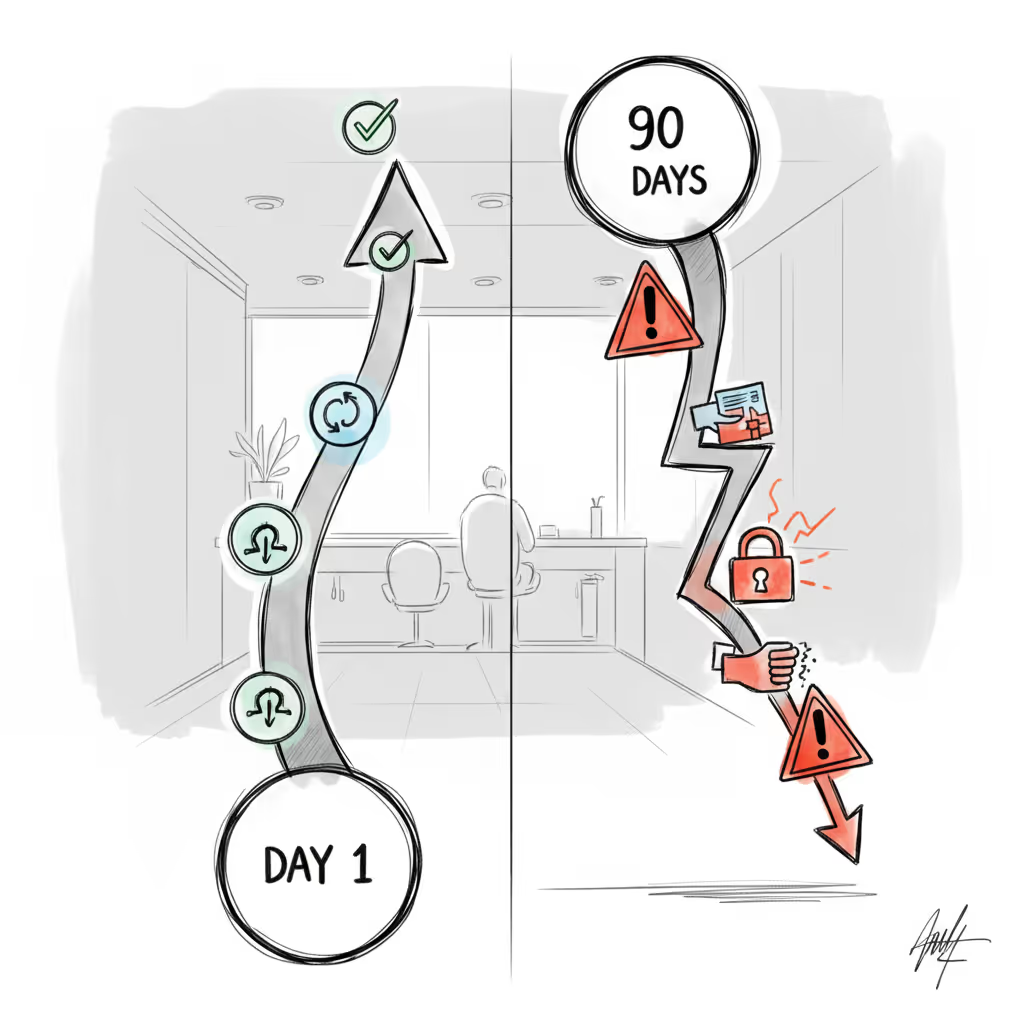
Debt collection agencies enter at the end. By the time they're involved, an invoice is typically 90 or more days overdue. Recovery rates drop sharply with age. According to the Commercial Collection Agencies of America, the likelihood of full recovery falls to around 70% at 90 days and drops below 20% after a year. Automated AR tools can help prevent accounts from reaching this stage.
AR automation starts at day one. Follow-ups go out while the invoice is fresh, the relationship is warm, and paying is still easy for your customer. There's no awkward third-party introduction. No formal demand letter. Just a professional nudge at the right moment.
That gap in timing is where most of the real cost difference lives.
Key Differences: Approach and Customer Experience
Collection agencies contact your customers as a third party pursuing a debt. The tone, by design, carries weight. Formal letters, repeated calls, legal language designed to prompt action.
AR automation works from your name, in your voice. When Invoice Butler follows up on an overdue invoice, your customer hears from you, not from a stranger. The message stays professional and polite, the kind of nudge that gets invoices paid without anyone feeling cornered.
That distinction matters more than people expect. Customers respond differently when they feel respected.
Key Differences: Cost Structure and ROI
The fee structures tell the story pretty quickly.
A contingency fee sounds low-risk until you do the maths on a $50,000 receivables backlog. At 30%, that's $15,000 gone before you see a pound... er, dollar.
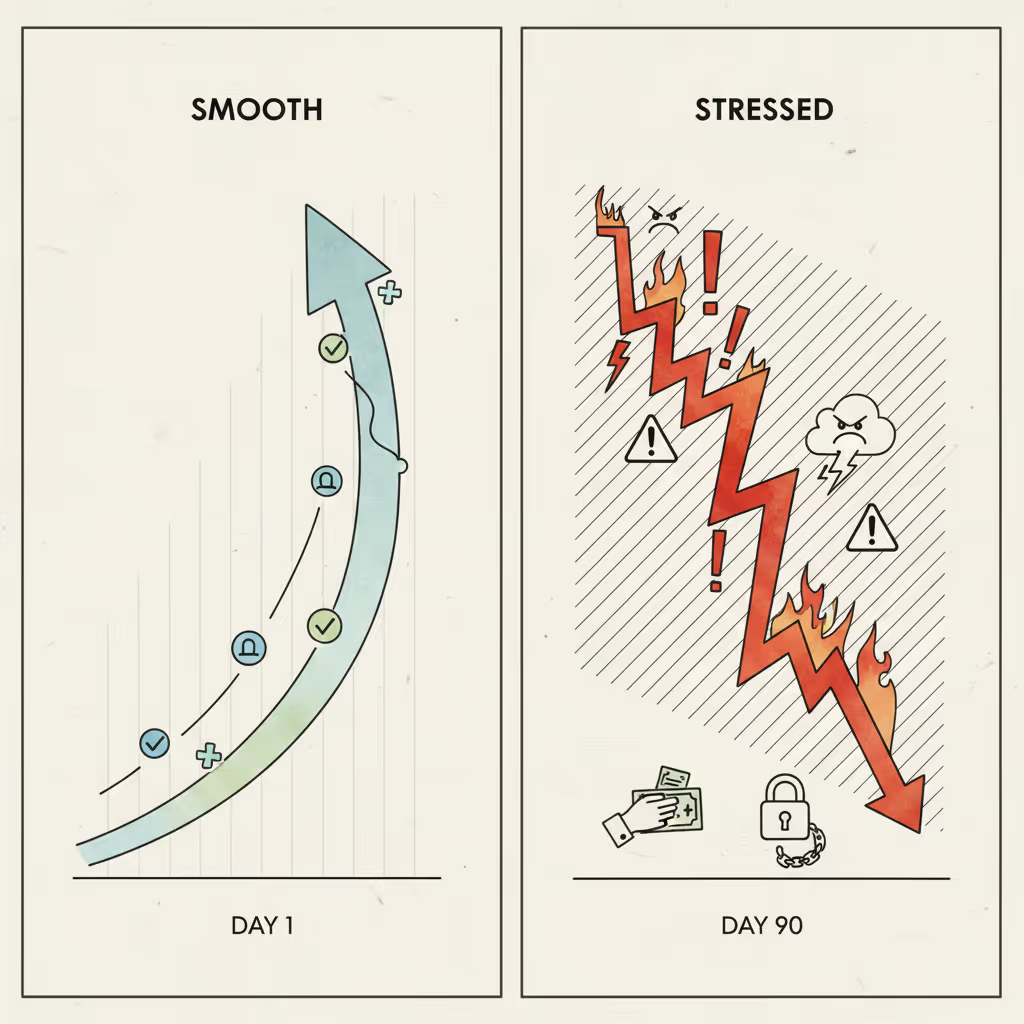
AR automation runs as a predictable subscription. There's no percentage taken off recovered invoices because, ideally, invoices never reach the point of needing recovery. AI-driven collections reduce DSO faster.
The ROI comes from collecting what you're already owed, on time, without giving a cut to anyone.
Choosing the Right Solution for Your Business Needs
A few honest questions can point you in the right direction.
If your invoices are already 90+ days old and a customer has gone completely silent, a collection agency may be your only remaining option. At that stage, the relationship may already be strained, and recovery matters more than prevention.
For everything else, AR automation is the stronger default. Ask yourself:
- Are invoices aging because no one has time to follow up consistently?
- Do you invoice other businesses on Net 30 or Net 60 terms?
- Do any customers require supplier portal submissions?
- Is your team spending hours each week chasing payments manually?
If you answered yes to any of those, the problem is process, and process is fixable before it becomes a collections issue. The two approaches aren't always mutually exclusive either. Some businesses run AR automation for active receivables and lean on an agency only for accounts that have truly gone cold. That combination keeps the pipeline clean while still having a fallback for edge cases.
How Invoice Butler Delivers AR Automation as a Service
Invoice Butler handles the full AR workflow from invoice-out to payment received.
That means sending follow-ups, managing replies, submitting invoices through procurement portals like Coupa or Ariba, and escalating to decision-makers when the right contact goes quiet. If a customer needs a PO number corrected or billing details updated, we sort it. If they respond better to a phone call than an email, we ring them.
The key difference from a software tool is that your team does not manage any of it. No reminder queues. No exceptions to triage. Invoices get paid, and your customer hears from you throughout.
By the time a debt collection agency would typically step in, we've already closed the loop.
Final Thoughts on Invoice Butler Compared to Debt Collection
Comparing Invoice Butler vs a debt collection agency really comes down to timing and approach. We step in at day one to keep invoices from ever reaching that 90-day mark where collection firms take over, and we do it without damaging the customer relationships you've worked hard to build. If invoices are slipping through the cracks or your team is drowning in follow-up emails, hop on a quick call and we'll walk you through how we handle it. You'll get paid faster, keep more of what you're owed, and actually enjoy running your business again.
FAQ
Invoice Butler vs debt collection agency: which one should I use?
Use Invoice Butler for active receivables to prevent invoices from aging into problems, and reserve collection agencies only for accounts that have already gone cold (90+ days with complete silence). Invoice Butler works from day one to keep invoices moving, whilst agencies recover debt that's already seriously delinquent and often relationship-ending.
Can I avoid collection agency fees by starting follow-ups earlier?
Yes. Collection agencies charge 20-50% of whatever they recover because they're handling aged, difficult accounts. By following up consistently from day one with AR automation, most invoices get paid before they reach that stage, so you keep the full amount without paying contingency fees.
What's the best way to collect on invoices without damaging customer relationships?
Follow up early and often in your own voice before the debt becomes serious. Invoice Butler sends polite, professional reminders as an extension of your team (not a third party), handles customer questions, and escalates tactfully when needed, keeping the relationship intact whilst getting you paid.
How do debt collection agencies actually work?
They send formal demand letters, make repeated phone calls, use skip tracing to find contacts, and can report debts to credit bureaus or involve attorneys if needed. This process typically runs 30-90 days and always involves third-party contact with your customer, which changes the relationship permanently.
When does it make sense to hand an invoice to a collection agency?
When an account is genuinely unresponsive after 90+ days, the relationship is already broken, and you've exhausted all internal follow-up options. At that point, recovery matters more than preservation, and an agency becomes your fallback for accounts that have crossed from "overdue" into "lost cause" territory.