Table of Contents

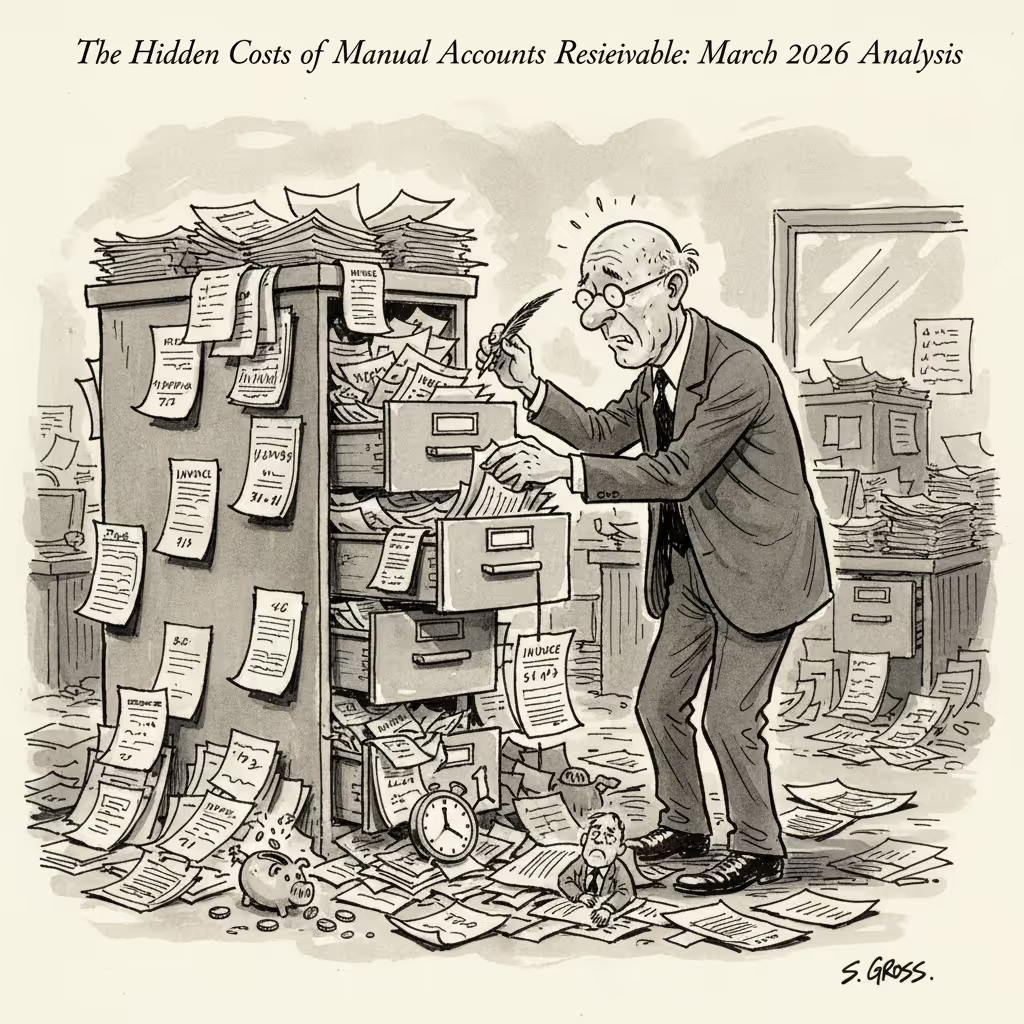
You can measure the cost of manual accounts receivable in salary and hours, but that's only part of the picture. The bigger drain happens in places your accounting software doesn't track: working capital that's technically yours but practically locked away, corrections that pile up invisibly, knowledge that disappears when your AR person moves on, and strategic work that keeps getting pushed to next quarter. Let's walk through where these costs actually live in your business.
TLDR:
- Manual AR costs 3x more per invoice than automation due to hidden labor expenses
- You lose $126,000 in working capital for every 23 extra days of DSO on $2M revenue
- Data entry errors hit 1 in 25 invoices, each requiring 3-4 touchpoints to fix
- Replacing an AR coordinator costs 50-200% of their salary in recruiting and ramp time
- Invoice Butler handles collections entirely, freeing your team for strategic finance work
Direct Labor Costs: The Most Visible Expense
Most finance leaders look at their AR process and see a workflow. What they're missing is a payroll line item hiding in plain sight.
Organizations with manual AR processes spend 3x more per invoice than those running automated systems. That gap comes from somewhere specific: staff hours. Every reminder email written by hand, every spreadsheet updated after a payment comes in, every phone call to chase down an overdue balance. Those minutes stack up fast.
Consider what a typical AR coordinator actually does in a week:
- Writing and sending follow-up emails for outstanding invoices, each one requiring context-gathering before a single word gets typed
- Logging payment status updates across multiple accounts, often in more than one system
- Cross-referencing bank statements against invoices to catch discrepancies before they become disputes
- Fielding customer questions about billing details that a self-serve record would answer instantly
- Re-sending invoices that were "never received," a task that is as tedious as it sounds
None of this is strategic work. It's repetitive, necessary, and expensive when you price it at a salaried employee's hourly rate. A $55,000 AR coordinator spending 60% of their time on these tasks costs over $33,000 annually in follow-up labor.
The Cash Flow Penalty: When DSO Becomes a Silent Killer
Every extra day of DSO is money sitting idle in someone else's account. Manual AR workflows extend DSO by 23 days on average, and that delay rarely comes from one big failure. It accumulates quietly: an invoice goes out late because someone forgot, a follow-up gets skipped during a busy week, a payment arrives but sits unreconciled for days.
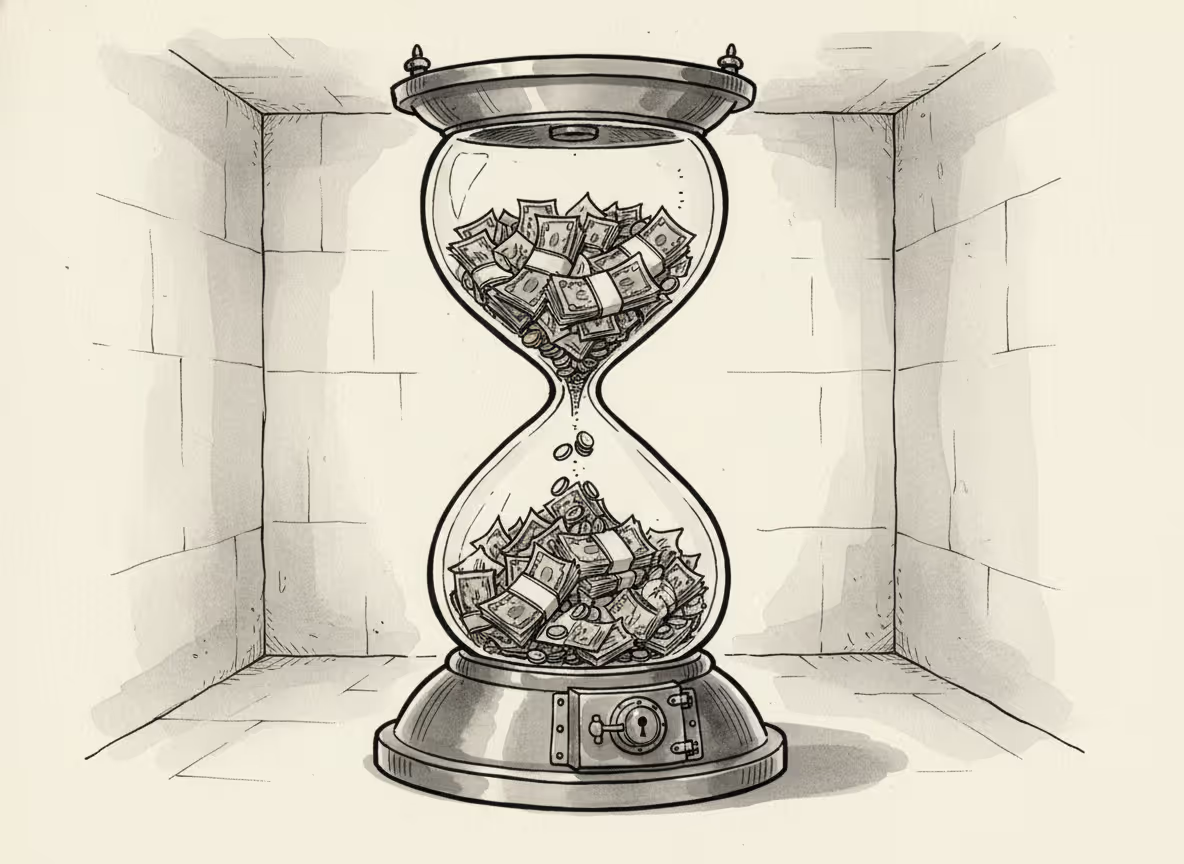
For a company doing $2M in annual revenue, 23 extra days of DSO locks up roughly $126,000 in working capital. That's capital you can't reinvest, can't use to cover payroll, and can't put toward growth.
The cash exists. You've earned it. You just can't touch it yet, and that waiting has a real price attached to it.
Error Rates and Rework: The Hidden Tax on Your Finance Team
Every error in manual AR work creates a second job: fixing the first one.
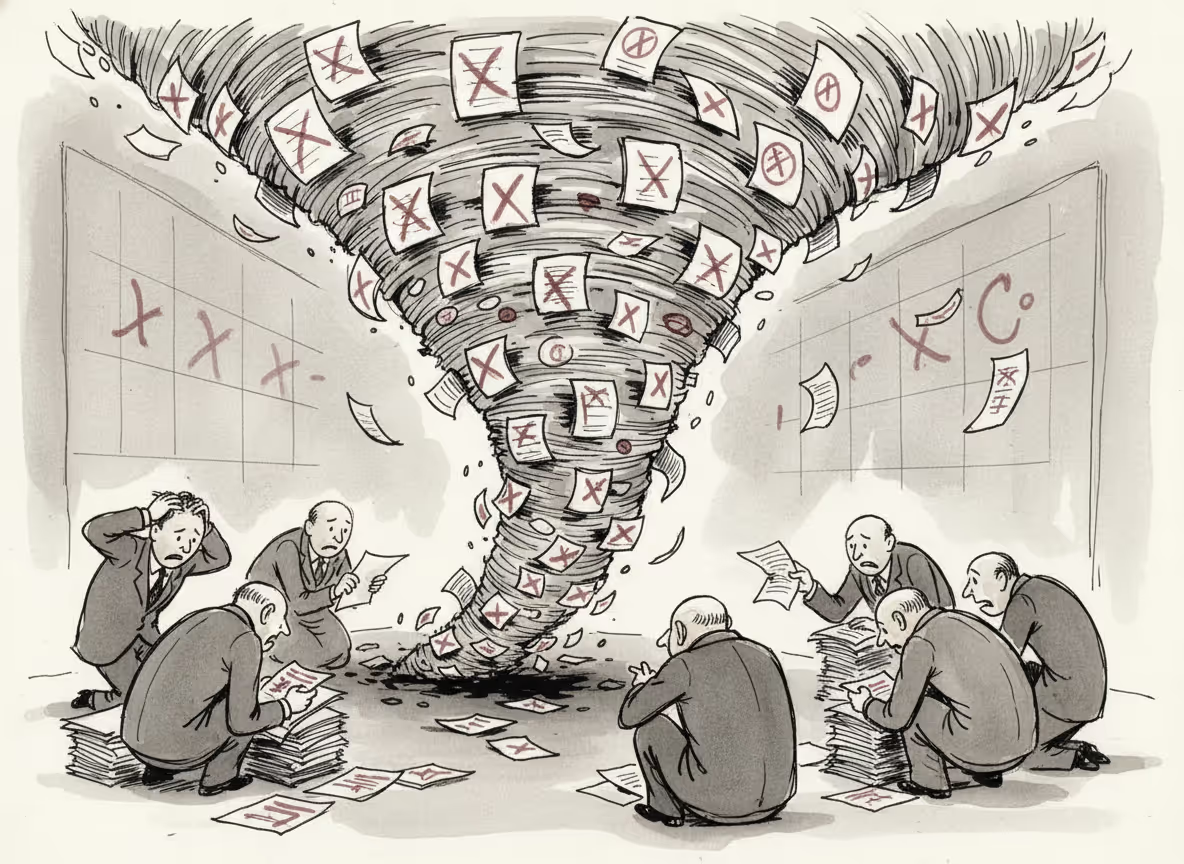
Data entry mistakes affect roughly 1 in 25 invoices, and each one typically requires three to four additional touchpoints to resolve. Spotting the discrepancy, contacting the customer, issuing a corrected invoice, reconfirming receipt. A wrong PO number or a duplicate entry posted to the wrong account feels minor in isolation. Multiply it across hundreds of invoices a month, though, and you're looking at a serious drain on your team's hours.
The compounding problem is what those correction hours replace:
- Time spent chasing a mismatched payment amount is time pulled directly away from collections follow-up on aging invoices.
- Every re-issued invoice resets the payment clock, quietly extending your DSO without appearing on any error report.
- Rework rarely gets tracked as a cost, so it stays invisible while quietly consuming capacity week after week.
That invisibility is the real issue. The labor shows up as a salary. The waste doesn't show up anywhere.
The Knowledge Loss Problem: When Your AR Person Leaves
Manual AR lives inside spreadsheets. More accurately, it lives inside the person managing those spreadsheets.
When that person leaves, the spreadsheet stays. But the context doesn't. Which customers always pay late but need a specific contact. Which invoices have informal payment arrangements never written down. Which portal logins are saved only in a browser that's about to be wiped. That institutional knowledge walks out with them, and the gap it leaves is expensive.
Replacing an AR coordinator costs between 50% and 200% of their annual salary once you factor in recruiting, onboarding, and the ramp period before they're operating independently. During that window, collection follow-ups slow down or stop entirely.
The real risk isn't the hire. It's the dead time in between, when aging invoices sit untouched and customers who were close to paying quietly fall off the radar.
Scalability Constraints: Why Manual AR Becomes More Expensive as You Grow
Growth is supposed to feel good. More customers, more invoices, more revenue. What nobody mentions is that with manual AR, more invoices means more of everything else too: more spreadsheet rows, more follow-up emails, more hours, more headcount.
The math does not scale. Adding 50 new customers does not require 50% more AR effort, it often requires doubling it. Customer quirks multiply. Portal requirements stack up. And 61% of finance leaders still rely on spreadsheets and manual processes to manage all of it, absorbing the cost as a normal part of growth.
At some point, you face a choice: hire another AR coordinator, or accept slower collection cycles. Neither option is free. One costs salary. The other costs cash flow.
Opportunity Cost: Strategic Work That Never Gets Done
The cost of manual AR goes beyond what shows up on a timesheet. When your finance team spends the day chasing overdue invoices, someone else's question goes unanswered: what should our cash flow look like next quarter?
Cash flow forecasting, financial modeling, vendor negotiation, cross-functional budget reviews. These are the activities that actually move a business forward. They also require focused, uninterrupted thinking. That thinking is hard to come by when you're fielding payment status requests and re-uploading invoices to supplier portals.
The work that gets deferred is rarely urgent enough to escalate, so it quietly sits undone:
- Identifying which customers are chronically slow-paying and renegotiating terms proactively
- Building rolling 13-week cash flow forecasts that improve decision-making
- Analyzing which products generate healthiest payment cycles
None of those tasks have a deadline. That's exactly why manual AR keeps winning the day.
Moving Beyond Manual AR: What an AR Service Can Do for Your Business
Every hidden cost covered in this analysis points to the same root cause: manual work that compounds over time.
An AR service removes that manual work entirely. AI-powered follow-ups go out on schedule. Customer replies get handled. Portal submissions get filed. Institutional knowledge lives in a centralized system instead of sitting in a departing employee's inbox.
Here is what that shift looks like in practice:
- Labor costs shrink because your team stops spending hours on tasks that can run automatically.
- DSO shortens because follow-ups happen consistently, not whenever someone gets around to it.
- Errors stop compounding because there is no manual data entry introducing mistakes at each step.
- Your finance team gets their time back for work that actually requires their judgment.
When volume grows, a good AR service grows with it. No hiring cycle, no ramp period, no knowledge gaps left behind.
Final Thoughts on the True Expense of Running AR Manually
The cost of your manual accounts receivable process goes beyond what shows up on timesheets. It's the cash flow penalty from extended DSO, the rework from preventable errors, the strategic initiatives your finance team never gets to because they're stuck chasing payments. Moving to automated AR fixes all of that without adding headcount or complexity, and the payback period is usually measured in weeks, not quarters. Set up a discovery call and we'll show you exactly where your current process is leaking time and money.
FAQ
How much working capital does manual AR actually lock up?
For every 23 extra days of DSO (the average delay with manual processes), a company doing $2M in annual revenue has roughly $126,000 tied up and unavailable. That's money you've earned but can't access for payroll, growth investments, or day-to-day needs.
What happens to my AR process when my coordinator leaves?
You lose the institutional knowledge they carried: which customers need special handling, which portals have saved logins, which informal payment arrangements were never documented. Replacement costs run 50-200% of their annual salary, and collections typically slow or stop during the transition period.
Why do manual AR costs increase faster than revenue growth?
Adding 50 new customers rarely means 50% more work. It often doubles your AR effort. Each customer brings unique portal requirements, payment quirks, and follow-up needs that compound exponentially, forcing you to either hire additional staff or accept slower collection cycles.
How many invoices contain errors that require rework?
Roughly 1 in 25 invoices processed manually contains a data entry mistake. Each error typically requires 3-4 additional touchpoints to resolve (spotting it, contacting the customer, issuing a correction, reconfirming receipt), and that rework time comes directly out of your team's capacity for actual collections work.
What strategic work gets pushed aside by manual AR tasks?
When your finance team spends their day chasing payments and updating spreadsheets, higher-value work goes undone: cash flow forecasting, identifying chronically slow-paying customers for proactive term renegotiation, building 13-week rolling forecasts, and analyzing which contracts generate the healthiest payment cycles.